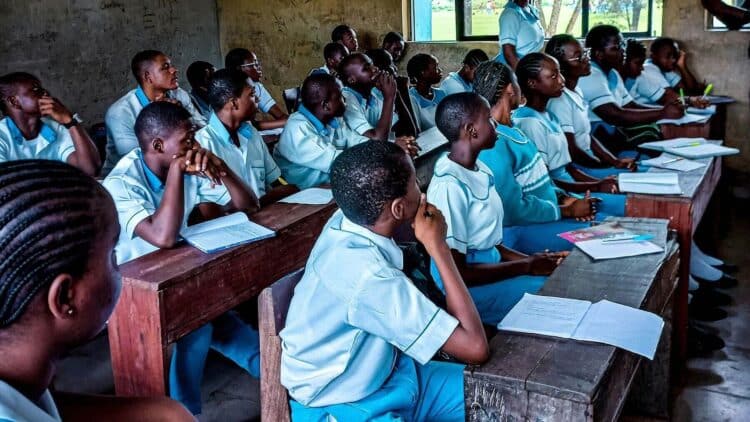
The UN has been deeply concerned about the significant increase in kidnappings and attacks against students in northern Nigeria. This situation has generated a major global debate about school safety. In a short period of just a few weeks, hundreds of children and teenagers have been forcibly taken, leaving entire families suffering and worried. The UN has been trying to reinforce the message that education cannot be paralyzed by violence, but in reality, the current scenario shows the opposite.
What will the UN do about the new wave of kidnappings in Nigeria?
With each new kidnapping case in Nigeria, the concern grows that schools will cease to be safe spaces. Now, the country’s government authorities and international organizations are attempting immediate action to prevent the cases from spreading and generating even more chaos in the region.
The most recent kidnapping cases in Nigeria expose a vulnerable and extremely unstable situation in the region. In Nigeria, at least 303 students and 12 teachers have already been taken from a Catholic school in the village of Papiri. This case has even surpassed the emblematic Chibok case of 2014; many children and teenagers were captured while trying to escape, all between the ages of 10 and 18. This episode generated great national outrage and made families question whether it is safe to send their children to school.
Around the same time, another case generated widespread attention. An attack struck Kebbi state, where 25 students were kidnapped. According to the UN Human Rights Office, at least 400 people have been abducted across an estimated four states since November 17th. Of these, only 88 have managed to escape or have been released. One of the major problems in these cases is the absence of a group claiming responsibility, which hinders investigations into the criminals behind these incidents.
In the face of this humanitarian crisis, the UN reinforces its message that schools should be “sanctuaries, not targets.” UN agencies such as UNICEF and UNESCO have also condemned these acts of violence and called for the immediate release of all kidnapped students. For these organizations, the scenario in which fear dictates the pace of education is worrying, and this could threaten the future of an entire Nigerian generation.
The expansion of insurgent violence
Everything indicates that the kidnappings in Nigeria were orchestrated by insurgent groups from the north of the country, who have been advancing rapidly throughout the territory. In many regions, the attacks have become frequent, putting pressure on local communities already dealing with problems such as extreme poverty and lack of infrastructure. The World Food Programme (WFP) has issued an important warning about a possible direct link between the violence and the growing hunger in the country. According to some studies and research, estimates indicate that at least 35 million people may face food insecurity, the highest number ever recorded.
Social and humanitarian impact
The effects of this wave of kidnappings are going far beyond the absence of students. In several regions of the country, schools have been closed indefinitely, disrupting the learning routine of thousands of children.
What is the importance and role of the UN in this case?
The country faces problems that exceed the local capacities of the region, and this requires coordinated efforts in security, humanitarian assistance, and social development from international bodies.
This situation in northern Nigeria highlights how students remain exposed to violence and vulnerable in the region. This wave of kidnappings makes clear the importance of protecting schools, which has become an urgent priority. Without drastic changes, the future of children and adolescents in the country will remain threatened. Guaranteeing the safety, education, dignity, and hope of these young people is crucial, and therefore, Nigeria needs global support to overcome this situation.