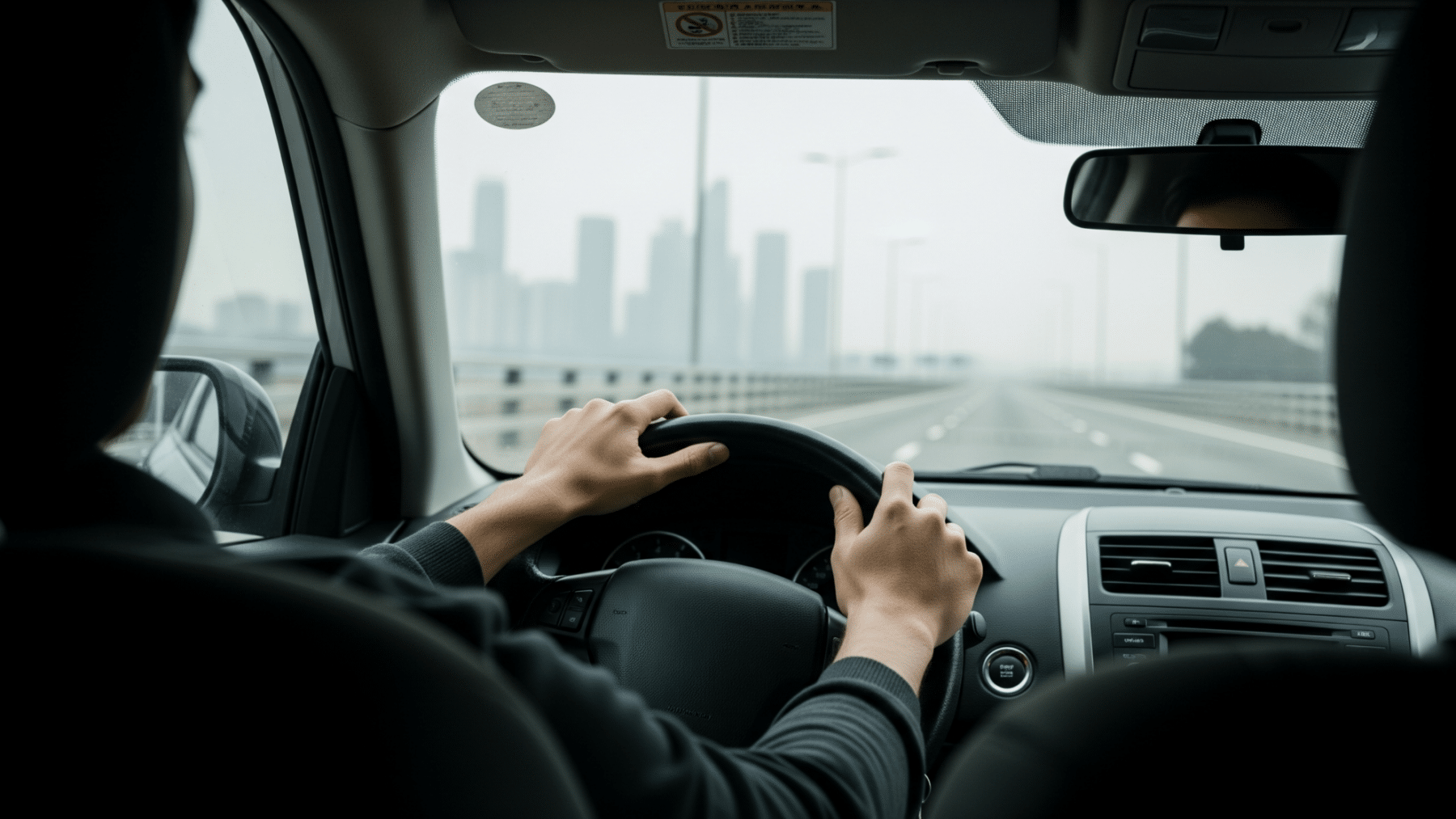
Almost every working American has a version of this ritual. The alarm goes off, the coffee is poured, and then comes the stretch of time nobody asked for: the commute.
It is easy to resent. It burns fuel, eats into mornings, and piles up over a lifetime into thousands of hours that feel stolen.
But a growing body of psychology research is making a surprising case for why that familiar groan may be misplaced.
The number most commuters have never actually sat with
According to U.S. Census Bureau data, the mean one-way travel time in 2024 was 27.2 minutes. After peaking in 2019 with an average commute time of 27.6 minutes, the 2024 figure is almost back to pre-pandemic levels. Add the return trip and that is close to an hour carved from every workday, yet surprisingly little research has examined the implications of this daily routine for work-related outcomes.
The percentage of workers reporting commutes of 60 minutes or longer stood at 9.8% in 2019. Travel times of 90 minutes or more were less typical, at 3.1 percent of commuters.
That is a significant slice of the day. And for years, researchers treated all of it as pure cost.
Commuting has traditionally been viewed as a demand that negatively impacts psychological health. Yet theoretical scholarship has begun to suggest there may be an upside to commuting for mental health.
Why the drive home feels different from the rest of the day
The shift in thinking centers on a concept that sounds almost philosophical: liminal space.
Researchers argue that commutes are a source of “liminal space”, a time free of both home and work roles, that provides an opportunity to recover from work and mentally switch gears to home.
Think of it as a built-in decompression chamber. The commute is neither the office nor the kitchen table. It belongs to neither domain, and that in-between quality is exactly what gives it value.
Researchers focused on two specific cognitive processes during the commute: psychological detachment from work and psychological recovery from work.
Psychological detachment means mentally disengaging from the demands of work. Psychological recovery means rebuilding stores of mental energy used up during the day.
What happens when that window disappears entirely
The pandemic offered a vast, unplanned experiment in what life looks like without the commute. The results were instructive.
A study in the Organizational Psychology Review found that remote work can lead to burnout if proper work-life boundaries are not established, because the loss of “liminal space” can result in role blurring and stress.
Without mentally disengaging from work, people can experience burnout. Without the ability to mentally shift gears, people experience role blurring, which compounds that stress.
Some workers found their own workarounds. One woman told a journalist that even though she was working from home, she regularly sat in her car in the driveway at the end of the workday in an attempt to carve out some personal time and mark the transition from work to nonwork roles.
It sounds eccentric. Research suggests it was actually exactly right.
The specific finding that reframes the whole commute
A study by McAlpine and Piszczek published in Organizational Psychology Review developed a liminal-space model of the work-to-home commute, and a follow-up field study tested it in a specific, measurable way.
On days with longer-than-average commutes, people reported higher levels of psychological detachment from work and were more relaxed during the commute.
However, on days when commutes were more stressful than usual, they reported less psychological detachment from work and less relaxation during the commute.
That second finding matters. The commute is not a magic fix. Its value depends on how it is experienced, not merely how long it lasts.
A 2024 study published in Socius reinforced the picture from a family angle. Commuting distance alone was not significantly linked to mental health, but the nature of commuting, whether it is viewed as a demand or a resource, depends on other factors in parents’ lives.
Specifically, an increase in commuting distance can simultaneously buffer against the impact of work-to-family conflict on psychological distress, irrespective of gender.
In other words, for parents juggling long work hours and the pull of home, the commute’s physical distance can act as a pressure valve that eases the collision between two demanding worlds.
How to actually use your commute as the buffer it was built to be
The research points toward a clear and actionable reframe. The commute is not wasted time. It is transition time, and protecting its psychological quality matters more than shortening it.
Research suggests that employees who engage in role-clarifying prospection, thinking about the upcoming work role during the morning commute, are less likely to be negatively affected by lengthy commutes.
The evening ride home is its own opportunity. Research shows that commute stress detracts from detachment and relaxation more than commute length does, so some people may find it worth their time to take the “scenic route” home to avoid tense driving situations.
That means listening to something absorbing, sitting with silence, or making a small mental list of what is done for the day. None of it requires a longer drive or a different route.
It requires treating those minutes as genuinely yours, not as dead time between the two things that matter.
Remote and hybrid workers who have lost the commute entirely can manufacture the same boundary. A ten-minute walk, a drive around the block, or even a deliberate seated pause before opening the front door can protect the mental separation that keeps work from colonizing home life. The commute, it turns out, was doing a job most people never noticed it doing.
