Walk a suburban dealership lot on any weekday morning and the pattern is hard to miss.
The hybrid badges are gone before the weekend. The full-electric stalls sit longer. The sales board at the end of the row keeps getting updated in the same direction. Something measurable shifted in the US car market this past spring, and the quarterly numbers have now confirmed it.
What exactly moved the needle so fast, and for whom?
How the hybrid powertrain quietly rewrote the sales scoreboard
Second-quarter US vehicle sales turned into a tale of haves and have-nots, as automakers with strong hybrid lineups outperformed those without, amid elevated gas prices and slackening demand for all-electric vehicles. The mechanism is straightforward: a hybrid needs no charging infrastructure, costs closer to a conventional model than a full EV, and returns noticeably better fuel economy at a moment when pump prices are elevated.
That combination removed the main barriers that kept cautious buyers on the sidelines. So when a shopper who once considered an EV walked in and found the charging math did not add up, the hybrid sitting two spots over became the obvious answer.
Cox Automotive found that more than half of consumers surveyed said higher fuel prices made them more likely to consider a hybrid or plug-in hybrid. That sentiment translated directly into registration data, and one automaker’s lineup was positioned to absorb almost all of it.
The quarter when one brand pulled ahead of every rival
Toyota’s second-quarter sales results hit 673,971 vehicles across the whole corporate group, with electrified models jumping 19.5 percent year over year. At 56.8 percent, nearly 57 percent of everything it sold was electrified. At the brand level, the lead was even starker.
Toyota the brand posted 585,211 second-quarter sales, ahead of Ford’s 549,200 and Chevrolet’s result for the same period. That made Toyota the best-selling nameplate in America for the quarter, a position the domestic brands had not surrendered in years.
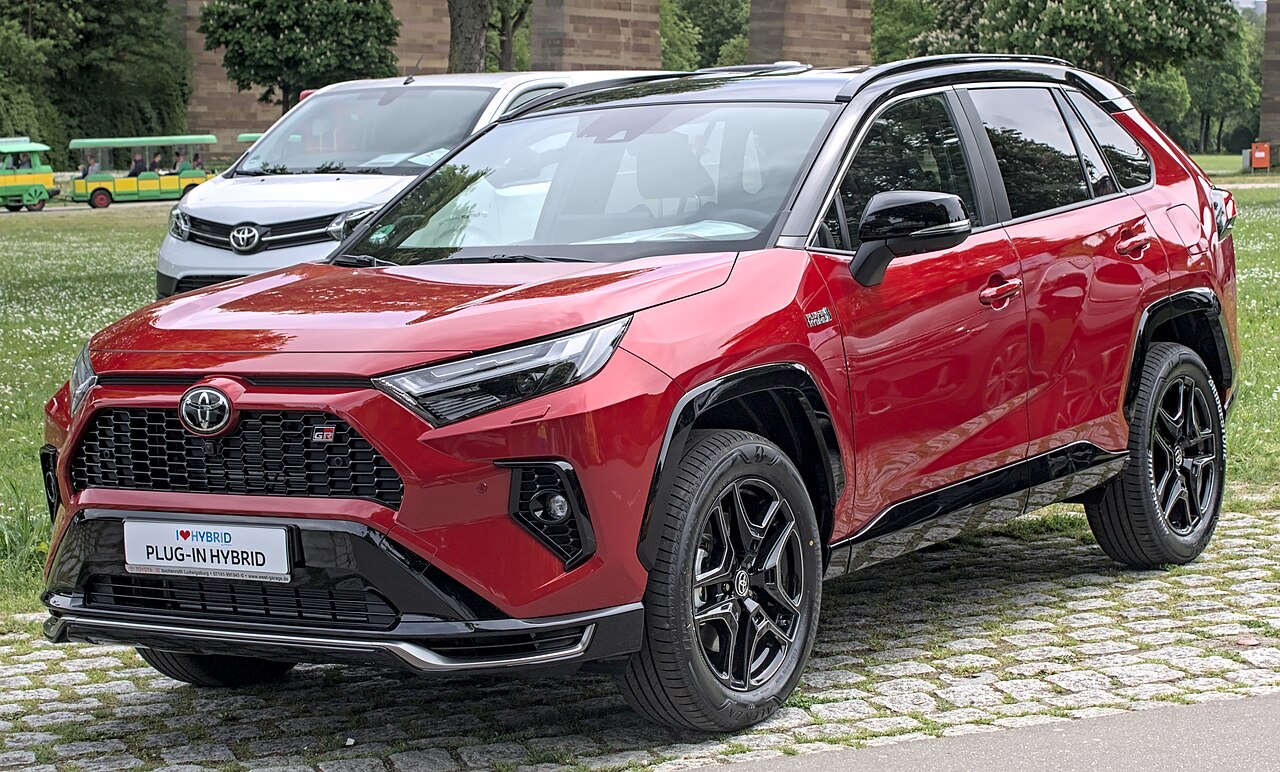
The RAV4 Hybrid achieved a strong quarter-over-quarter result, and Toyota and Lexus together offered an expansive range of electrified options across their combined lineup. A buyer who arrives wanting a small crossover, a midsize hauler or a three-row SUV can find a hybrid version of each without switching brands, which is exactly the product depth that keeps conquest shoppers from walking out.
Where the hard numbers put each competitor
GM led the market through June with 1,341,325 sales and second-quarter volume of 714,896 against Toyota’s 673,971. The cushion that once looked comfortable is now thin enough that a single strong quarter in the second half could erase it entirely.
Ford reported a 10.3 percent drop in second-quarter US sales to 549,200 vehicles as electric-vehicle demand tumbled and the automaker worked through the discontinuation of two models. F-Series sales dropped 11 percent from last year, mainly because two fires at a key aluminum supplier in late 2025 limited the materials needed for the trucks. Meanwhile, Stellantis and Nissan both ran sales-focused turnaround plans that leaned into discounting rather than electrification alone. For GM the story was more complicated, with product mix and rising vehicle costs adding to the challenge.
Kia reported a 152 percent increase in hybrid sales during the second quarter, contributing to solid overall gains for the brand. The pattern across every winner was the same: a wide hybrid menu meeting shoppers where they already were.
Where the advantage breaks down and what complicates the picture
The hybrid surge is not a clean sweep for every model. RAV4 volumes faced some pressure during the quarter as inventory dynamics shifted with the model cycle, a meaningful caveat: the brand’s best quarter in recent memory was achieved with supply constrained on its single highest-volume nameplate.
When full production of the new generation normalizes, the volume sitting in backorder will flow onto lots and potentially accelerate the shift already underway.
There is a broader complication too. Hyundai’s hybrid gains came alongside real operational strain, including a safety recall on its Palisade Hybrid that pulled attention and resources inside the brand. Strong segment-level momentum and corporate-level headaches can coexist, and the quarterly scorecard rarely captures both at once.
What the scoreboard signals for the rest of the year
Ford is facing a challenging year, with first-half sales down 9.6 percent, while a major all-electric brand is under pressure amid intensifying competition. Both outcomes point to the same dynamic: a market rewarding broad electrified lineups over all-or-nothing bets, whether on combustion or full battery-electric alone.
The distribution of gains across the industry remains deeply uneven, with Asian automakers carrying strong hybrid portfolios capturing most of the momentum while brands without that depth absorbed the bulk of the volume decline.
Cox Automotive’s analysts noted the trend has favored Asian automakers with stronger hybrid lineups, and the industry’s June sales pace topped a 17 million annual rate for the first time since July 2025. A market moving at that pace, with share shifting this fast, rarely stays politely settled for long.
