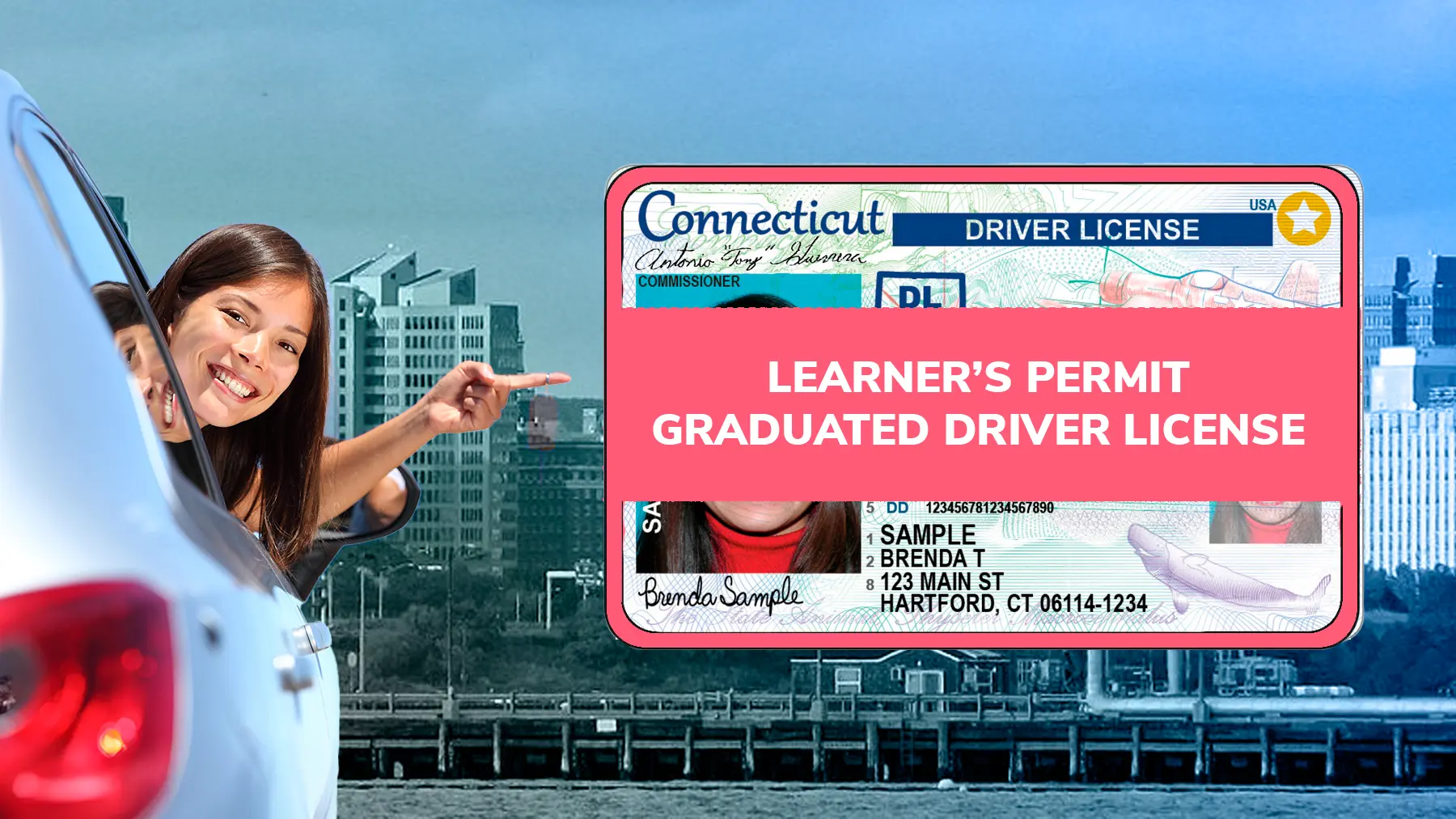
The process of getting a driver’s license in Connecticut can be very thrilling as well as being full of milestones to a teenager and their family. The graduating licensing process in Connecticut aims at developing safe driving habits, confidence and good knowledge of the road among the new drivers. To help you through each step, with confidence and a clear understanding of what is required at each phase, this guide is the perfect step-by-step overview of what each phase requires in order to be met before you can progress through every stage to full licensure.
Eligibility and learner’s permit phase in Connecticut
There are some requirements you need to fulfill and go through the process up to an initial phase before you can begin driving in Connecticut. Here, we will guide you through what you need to do before you apply for your permit.
Minimum age and education requirements
The state has stringent requirements for new drivers. The Connecticut learner permit age 15 is the minimum permit age. To qualify, you must be:
- At least fifteen years old
- Enrolled in or have completed a state-approved driver’s education program
- A Connecticut resident, with proof of residency
- Have a parent sign the application if under the age of eighteen
Driver’s ed isn’t just a must—it’s your ticket to Connecticut’s traffic statutes, defensive driving skills, and the responsibilities of a driver.
Required documentation and testing
In preparation of the knowledge test and before you get to the DMV, make sure to have the following documents:
- Identity and age proof (Passport, State ID and Birth certificate)
- Verification of Social Security number
- Two records which demonstrate residence in Connecticut (utility bill, bank statement etc.)
- Receipt of enrollment or completion of course in driver education
- Parental permission form (under eighteen)
You also have to pass a written test about knowledge of safe driving, traffic and road signs. The Connecticut knowledge exam passing score is eighty percent. A vision and hearing screening at the DMV is also required.
Supervised driving and permit holding period in Connecticut
Once you have your permit, you will also undergo a supervised driving period. It is all about having practical learning and getting confidence when on the road.
Minimum duration of permit stage
Connecticut demands that in case you have done a commercial or secondary driver education course, you have to keep your learner permit not less than 120 days, and in case you do not, 180 days. Waiting is restarted by any moving infracting offence or rendition of a permit.
Supervision regulations and driving time records
The requirements of the state are:
- Supervised driving at least forty hours
- Parent training in two hours
- Every time that is recorded and confirmed by a parent or a guardian
Learning to drive should be supervised by a licensed person who is over the age of twenty years, and who has a driving experience of four years, in the front passenger seat. This forms one of the fundamental elements of the Connecticut supervised driving hours.
Intermediate license or provisional license stage in Connecticut
After you have completed the supervised driving, you will be in a position to apply the provisional license. The ability to go out brings new freedoms, however some serious restrictions also need to be observed to ensure your safety.
Accessibility to intermediate license
In order to be eligible to have the intermediate license (Connecticut driver license 16 years) you have to:
- Be older than sixteen years old
- Have had the learner permit of your learner the required time without a traffic conviction
- Catch up on driving hours: The type of supervision you had during these hours must be known. The number required varies by state as well as by the number of previous non-enrolled driving hours.
- Success in the road skills test
This will make sure that the individuals who advance in the Connecticut graduated driver licensing process are ready and accountable motorists.
Nighttime driving restrictions and passenger vehicles Restrictions
The Connecticut intermediate license restrictions is intended to reduce the numbers of distractions and dangers that the novice driving faces. Under the regulations, drivers:
- For the first six months: No passengers except a licensed driving instructor, parent, or legal guardian
- For the second six months: Only immediate family members as passengers
- No driving between 11 p.m. and 5 a.m. unless for work, school, or religious activities (Connecticut teen driving curfew laws, Connecticut nighttime driving restrictions teens)
Punishments, as well as the consequences that follow the breaches in question
In Connecticut, regulation of these rules is enforced without leniency. The possible penalties of the violation of these provisions might consist of:
- Fines and costs court
- Suspension of the license or an extension of the restrictions
- Obligatory courses of training drivers
A moving citation at any time while your license is provisional can postpone your ability to obtain a full license.
The Connecticut criteria to be eligible to get a full and unrestricted driver license
The final phase is to obtain your fully unrestricted license. In the sections that follow, the requirements and the steps necessary to finalize the process are presented.
Eligibility for full license in Connecticut
The Connecticut state law requires that to obtain a full license the following eligibility procedures must be done;
Being able to keep your driving record clean, using the provisional license until the eighteenth birthday, will enable you to receive a full and unrestricted driver license. During the entire period of your tentative one year, you should ensure that your record is spotless.
This experience is intended to satisfy that inexperienced drivers have attained an acceptable level of maturity and experience of driving to take full driving rights as per the aims of the graduating licensing process in Connecticut.
The compliance period and the requisite de-restriction conditions are outlined here.
In order to attain unrestricted status you have to:
- Maintain the temporary license up to the eighteen birthday.
- All 12 months of patrol should be accompanied by a suspension patrol or violation entry.
- The moment you will complete all the required hours of supervised driving and all the requirements offered during the driver-education process, you will be able to take a license that did not have any restrictions applied.
- Get fines and fees payments.
When all these conditions are met, the DMV will reinstate your full driving privileges.
Frequent questions (FAQ)
- Is there online driver education in Connecticut? Yes, Connecticut permits state-certified online drivers ed classes, but you will also have to undergo the behind-the-wheel training with a qualified instructor.
- What will happen in case of a ticket being given when I hold a permit or intermediate license? Any moving violation re-institutes your permit or intermediate maintenance and possibly needs you to take another driver improvement courses.
- Are there any exceptions to the night-time driving bans? Work, school or religious activities are exempt but when you are caught driving in prohibited hours, you should possess some supporting documents.
Completing the graduating licensing process in Connecticut is more than a legal requirement—it’s a journey that shapes responsible, skilled drivers for life. By following each step, logging your Connecticut supervised driving hours, and respecting all Connecticut intermediate license restrictions, you’ll be well-prepared for the freedom and responsibility of the open road. For more information or to begin your journey, visit the official Connecticut learner’s permit page.
Disclaimer: The content of this guide is not intended to replace professional advice or official sources. It is for informational purposes only and should not be used to make economic or non-economic decisions.
