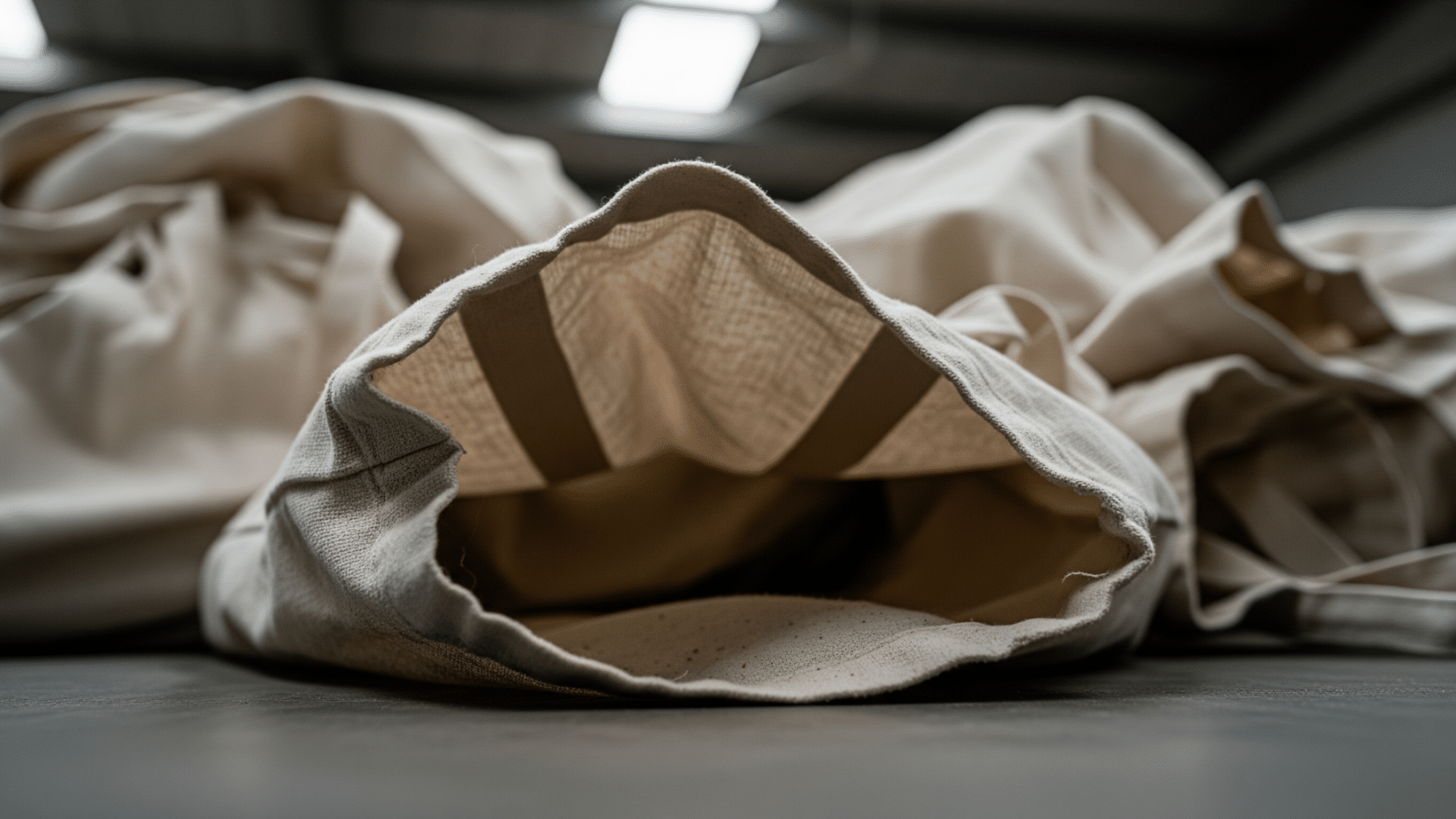
Walk into almost any grocery store in America and you will see them: the cotton tote bag looped over a shopper’s wrist, printed with a slogan or a bookstore logo, swinging past the checkout lane like a small badge of conscience.
They replaced the plastic bag in the cultural conversation about sustainability. They got cheaper, trendier, and more ubiquitous every year.
But a number sitting inside a government report has been waiting for more people to find it, and once you see it, the familiar tote looks a little different.
The bag that became a symbol of doing the right thing
The cotton tote’s rise as a green status symbol tracked almost perfectly with the public backlash against single-use plastic bags in the 2010s.
Cities and states began banning or taxing thin plastic bags. Retailers started handing out cotton alternatives at the register, sometimes for free, sometimes for a dollar or two.
The logic felt simple: plastic is bad, cotton is natural, natural is better.
Millions of households built the reusable bag into their weekly routine without a second thought, stacking extras in kitchen drawers and car trunks for the trips they remembered to bring them.
What cotton actually demands before it ever becomes a bag
Cotton is one of the most resource-hungry crops on earth.
Cotton is a resource-intensive crop that requires lots of water and uses a substantial amount of pesticides and fertilizers, which introduce nitrates to land and waterways and result in the creation of nitrous oxide, a greenhouse gas.
The water figure alone is striking. Cotton consumes approximately 10,000 liters, about 2,642 gallons, of water to produce just one kilogram of the fiber.
A February 2026 life-cycle assessment published on Zenodo by researchers at SRH University Berlin compared cotton totes directly against both recycled and virgin polypropylene alternatives. Cotton exhibited the highest impacts in water consumption, land use, and toxicity due to agrochemical-intensive cultivation.
That cost is baked in before the bag is stitched, dyed, shipped, or handed to a shopper.
Why the drawer full of extras is part of the problem
The tote proliferated so fast that accumulation became its own issue.
Many people are drowning in reusable bags, cloth totes or thicker, more durable plastic bags, that retailers sell cheaply or give away as an ostensibly greener alternative to single-use plastic. Campaigners say these bag hoards are creating fresh environmental problems, with reusable bags having a much higher carbon footprint than thin plastic bags.
The bag only works for the planet if it actually replaces enough single-use bags over its lifetime. A tote used twice and forgotten is categorically worse than a thin plastic bag that at least gets repurposed as a bin liner.
The math that determines whether a cotton tote is ever genuinely better is not on the label. It comes from a government assessment most shoppers have never heard of, and the number it landed on stopped researchers when it was first published.
This pattern, an everyday habit that feels virtuous but carries a hidden real-world cost, turns up more often than people expect. Researchers tracking workplace behavior found a similar gap between perceived and actual impact, a finding that stunned even the economists who ran the numbers.
The 7,100-use figure that changes the whole conversation
In 2018, the Danish Environmental Protection Agency commissioned a full life-cycle assessment of shopping bags, carried out by DTU Environment, measuring environmental cost from raw material through disposal across 15 environmental indicators.
The Danish Environmental Protection Agency commissioned a Life Cycle Assessment on cotton tote bags and determined that, compared to a single-use plastic bag from a supermarket reused once as a trash bag and then incinerated, a conventional cotton bag needs to be used at least 7,100 times to offset its environmental impact across all indicators.
The consequence lands not on the shopper personally but on the land and waterways tied to cotton farming, the fields irrigated, the aquifers drawn down, the runoff carrying fertilizer into rivers.
For an organic cotton tote bag, the life-cycle assessment indicated it needs to be used 20,000 times to offset its overall production impact, requiring daily use for roughly 54 years.
The United Nations Environment Programme put the climate-only threshold lower but still striking: a cotton bag needs to be used 50 to 150 times to have less impact on the climate compared with one single-use plastic bag.
Most totes never get close to either number.
The bag you already own is still the best one to use
None of this means the cotton tote is irredeemable or that plastic bags are the answer. The picture is genuinely more complicated than either side of the debate usually admits.
Reusable does not mean clean in every sense, and the public should be mindful of the ability of bacteria to contaminate surfaces, but bacteria can be reduced to near zero simply by washing the bag regularly.
The practical upshot from every study is the same simple rule: the greenest bag is the one already sitting in your home, used as many times as possible before it wears out.
The answer to what’s the greenest replacement for a single-use plastic bag isn’t straightforward, but the advice boils down to reusing whatever bags you have at home, as many times as you can.
The 7,100-use threshold is not a reason to throw the tote away. It is a reason to treat it less like a fashion accessory and more like the durable tool it was always designed to be, and maybe to stop accepting a new one every time a brand hands one out for free.
Everyday consumer habits and their compounding real-world effects keep surprising researchers, often in ways that only show up when someone finally does the full accounting.
