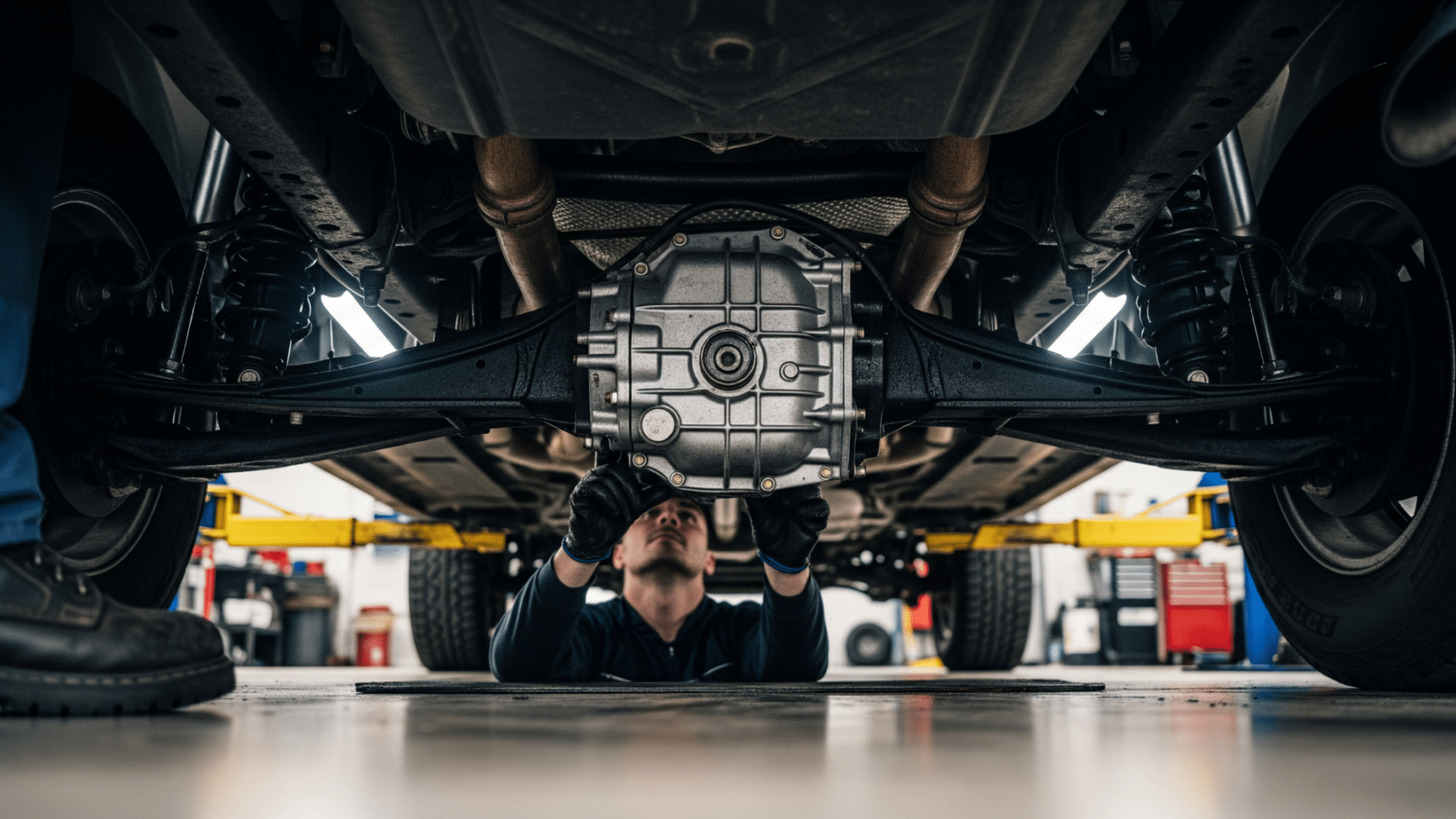
You pick a brand-new truck partly because of that 4WD badge. It is right there on the sticker, in the brochure, and in every ad showing the thing climbing a muddy hill. The promise is simple: this drivetrain will go anywhere you need it to go.
What nobody mentioned was a part the size of a finger that never made it inside the transfer case before the truck shipped.
The trucks that sold the 4WD dream hardest
Full-size pickups and large SUVs have been the engine of the American auto market for years.
GM identified a safety defect in certain 2026 model-year Chevy Silverado 1500, Tahoe, and Suburban vehicles equipped with four-wheel drive or all-wheel drive, along with select 2015 through 2020 full-size SUVs that may have received a replacement transfer case.
These are among the most popular nameplates in the country.
Truck buyers pay a real premium for 4WD capability. The two-wheel-drive version of the same model sits thousands of dollars lower on the window sticker.
How a transfer case is supposed to work
The transfer case is the heart of every 4WD system. It sits between the front and rear axles and splits engine power across all four wheels when you need it.
To do that job without destroying itself, it relies on pressurized lubrication reaching every moving bearing inside. Remove that lubrication and the bearings run dry, heat up, and eventually fail.
It is a system that has worked reliably for decades. The problem here was not the design.
Something happened at the factory before the trucks ever left
The recall documents reveal that a supplier error at Magna Powertrain de México resulted in transfer cases being assembled without an oil pick-up tube.
Without this tube, the transfer case bearings do not receive proper lubrication, which over time can lead to internal bearing failure and sudden wheel lock-up.
The defect did not develop over time from wear. The tube was simply absent from the moment the assembly left the supplier’s line.
Buyers drove off the lot with a drivetrain that was already compromised inside, with no way to know it from the outside.
The catch that 4WD pickup truck buyers never saw coming
Sudden wheel lockup while driving at highway speeds poses an extreme and unpredictable crash risk. This is not a warning light. This is not a limp-home mode. The wheels stop turning with the truck still moving.
Some drivers may hear a grinding sound before the wheels lock, but there is no guarantee of any warning before lockup occurs, which is precisely why GM issued a do-not-drive order rather than a standard service notice.
The issue surfaced on April 14, 2026, when a GM engineer filed a safety report after performing a teardown on a 2026 Silverado 1500 that had experienced wheel lock-up in a parking lot. The teardown revealed the missing oil pickup tube, prompting GM and the supplier to review end-of-line torque data and identify 68 suspect assemblies across the production run.
NHTSA filed the campaign as recall number 26V289. The recall affects a total of 66 vehicles across several Chevy, GMC, and Cadillac nameplates.
This recall is focused on four-wheel-drive and all-wheel-drive models; two-wheel-drive versions are in the clear.
The list covers 2015 to 2020 Chevrolet Suburban, Tahoe, Cadillac Escalade, GMC Yukon, and Yukon XL, along with 2026 Silverado 1500, Sierra 1500, Tahoe, Suburban, Yukon, Yukon XL, Escalade, and Escalade ESV.
Those older models are included because replacement transfer-case assemblies from the same affected batch may also have been installed in older trucks or SUVs during previous repairs, which widened the recall beyond current-production vehicles.
It is a stark reminder that even trucks built on one of the strongest sales runs in GM history, covered in our look at GM’s Q2 profit beat, carry risk when supplier quality slips at the component level.
What owners can do right now before the letter arrives
If you own an affected vehicle, GM’s instructions are clear: do not drive the vehicle until the remedy is performed.
GM is contacting owners directly to arrange for the vehicles to be towed to a local dealership for inspection and repair. Dealerships will inspect the transfer case and replace the entire assembly free of charge.
You do not have to wait for the mail. The involved VINs were uploaded to NHTSA’s recall website on May 7, 2026. That means you can check your vehicle right now at NHTSA.gov before the letter ever lands in your mailbox.
It is the same advice that applies to any safety recall: check first, drive later. Federal law requires the fix to be performed at no charge at any brand-authorized dealer, even on a used vehicle.
The broader pattern of supplier-level defects reaching finished vehicles is worth watching. Our report on Ford’s Bronco and Ranger recall showed how a seat-bolt issue affecting nearly 180,000 vehicles can trace straight back to a single supplier process failure. A single missing tube can do the same, and in this case, it can do far worse at speed.
Although the recall population is relatively small, drivetrain failures involving sudden wheel lock-up are among the most dangerous mechanical defects automakers deal with. The fix is fast and free. The risk of skipping it is not.
