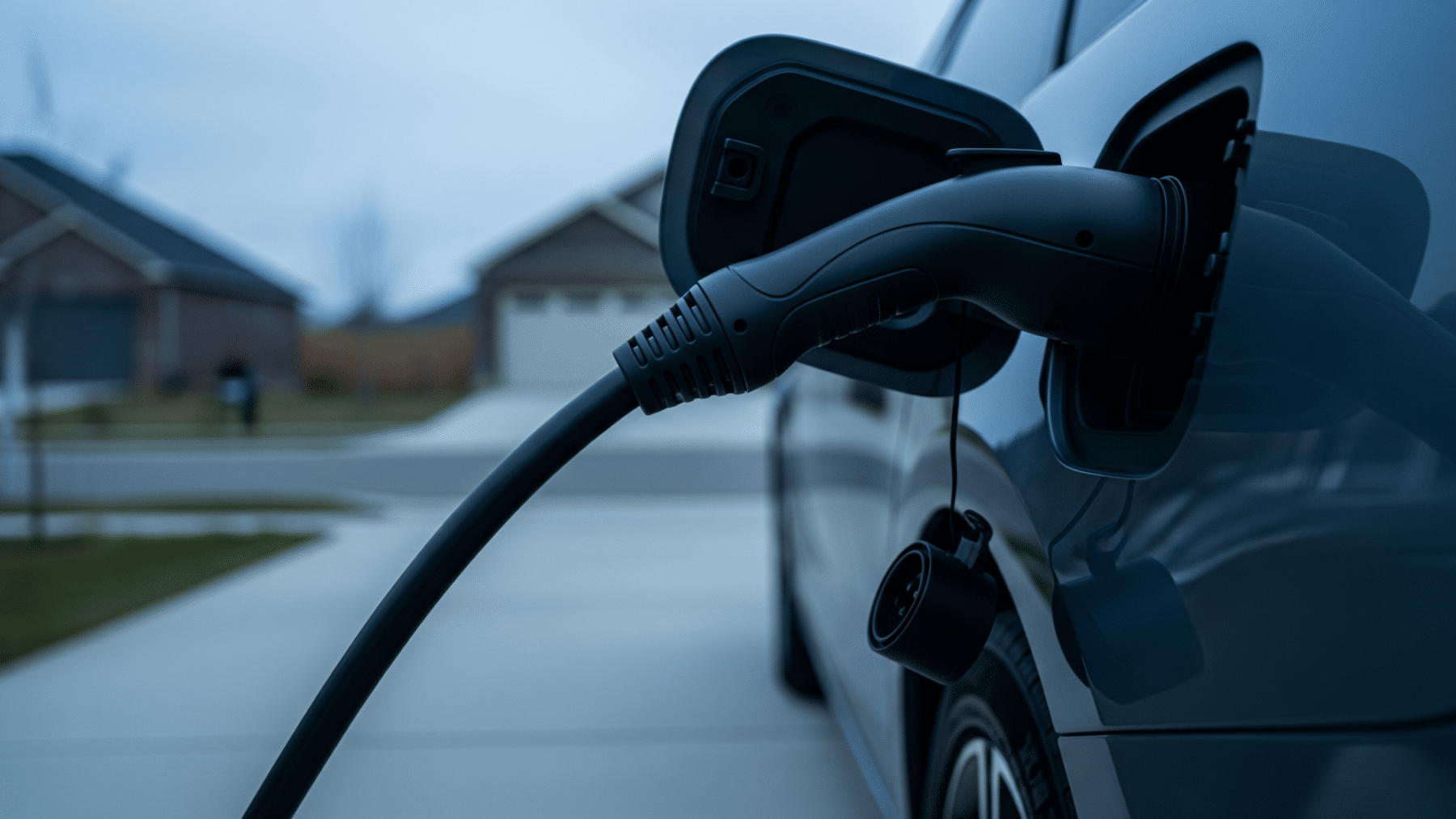
Every evening, millions of American drivers pull into the driveway, uncoil a cable and plug in their car. It feels routine. Across the whole grid, it is anything but.
The roughly 5 million electric vehicles registered on American roads are simultaneously driving the need for grid upgrades and providing utilities with a powerful tool to defer those expenses.
Those two facts are now colliding in real time, and a new set of official numbers puts a hard dollar shape on who wins and who loses.
A number so large it has utilities rethinking their whole planning cycle
According to the IEA, global electricity demand from EVs could exceed 1,500 terawatt-hours by 2035, growing around sixfold from 2025 levels.
To put that in perspective, 1,500 terawatt-hours is roughly double the electricity that the entire United States currently generates from wind and solar combined, a scale that makes grid planners sit up, even though globally it would add only about 4 percent to total electricity demand in 2035.
Despite the relatively low share of total demand today, EV and data center demand growth influences the load factor of the system, which is the ratio of the average system load to peak.
Shift the load factor and you shift what every American pays on their bill. That is the uncomfortable arithmetic buried in planning documents most people never read.
Why the timing of a plug-in matters more than the plug itself
The problem is not the total energy. It is the hour.
U.S. utilities are working with third-party software providers and automakers to develop and scale managed charging programs that can spread out the EV charging load and avoid creating peaks that stress local systems, helping to defer infrastructure upgrades that drive up rates.
An upgrade deferred is a rate hike avoided. That trade-off is billions of dollars sitting inside a timing decision made in millions of American driveways every night.
Planning, permitting and completing new grid infrastructure can take anywhere from 5 to 15 years, whereas EV charging infrastructure takes only 1 to 2 years to build.
At the same time, prices for key grid components have nearly doubled over the past five years. The grid cannot simply be built fast enough to chase the chargers. Something else has to give.
The distribution problem that is already showing up at the substation level
Planners are not dealing in hypotheticals anymore.
By 2030, 7 substation banks out of 779 within National Grid’s New York service territory alone are projected to experience EV load growth at 50 percent or more of their currently available capacity.
By 2035, 14 substation banks may be overloaded by EV loads taking up 100 percent of their existing headroom. That is one utility in one state. Scale that nationally and the picture sharpens quickly.
The race is on between the speed of EV adoption and the speed of grid investment. For most of the past decade, the grid has been losing that race.
This is why the federal charging funding battle that froze and then unfroze billions in infrastructure money has had real consequences on the ground: every delayed charger is also a delayed grid-impact study. The search for a market-based answer has never been more urgent, and in 2025 that answer finally arrived in a commercial form.
The tariffs that just turned parked cars into a grid asset with a revenue line
The first commercial offers for vehicle-to-grid (V2G) for private EV owners appeared in 2025, although there are few V2G-capable models available, the regulatory landscape for V2G remains fragmented, and standards are not yet clear.
That is the IEA’s own language in its Global EV Outlook 2026, published in May 2026. The report marks 2025 as the year V2G crossed the line from pilot project to real commercial product, with early tariffs in leading markets, primarily in Europe, offering owners free home charging in exchange for grid access.
The mechanic is simple: a bidirectional charger lets the car push electricity back to the grid when demand peaks and prices spike, earning the owner a payment instead of adding to the crunch.
With the rollout of smart and bidirectional charging, EV owners can reduce charging costs and, in some cases, generate revenue by participating in grid services such as frequency regulation.
Load shifting and V2G capabilities provide substantial electricity system benefits, helping reduce peak demand and potentially limiting the need for future grid investment. That last clause is the one that matters to ratepayers: grid investment that does not happen is a rate case that never gets filed.
Given the string of record battery storage build-outs already reshaping the grid, V2G adds a distributed layer that no central plant can replicate: cars that are already paid for, already parked and already connected.
Who gains, who loses and what the grid looks like when cars become power plants
The winners are clear in the near term: utilities that successfully enroll V2G fleets can defer substation upgrades worth hundreds of millions of dollars. Drivers with compatible vehicles collect payments for sitting in a parking lot.
The losers are the business models built entirely around one-way fast charging without any grid-services layer. That market assumed EVs are pure consumers. The IEA’s 2026 report says that assumption is now commercially obsolete.
The barriers are real. V2G-capable models remain few, the regulatory landscape remains fragmented, and standards are not yet clear.
But the commercial threshold has been crossed. What comes next is the standards fight, the rate-design battle and the race among automakers to make every new model bidirectional by default.
The car in the driveway is no longer just a load. It is, slowly and unevenly, becoming part of the grid itself.
