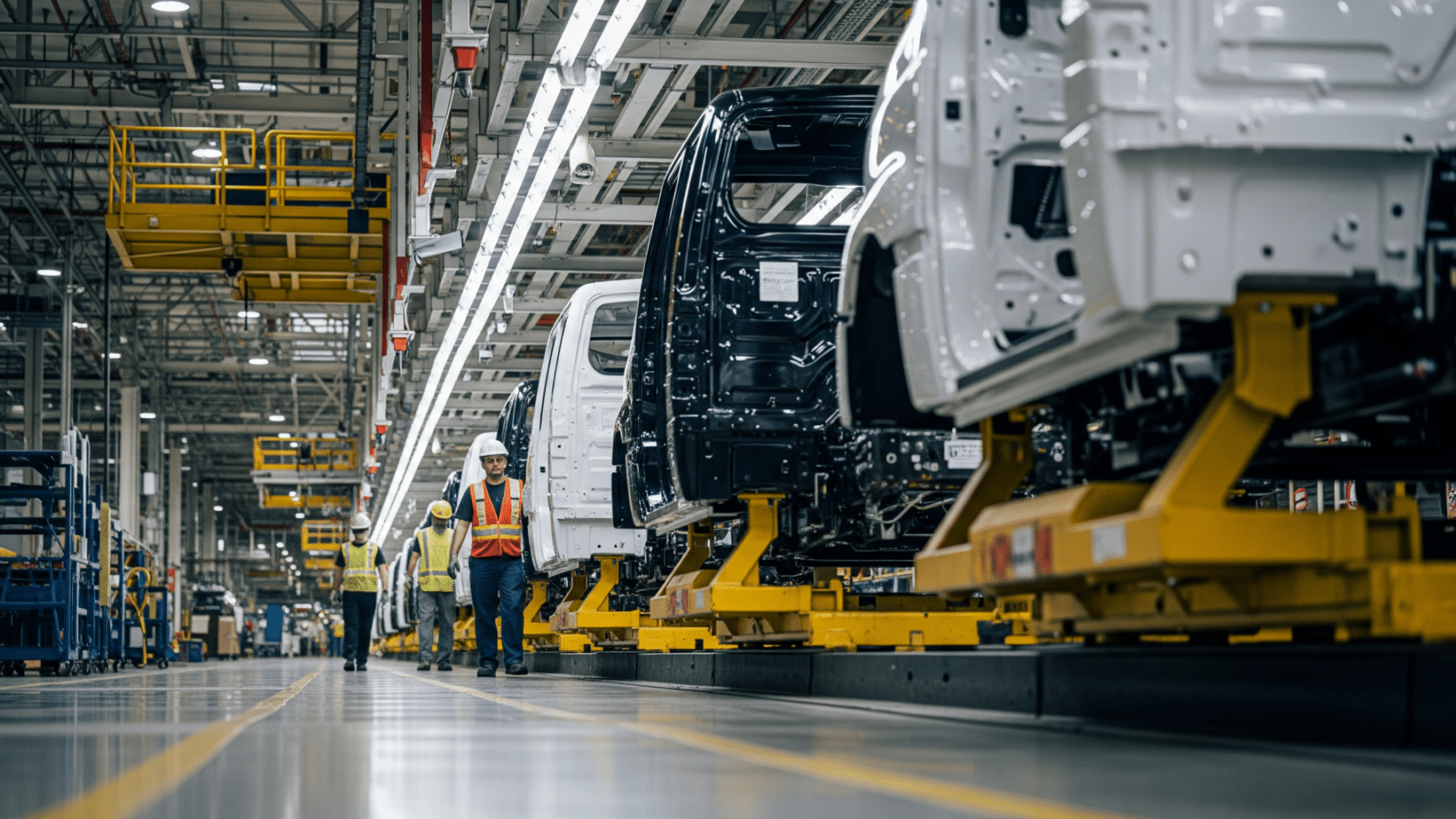
Toyota Motor North America announced on July 6, 2026, that it will invest $3.6 billion to expand its San Antonio manufacturing campus with a second vehicle assembly line to support the Tacoma truck. The move shifts Tacoma assembly from the company’s Baja California facility in Mexico to Texas.
A second assembly line doubles the campus
The expansion will create 2,000 new jobs and add 2.5 million square feet to Toyota Texas, doubling its size by 2030. The second vehicle assembly line will be located on the existing San Antonio campus.
The expansion will enable Tacoma assembly alongside the Tundra and Sequoia and support rear axle production. The campus also recently gained a new rear axle plant, which will begin production soon.
This expansion brings Toyota’s total investment in San Antonio to $8.3 billion since breaking ground in 2003. A May 15, 2026, filing with the Texas Comptroller of Public Accounts had put the project’s cost at $2 billion, making the confirmed $3.6 billion figure 80 percent higher than that earlier figure.
Tacoma shifts from Baja California to Texas over four years
Toyota Motor North America will transition Tacoma production from Toyota Motor Manufacturing Baja California to the expanded Toyota Texas plant over an approximate four-year period. Toyota has two major Tacoma production sites in Mexico: the older Baja California plant and the newer Guanajuato plant. The Baja California facility has been part of the Tacoma story for roughly two decades, while the Guanajuato plant began producing Tacomas in 2020. That newer Guanajuato plant is not part of this Texas production shift. Toyota is not moving all Tacoma production from Mexico to Texas; it is moving production out of the older Baja California facility while keeping the Guanajuato operation in place.
The San Antonio plant currently produces the Toyota Tundra full-size pickup truck and the Toyota Sequoia SUV.
The Tacoma is the top-selling midsize pickup in the U.S., making it a high-stakes production move for the brand.
The new facility will enable increased flexibility for the plant through advanced manufacturing technologies and will align with Toyota’s broader North American operations.
Incentives, trade policy and a broader U.S. commitment
The state of Texas, Bexar County, and the City of San Antonio assembled an incentive package worth at least $303 million, a combination of property tax incentives, related infrastructure promises, and various grants. Potential plans to expand the San Antonio plant, codenamed Project Orca, were first surfaced in a filing Toyota submitted to the Texas Comptroller of Public Accounts. The filing described a “highly competitive” and ongoing site-selection process. Throughout the process, public and company officials did not disclose information about competing sites evaluated under that codename.
The move reduces Toyota’s exposure to uncertainty regarding U.S. trade policy with Mexico and Canada. Toyota said it remains committed to its operations throughout the U.S., Canada, and Mexico, and encourages a quick resolution to USMCA to make the North American region globally competitive.
The San Antonio investment is part of Toyota’s November 2025 commitment to invest up to $10 billion in its U.S. plants over the next five years.
Toyota Motor North America President and CEO Ted Ogawa said, “Toyota’s continued investment in North America is a testament to our confidence in the region’s workforce, innovation and long-term growth potential.” He added: “By expanding our San Antonio plant, we are deepening our commitment to American manufacturing, creating meaningful and sustainable jobs, while advancing our mission to deliver high-quality vehicles that meet the changing needs of customers today and into the future.”
Industry backdrop and supply chain ripple
The announcement adds to a broader wave of domestic production commitments across the auto sector. As automakers race to localize supply chains, Micron’s chip deals with seven Tier 1 automotive partners signal how deeply manufacturers are working to secure every link in the production chain ahead of expanded output.
The Toyota Texas expansion also reflects a wider industry push to align factory footprint with tariff realities. With commercial vehicle output rising across manufacturers in the first half of 2026, the pressure to invest in domestic capacity is intensifying across the sector.
Toyota said the new facility will enable increased flexibility through advanced manufacturing technologies, and the automaker noted it remains committed to operations throughout the U.S., Canada, and Mexico while encouraging a quick resolution to USMCA to keep the North American region globally competitive. Construction timelines for the second assembly line have not yet been disclosed by Toyota’s official newsroom.
