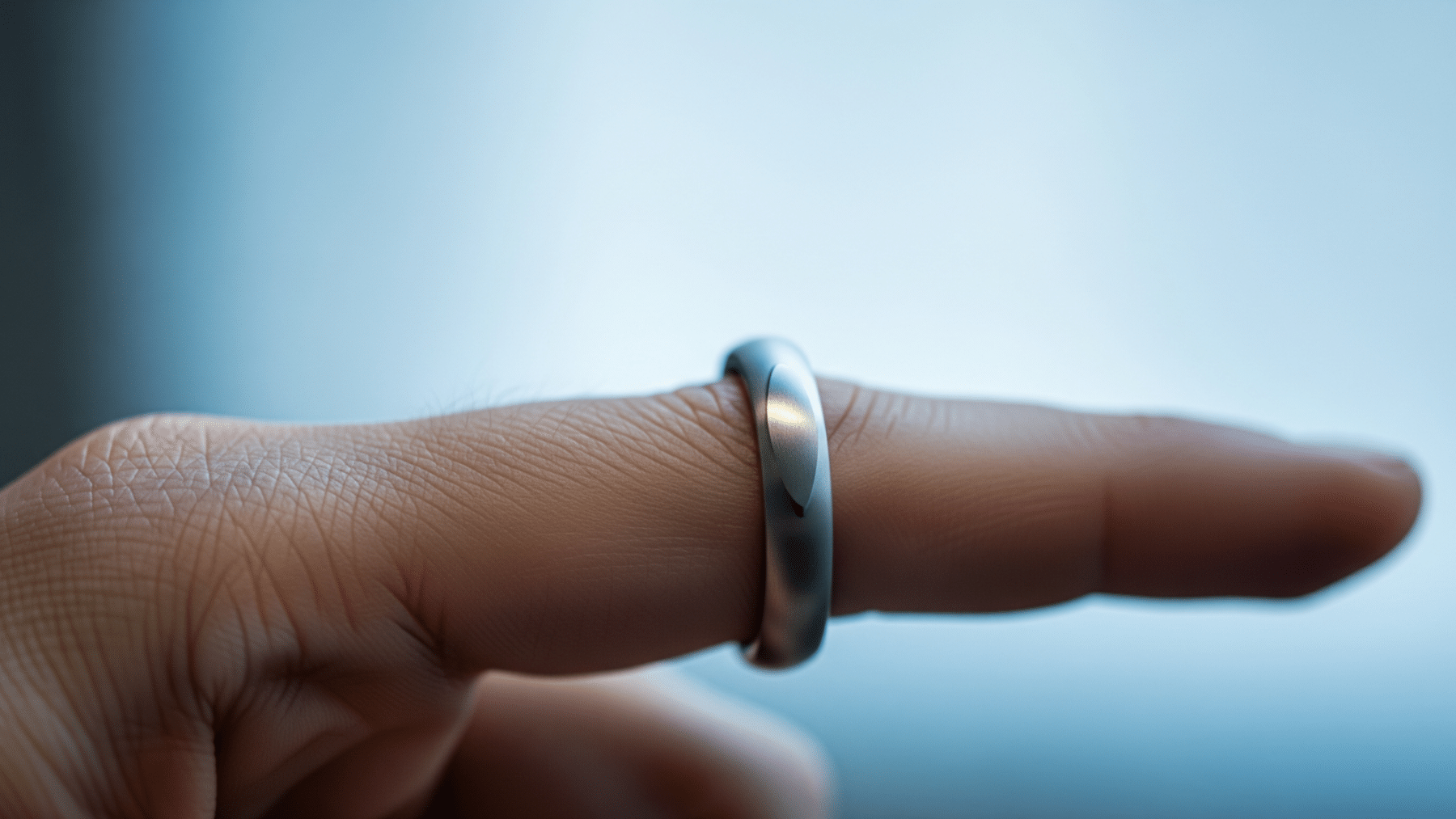
Most people walk past it without a second look.
It sits in a small tray near the register, a slim loop of titanium roughly the width of a wedding band, smaller than anything else in the wearables aisle.
It has no screen. No buttons. No strap to adjust.
And yet the numbers now attached to this overlooked finger ring are rewriting what the entire wearables industry thought it understood about where growth lives.
The gadget category almost nobody put in their forecast
When analysts first mapped the wearables boom, smartwatches dominated every chart.
Smartwatches commanded the largest revenue share within the smart wearable market, with fitness bands taking the next slice and AR glasses earning the boldest headlines.
Smart rings were, at best, a footnote, a novelty for biohackers and early adopters willing to pay a subscription just to read their own sleep data.
That framing is now outdated. Very outdated.
What a finger-worn sensor can actually do in 2026
The modern smart ring is a dense stack of sensors packed into a form factor smaller than a coat button.
Smart rings provide users with real-time data on metrics such as heart rate, sleep patterns, and activity levels, catering to the growing consumer demand for health-conscious devices.
New-generation smart rings increasingly include support for fertility tracking and women’s health features, pushing the category well beyond basic step counting.
Crucially, the ring never needs to be charged every night, never buzzes with notifications, and never glows at a dinner table.
For millions of users, that quiet invisibility turns out to be the entire point.
The market nobody was watching started growing fast
Shipment numbers tell the story clearly.
According to IDC data reported by Bloomberg, smart ring shipments were on track for a 49% jump in 2025, far outpacing an estimated 6% gain by smartwatches.
That rate of acceleration is faster than any other mainstream wearables sub-segment tracked by major research firms.
It is also the kind of growth curve that changes investor math, and the broader wearables race, from eyewear to rings, is drawing serious capital at every level of the stack.
The dollar figure analysts just put on the tiny ring
Here is the number that reframes the whole category.
Oura was on track to reach approximately $1 billion in revenue during 2025, with CEO Tom Hale confirming the target to CNBC, highlighting the growing commercial weight of the smart ring category.
One company. One product. A ring.
As of mid-2026, the company was on pace to surpass 5 million paid members, and Oura’s valuation reached roughly $11 billion following its October 2025 Series E funding round, ahead of a confidentially filed IPO.
That valuation figure, for a device most consumers still treat as a curiosity, lands in the same range as many mid-sized software platforms. The kind of number, as investor rounds across tech in 2026 have shown, that signals a category has moved well past novelty.
According to Global Market Insights, the global smart rings market is expected to grow from $1.01 billion in 2026 to $7.8 billion in 2035, at a CAGR of 25.4%.
Oura led with over 76.4% market share in 2025, per Global Market Insights.
And the competition is arriving fast. In October 2025, Reebok entered the smart ring market with the launch of its smart ring in partnership with F45 Training, integrating health and performance tracking into its connected fitness ecosystem.
Why the ring’s moment may only be getting started
The case for the smart ring rests on something simple: it is the only health-tracking device most people can wear around the clock without noticing it.
The integration of artificial intelligence into the smart ring is revolutionizing wearable tech by enhancing capabilities and user satisfaction, with AI-driven algorithms enabling intelligent health monitoring and offering personalized insights and recommendations.
Oura has increasingly positioned itself as a preventive health platform, expanding its sensor data into broader diagnostics integrations and partnering with organizations across health, wellness, and commercial sectors globally.
The device that looked like a novelty next to the smartwatch display is now writing its own chapter of the wearables story, one billion-dollar year at a time.
