The pitch sounds almost too good. A contractor shows up, explains that a geothermal heat pump will heat and cool your home for decades, and then slides a number across the table: the federal government will cover 30 percent of the cost.
For a typical installation, that savings runs to several thousand dollars.
But there is a catch, and it is a big one. Most homeowners getting quotes right now have no idea it is there.
The appliance that promises to outlast everything else in your mechanical room
A geothermal heat pump, also called a ground-source heat pump, does not burn anything.
It does not create heat at all. It transfers heat between your home and the ground using a buried ground-loop system.
Underground loops can last up to 25 to 50 years, while the indoor heat pump unit typically lasts 20 or more years. That longevity is a genuine selling point.
So is the efficiency claim. Because the system moves heat rather than generates it, monthly bills drop significantly compared with a gas furnace or a standard electric system.
The industry has been growing fast, attracting billions of dollars in private capital in recent years as next-generation geothermal projects push toward commercial scale.
The price tag that stops most buyers cold
None of that erases the upfront number, which is genuinely large.
A geothermal heat pump system costs about $25,500 installed for a typical 3-ton residential project in 2026, with most homeowners paying between $20,000 and $27,000 in standard soil conditions.
That assumes average soil conditions. The same 3-ton system that runs around $22,000 in flat Indiana farmland can exceed $35,000 or more in hard-rock terrain.
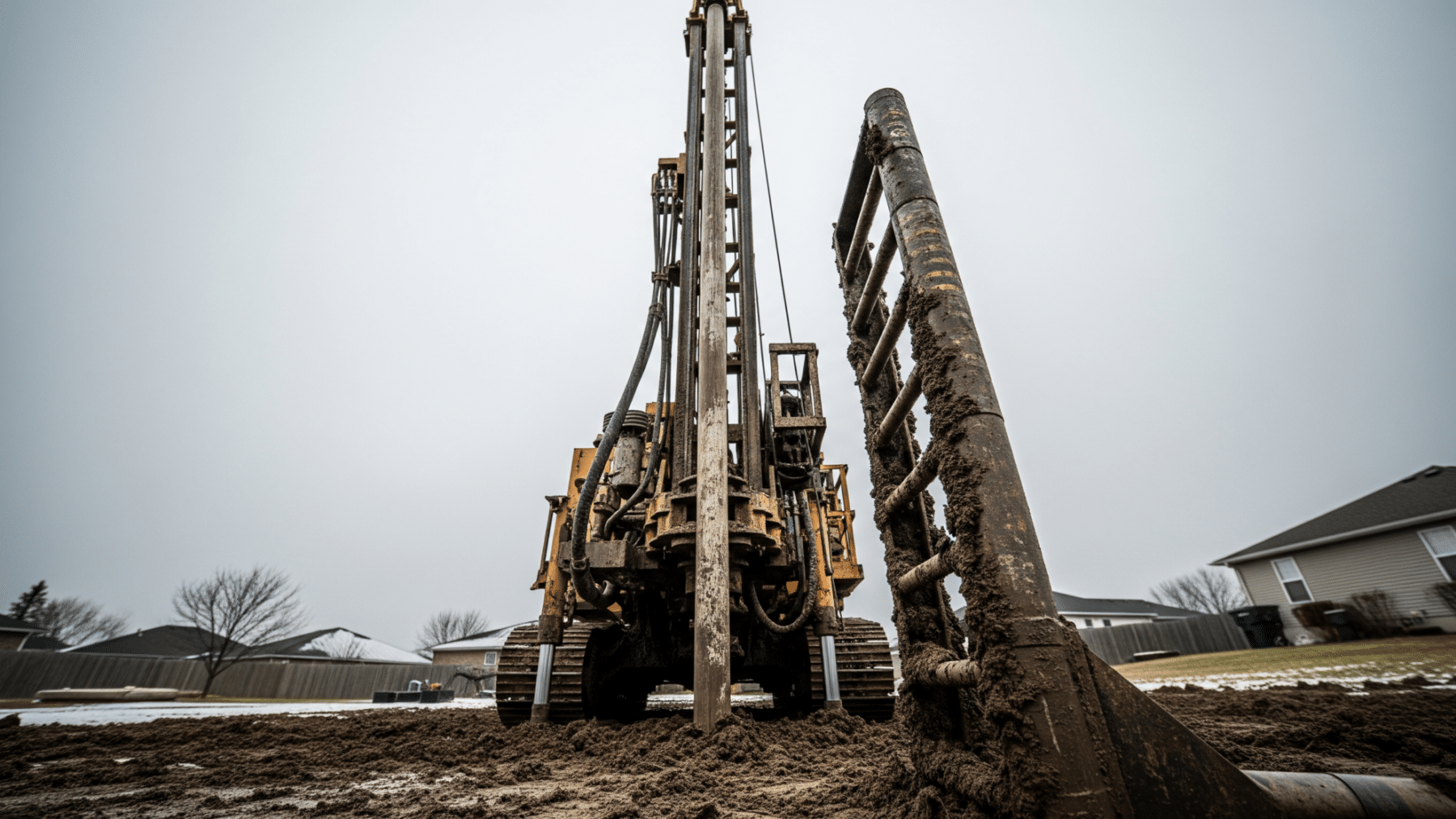
The ground loop, drilling, pipe, and fluid, accounts for the largest single share of the total bill, often approaching half the installed cost or more.
If your home already has a well-maintained duct system, you may connect without major modifications.
But if ducts are undersized or poorly insulated, budget an additional $1,400 to $5,600 for ductwork upgrades.
Homes without any ductwork can add $8,000 to $15,000 to the total.
For years, the answer to all of that sticker shock was the same three words: federal tax credit.
Why the credit made the numbers work for so many families
Congress built the math into law. The Residential Clean Energy Credit, commonly known as the Section 25D credit, offered homeowners a 30% tax credit for geothermal projects.
On a $25,500 system, that is roughly $7,650 straight off a tax bill.
The Inflation Reduction Act of 2022 set the 30 percent residential clean energy credit at that rate through 2032, with a gradual phase-down through 2034. Contractors quoted it as a near-certainty for anyone buying in the next decade.
It was the single biggest financial argument for pulling the trigger on an expensive system, and it was baked into millions of sales conversations across every state.
The geothermal industry was counting on that runway. So were the homeowners who got the bids, researched the payback period, and put down deposits.
Congress, meanwhile, had other plans. As the House passed its geothermal research bill on one track, the bigger fiscal legislation was moving on another.
The law signed on July 4th, 2025, that most buyers never saw coming
Here is the catch that is now landing in contractors’ inboxes and homeowners’ email threads.
The residential credit under Section 25D ended for expenditures made after December 31, 2025, thanks to the One Big Beautiful Bill Act, signed July 4, 2025.
This is a significant acceleration of the phaseout, ending the credit nearly a decade earlier than the IRA had legislated, the credit had been available on qualifying items placed in service through 2034, at a 26% rate in 2033 and 22% rate in 2034.
And the timing rule makes it even sharper. Per IRS guidance, if installation is completed after December 31, 2025, the expenditure is treated as made after that date, which prevents the taxpayer from claiming the Section 25D credit, regardless of when the contract was signed or the deposit paid.
A contract executed in November 2025 with system commissioning in February 2026 does not qualify for Section 25D. That is a real scenario that played out across the country during the winter installation backlog.
Incomplete IRS figures show at least 80,730 households claimed the credit for a geothermal system in 2023, with an average credit of just over $12,000, a measure of the market scale that has now lost its primary federal incentive.
But the bill also opened the door to new business models that could reshape the market, especially for contractors willing to adapt. From the continuation of commercial tax credit eligibility to a long-sought leasing pathway for residential systems, the industry now faces a critical pivot point.
But the residential buyer getting a home-heating quote today gets none of that direct federal credit.
What the math looks like now, and where the industry goes from here
The payback picture shifted sharply. With $8,000 or more in combined incentives, payback drops to five to eight years and geothermal remains an excellent investment.
Without those incentives, payback extends to 14 to 18 years.
Some relief still exists. For 2026 buyers, the savings picture is now built from state tax credits, utility rebates, the federal HEEHRA and HOMES rebate programs administered by state energy offices, and, for new construction or whole-home retrofits, the commercial Investment Tax Credit accessed via third-party ownership leasing.
New York, for example, offers a 25% state income tax credit on the total cost of a geothermal system. The cap was doubled to $10,000 for systems placed in service after July 1, 2025, making it one of the more generous state-level offsets still available to residential buyers.
The broader technology is still advancing fast. Although the United States leads the world in geothermal electricity capacity, DOE analysis points to enormous untapped potential for reliable, flexible geothermal power on the U.S. grid in the decades ahead. And commercial-scale enhanced geothermal projects are pushing toward the grid right now.
But for a homeowner sitting across from a contractor today, the single most important number in that sales conversation, the 30 percent credit, is gone. The honest bid now starts with that fact, not a footnote.
