Something shifted quietly at American car dealerships in the first half of 2026, and the numbers have now made it official.
It did not involve a headline product launch or a factory ribbon-cutting. It happened one sale at a time, across thousands of lots, as ordinary buyers made a very ordinary calculation about gas prices and monthly payments.
The result landed in a government report, and it rewrote the story of where the US auto market is actually heading.
The quarter that changed the scorecard for every powertrain on the market
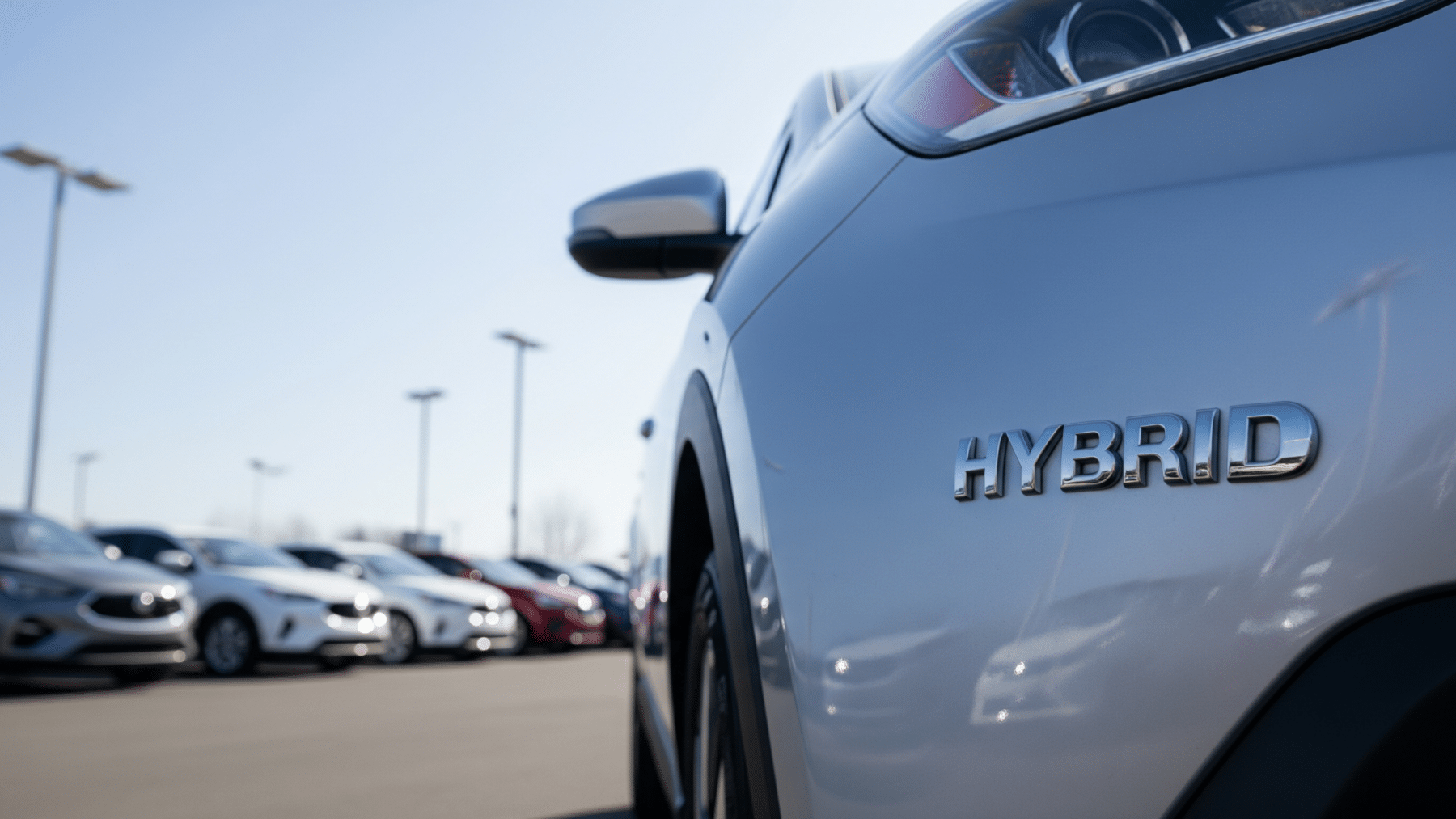
Hybrid electric vehicles hit a record 16 percent share of new US light-duty vehicle sales in Q2 2026, according to the US Energy Information Administration’s latest analysis, the strongest showing the segment has ever recorded.
Combined, hybrid, battery electric, and plug-in hybrid vehicles together accounted for 24 percent of all new light-duty sales in the quarter, up from 22 percent a year earlier.
That headline figure, though, hides a sharp divergence underneath it.
One group of buyers kept climbing while another quietly pulled back
The increase in overall electrified vehicle share was driven almost entirely by rising demand for conventional hybrids.
Battery electric vehicles, by contrast, lost market share, falling to 6 percent of new sales from 7 percent a year earlier.
BEV sales declined following the expiration of federal tax credits in September 2025.
Hybrids are appealing to buyers precisely because they do not require connection to the grid, and, unlike battery electrics, they were not eligible for the federal tax credits that expired last year, meaning their rising sales happened without any purchase incentive at all.
That last detail is the one industry analysts keep flagging.
Why gas prices became the most effective hybrid salesperson in the country
The national gas average stood at $4.10 per gallon in late July 2026, up 95 cents from a year ago, according to AAA and EIA data.
Historically, hybrid versions of cars have cost more upfront than gas vehicles because of their more complex powertrains, but buyers can save somewhere between 30 and 50 percent on fuel costs, and can recover the added upfront cost in as little as two to three years.
That math is now doing the selling.
Hybrid sales climbed 26 percent year over year in Q2 and reached 1,020,296 units through June 30, more than double the 426,502 battery-electric vehicles sold over the same stretch.
Three automakers are capturing most of that wave. None of them are American companies. And one in particular has numbers that most people in the industry did not see coming at this scale.
For those tracking how Toyota targets 5 million hybrid sales globally in 2026, the domestic competition is now just as fierce.
The single model whose hybrid version just eclipsed an entire luxury brand
Honda’s CR-V Hybrid is the clearest symbol of where this market has landed.
The CR-V is the number one SUV in America in 2026, with hybrid trims representing 55 percent of sales for an all-time best first half, totaling 124,017 hybrid units through June, according to American Honda’s official first-half sales release.
Those 124,017 CR-V Hybrid units sold in the first half of 2026 alone outsold the entire Acura division, which moved 69,715 vehicles over the same period.
A single gas-electric version of a compact SUV, outrunning a full luxury brand, model for model.
Hybrid trims also represented 43 percent of Accord sales and 30 percent of Civic sales through the first half.
The trend continued into July. Honda recorded record hybrid sales of 36,609 units in the month, with the CR-V at 54 percent hybrid mix and the Accord at 41 percent hybrid mix.
Honda’s lone battery-electric model, the Prologue, meanwhile sold just 1,554 units in July, a 75.4 percent drop from the same month last year.
What the shift means for the brands that did not bet on hybrids early enough
The market math is now closing doors.
Toyota, Honda, and Hyundai Motor Group together dominate the US hybrid market, with hybrids rising to nearly three times the share of pure EVs in the first half of 2026.
Hybrid share reached a record 16 percent in Q2 and approximately 15.4 percent across the full first half, according to EIA data and estimates from market research firm Omdia, figures that would have seemed optimistic projections just two years ago.
Brands that did not build out hybrid lineups early are now watching rivals widen their lead with every sales cycle.
The buyers driving the trend are not early adopters or tech enthusiasts. They are ordinary shoppers running a simple comparison: pump prices today versus a lower fuel bill every week for the next three years. Right now, that calculation keeps pointing at the hybrid sticker.
