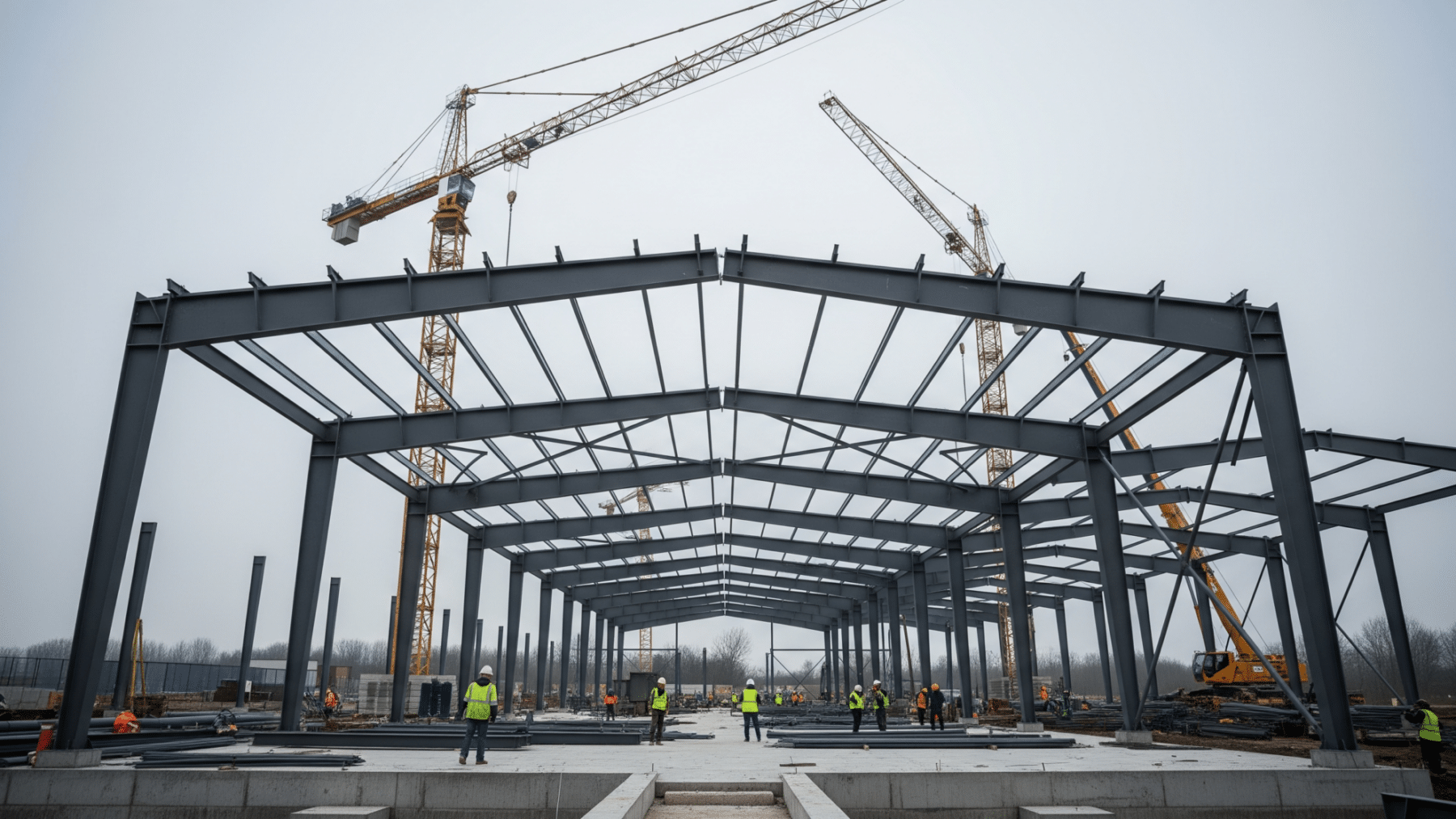
Daimler Truck North America announced plans Aug. 6 it plans a new US truck plant, with construction starting by year-end 2026 and operations beginning in 2029. The announcement is the company’s first public commitment to a greenfield commercial vehicle manufacturing facility in the United States.
What the company announced
Daimler Truck North America LLC (DTNA), a Portland, Ore.-based commercial truck manufacturer, announced plans to build a brand-new, state-of-the-art manufacturing facility in the United States, reinforcing its long-term strategy to support customer demand, enhance operational flexibility, and strengthen its production capabilities across North America.
Daimler Truck North America said Daimler Truck’s supervisory board approved plans for the new greenfield facility in the US.
DTNA president and CEO John O’Leary told reporters in a press conference: “We had our quarter-end supervisory board meeting and I’m proud to announce that we got the approval for the plans to build a new truck manufacturing plant in the U.S.” O’Leary said the new facility will be the company’s largest truck manufacturing plant in the US. O’Leary noted that while tariffs are part of today’s operating environment and were not ignored in the decision, they were secondary to broader long-term factors, with the facility’s completion target of late 2029 reflecting multi-year planning for market demand, plant modernization, and supply chain resilience.
The facility will utilize advanced, flexible manufacturing technologies to build both vocational and on-highway commercial vehicles. Highly adaptable assembly processes will allow DTNA to efficiently build a broad range of vehicle configurations while responding to changing market needs.
Site selection and timeline
Following final site selection, DTNA said construction is expected to begin in late 2026, with operations targeted to start in 2029. DTNA is evaluating multiple southeastern US sites and said supply chain access, workforce availability, logistics infrastructure, and long-term strategy will guide the final selection.
DTNA has not yet disclosed the location, investment amount, production capacity, or which truck models will be built there. Additional details, including the final location and employment projections, will be announced at a later date.
DTNA currently operates facilities in Cleveland, Gastonia, Mount Holly, and High Point, NC, and Gaffney, SC, and the company said its current plants remain critical to its production strategy. The new greenfield site is intended to expand, not replace, that network.
Portland operations and jobs
Daimler Truck North America will close Freightliner’s Swan Island plant in Portland, Ore., on Oct. 30, ending local truck manufacturing that began in 1947. The closure affects about 375 jobs, with production shifting to North Carolina and South Carolina.
Although truck production is ending, the company will continue employing thousands of people in engineering, testing, product development, and corporate operations in the Portland area, with Portland continuing to serve as DTNA’s North American headquarters. The company has said it will provide severance benefits, transition assistance, access to support resources, and opportunities to explore other openings within the company.
Jeff Allen, senior vice president of operations at DTNA, said the plant will provide “thousands” of jobs and support regional economic growth through supplier and community partnerships.
Market context
The investment reflects growing demand, as DTNA raised 2026 sales guidance and reported its first year-over-year quarterly sales increase in six quarters.
With tariff pressures weighing on the broader industry, DTNA’s commitment to domestic production adds manufacturing capacity on American soil. O’Leary indicated that tariffs were not a primary driver behind DTNA’s decision, framing the investment instead as a long-term response to market cycles and the need for a more flexible production network. Fleet buyers watching transaction prices will be following the site-selection process closely, given that domestic production volume is one factor that could influence commercial truck pricing over the medium term.
The plant has a supervisory board signature, with construction to start in late 2026, and headcount is projected in the thousands. Site selection is expected to provide the next major piece of the project, followed by more detail on investment, production capacity, and the vehicles that will eventually be assigned to the new facility.
