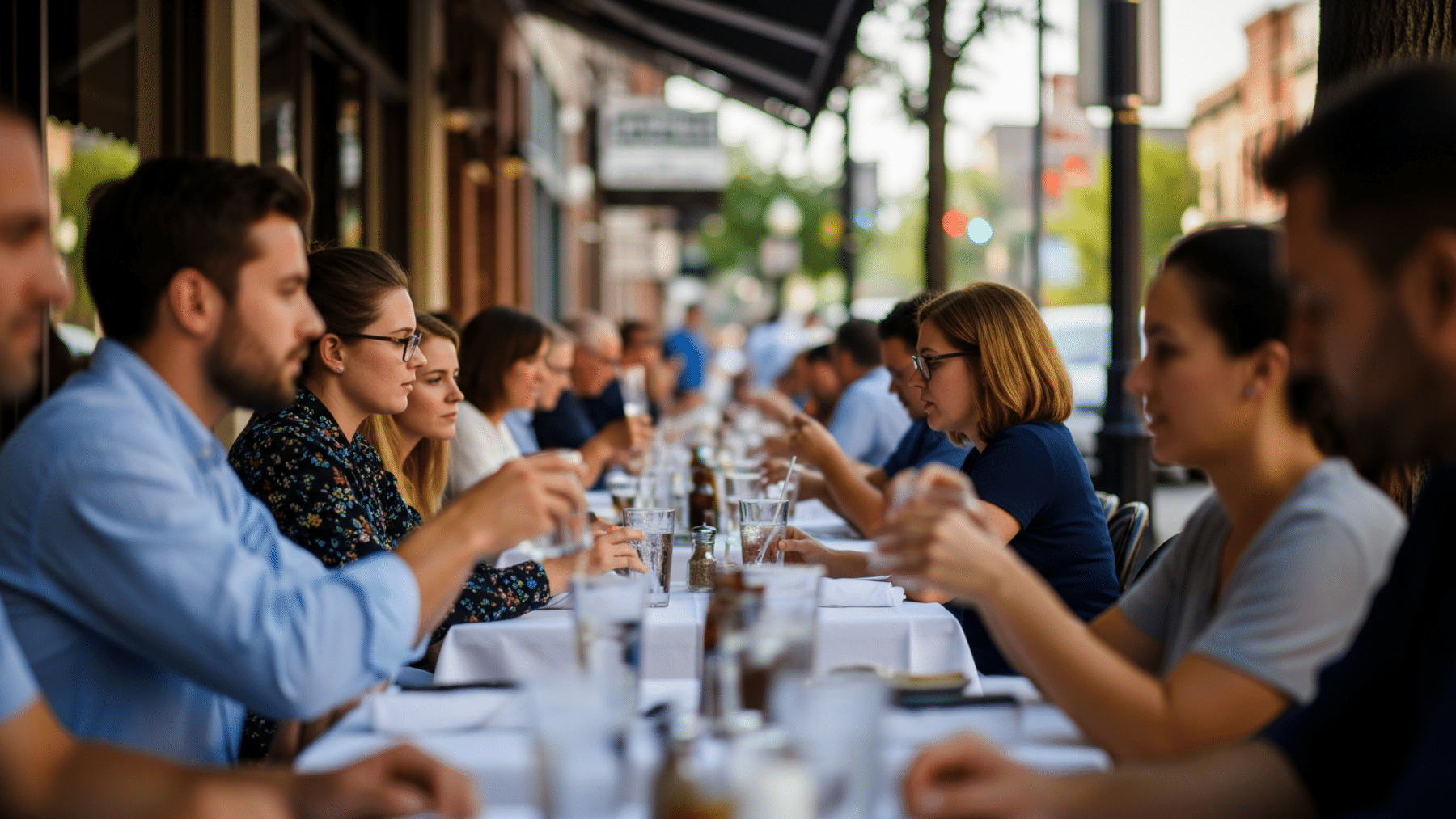
Dining out has ranked above every other leisure activity as the defining feature of the American summer trip, according to a new report from the National Restaurant Association. The 2026 Summer Tourism & Dining report, based on a May 2026 survey of more than 1,000 consumers, finds that 55 percent of consumers plan to take at least one overnight domestic trip this summer.
For most of these travelers, visiting a restaurant ranks as their most popular activity, beating shopping and sightseeing.
Restaurants ranked above beaches and sightseeing
Nearly all survey respondents, 98 percent of those planning domestic summer travel, said they expect to visit restaurants during their trips, making dining the most popular travel activity, ahead of shopping (85 percent), sightseeing (83 percent), and visiting beaches (76 percent).
An additional 11 percent of consumers expect to travel internationally, and 6 percent plan to do both. Younger adults, urban residents, families with children, and higher-income households are the most likely to travel this summer.
The finding carries weight for an industry that has navigated a difficult first half of the year. Business conditions for restaurants proved more challenging than expected, driven largely by sharply higher gas prices. The national average for a gallon of regular gasoline stood above $4 for nearly three months before dropping below that threshold in mid-June, putting additional strain on household budgets.
Despite that pressure, diners appear to have protected restaurant visits as a core part of summer plans. Industry-wide sales are projected at $1.55 trillion nationwide, according to the National Restaurant Association’s broader 2026 State of the Restaurant Industry report, which cited the desire to visit restaurants as budgets allow as a key driver of that growth.
How travelers plan to order
Most travelers plan to vary their restaurant usage while on the road. Some 93 percent plan to dine in at a restaurant, 90 percent plan to use takeout, delivery, or drive-thru options, and 84 percent plan to stop at a coffee shop or snack spot.
The breadth of those numbers suggests that summer travel spending flows across every restaurant format, not just sit-down dining.
The cultural weight attached to dining out continues to grow even at home. Separate consumer research by OpenTable points to rising interest in experiential dining, with diners seeking novelty and variety when eating out.
OpenTable also found that happy hour has returned as a significant draw, as diners seek value while dining out. That broader appetite for restaurant experiences appears to carry directly into how Americans structure their vacations, treating a memorable meal as an anchor activity rather than an afterthought.
According to the National Restaurant Association, consumers, particularly those in lower- and middle-income households, are increasingly stretched, contributing to a divergence in dining behavior. Higher-income diners are spending freely, while lower- and middle-income consumers are becoming more selective and dining out less often.
For restaurants, that split gives operators a clear target for summer promotions and menu positioning.
A $3.7 trillion economic footprint
Restaurants are a powerful driver of travel spending, part of a $3.7 trillion national economic footprint. That figure underscores why the association frames summer travel data as a bellwether for the whole sector.
For independent operators and regional chains, the report’s emphasis on local, memorable experiences points toward an opening. Travelers drawn to a destination for its food scene are, in effect, choosing a restaurant the way an earlier generation chose a landmark. That appetite for novelty is driving experiential dining trends, with more restaurants crafting curated experiences such as chef’s tables, tasting menus, and themed nights to meet demand throughout the season.
Americans’ growing habit of letting dining anchor how they spend their leisure time is consistent with what researchers have found about how Americans treat leisure spending as non-negotiable even under budget pressure, and it aligns with findings on how in-person food experiences retain a pull that digital alternatives have not displaced.
