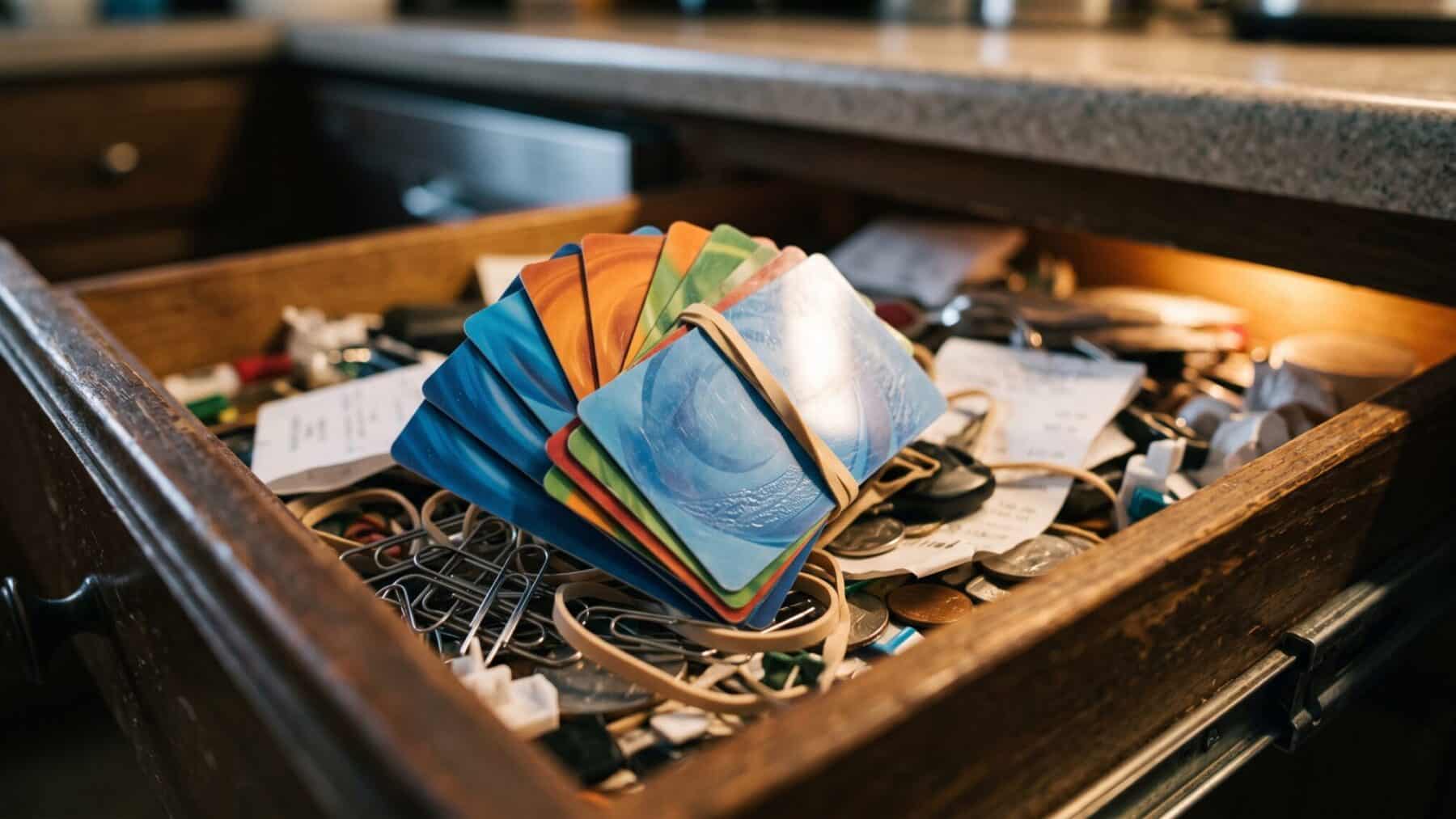
A plastic card slides into a kitchen drawer after the holidays.
Then another. Then a third, from a birthday no one quite remembers. The drawer closes, and the cards disappear from thought entirely. Multiply that scene by millions of households and a staggering pile of money appears, real earned value that simply goes nowhere. How does that pile keep growing so reliably every single year?
Why unused gift cards are a perfectly engineered money trap
The mechanics are straightforward and quietly brilliant for retailers. When a gift card is sold, the store collects the cash immediately. It only hands over goods when the card is redeemed. Every day a card sits unused, the retailer holds free working capital with no obligation to deliver anything.
The industry even has a polite name for money that never comes back: breakage revenue. Unredeemed balances that cross a retailer’s internal dormancy threshold convert directly into profit, no product required.
Because the card lives in a wallet or a drawer rather than a bank account, it carries none of the psychological weight of cash. Researchers who study consumer behavior note that people treat earmarked stored value differently from real money. It feels less urgent and far easier to defer. That mental distance is exactly what keeps the drawer shut.
What $27 billion in forgotten plastic actually looks like on the ground
Gift cards top the most-wanted gift list at 50%, with 77% of US consumers planning to buy them. Yet 43% of Americans hold at least one unused card, averaging $244 in unspent balance each. That combination, universally given and routinely forgotten, is precisely what inflates the national total to $27 billion nationwide.
To put that figure in everyday terms, it is roughly equivalent to every US household leaving two full tanks of gas money on a shelf and never going back for it. The average unused balance has climbed fast, up 30 percent from 2023, when it was $187.
The who-holds-what breakdown is counterintuitive. Higher-income individuals are most likely to sit on unused cards, with 55% of households earning $100,000 or more reporting unredeemed balances, more than any other income bracket. Lower-income holders are most likely to spend them. The people who least need the money are the ones leaving it sitting longest.
The research behind the $27 billion figure and what the data confirms
The figures draw on data from the National Retail Federation, Bankrate, Blackhawk Network and the Incentive Research Foundation. The Bankrate survey, conducted by YouGov in August 2024 among 2,373 US adults, is the primary source for the 43% figure and the $244 average balance, capturing gift cards, vouchers and store credits together.
The problem extends beyond gift cards alone. Industry estimates suggest a significant share of loyalty points go unspent each year, costing consumers billions in potential savings. Americans who already underestimate their monthly subscription spend by more than $130 are leaving this second pool of value completely untracked. Add it together and total unredeemed value across cards and points runs well into the tens of billions annually.
Where the habit breaks down and who it hits hardest
One complication is format. Consumers redeem digital gift cards in an average of just 16.8 days, compared to 35.3 days for physical ones. Physical cards get misplaced in the literal sense, buried under junk mail or shoved into the same drawer where receipts go to die.
Digital cards create a different trap: inbox clutter buries the email before the card is ever clicked. Legal protections exist but have limits. Under a federal law that went into effect in 2010, a gift card cannot expire for five years from the time it was purchased or from the last time someone added money to it. Yet 20% of people have had at least one gift card expire before redeeming it, making expiration the leading reason cards go unused.
Small residual balances are a significant driver of breakage. The $3.47 left after a partial redemption is easy to ignore, because no one drives to the mall to spend $3.47.
Meanwhile, self-gifting has jumped from 31% to 56% of gift card purchases in a single year, according to Blackhawk Network’s 2026 consumer research, meaning more people now buy cards for themselves as a budgeting tool. That makes stored-value blind spots structural rather than occasional.
What shoppers can actually recover and what remains genuinely at risk
The good news is that most of this money is not permanently gone. Any gift card from the past five years is most likely still valid. In at least 19 states, retailers must work with state unclaimed property programs to return money from unspent gift cards to consumers, and all 50 states and the District of Columbia run such programs. A quick search of a state’s unclaimed property portal can surface balances people forgot they ever had.
Selling unwanted cards is a real option too. Secondary markets have matured considerably, and resale platforms typically return 70 to 80 cents on the dollar for popular retailers. That is real money for a card that would otherwise expire untouched.
The deeper shift may be attitudinal. As long as gift cards feel like found money rather than real money, the drawer wins every time. Treating a card balance with the same attention given to a bank account, checking it, spending it deliberately, or selling it, is the only habit that closes the gap between the $27 billion that evaporates and the value Americans actually intended to give each other.
