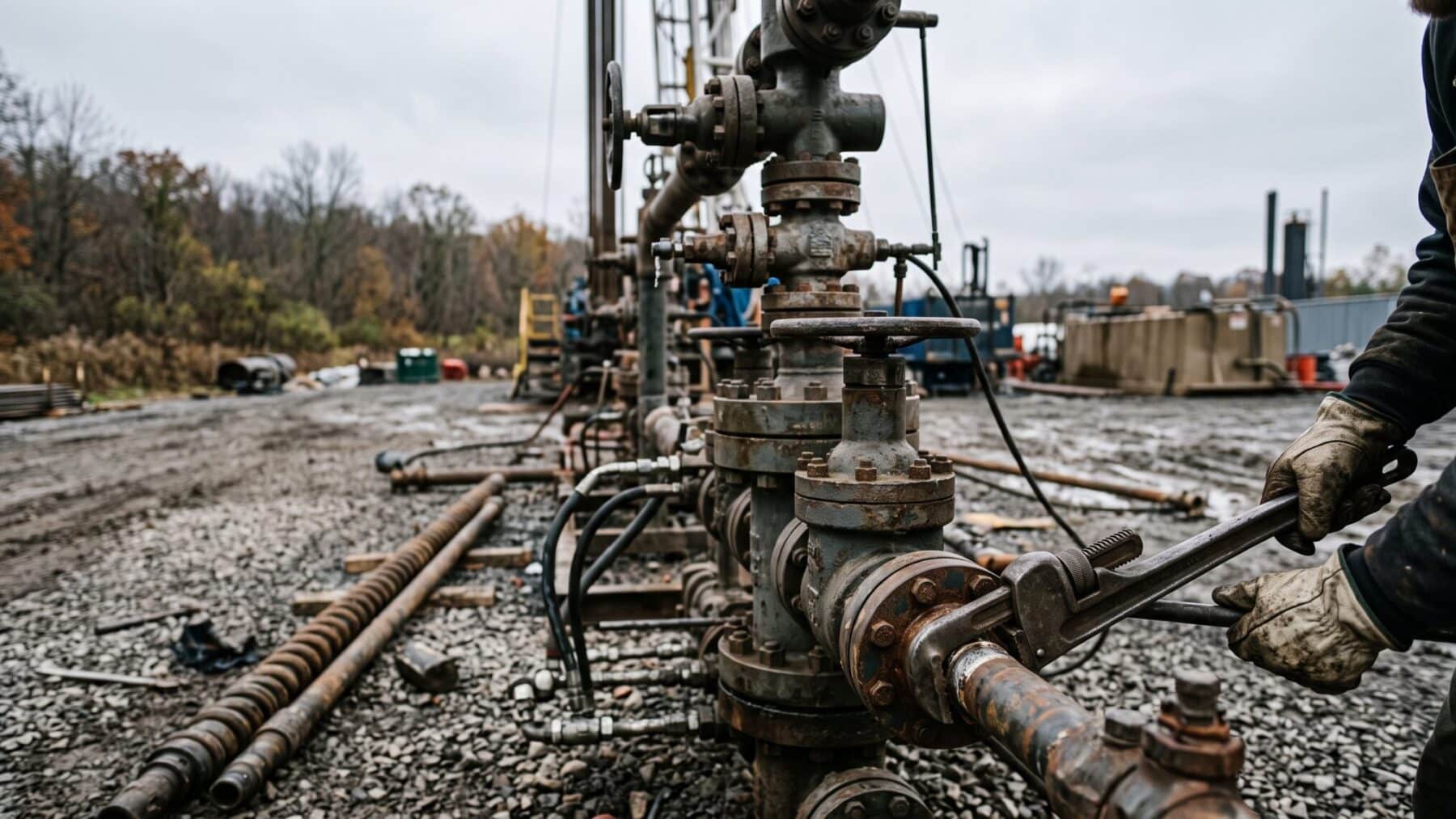
The U.S. Department of Energy has selected a $14 million enhanced geothermal systems demonstration project in Pennsylvania that will attempt to convert an existing horizontal shale gas well into a working geothermal power source, marking the first such pilot in the eastern United States.
First eastern EGS test in Appalachian shale
The U.S. Department of Energy’s Hydrocarbons and Geothermal Energy Office (HGEO) announced on April 14, 2026 a $14 million project to support field tests for enhanced geothermal systems (EGS). Led by the Pennsylvania Department of Environmental Protection, the project will leverage the significant thermal resources in the Appalachian Utica Shale to assess the efficacy and scalability of EGS in the eastern United States.
The project will include converting a horizontal shale gas well to geothermal, assessing optimal well orientations and placements, and testing various techniques to create the fractures necessary for a human-made geothermal reservoir.
The EGS pilot demonstration project will generate both electrical power and thermal energy for rural communities in Indiana County, in areas adjacent to legacy and active oil and gas development.
Indiana County sits in the western Appalachian region of the state, where decades of natural gas extraction have left behind a dense network of drilled formations that the project intends to repurpose.
Reusing oil and gas infrastructure
While geothermal has traditionally been concentrated in the western part of the country, where natural conditions are more favorable, this project is exploring whether existing oil and gas infrastructure can help unlock similar potential elsewhere.
That distinction matters commercially: the eastern U.S. holds no volcanic hotspots, but the Appalachian basin is among the most heavily drilled regions on the continent.
While underground heat exists everywhere, many locations lack adequate water or conditions that facilitate fluid flow necessary to recover that heat energy. EGS can be used to create a human-made underground reservoir to tap that heat.
The Pennsylvania project is designed to test whether that engineering approach translates into the sedimentary geology of the Appalachians, which differs substantially from the fractured hard-rock formations of the American West where most EGS research has been concentrated, including the ongoing work at Utah FORGE in Beaver County, Utah.
Pennsylvania DEP Secretary Jessica Shirley said the agency was “very excited about this opportunity to pilot an innovative solution to meet the energy demands of today and the future,” adding that “geothermal systems could supply the clean energy needed for economic growth and long-term grid resilience for our communities.”
Strategy and scalability
If successful, the project will offer a replicable model that could expand the use of EGS in more locations nationwide. This project is the second selection under the Office of Geothermal’s EGS Pilot Demonstrations opportunity.
Then-Assistant Secretary of the HGEO Kyle Haustveit said: “As the first enhanced geothermal systems demonstration site located in the eastern United States, this project offers an important opportunity to assess the ability of such systems to deliver reliable, affordable geothermal electricity to Americans nationwide.”
Demonstration projects are vital to help expand knowledge and data about EGS reservoirs and how they function, and to understand EGS in a variety of geographic locations, geologic formations, and subsurface conditions. Successful demonstrations will help spur further growth of geothermal energy.
The DOE’s Office of Geothermal had previously announced a separate funding opportunity of up to $171.5 million for next-generation geothermal field tests as well as characterization and confirmation drilling for geothermal resources.
That open solicitation anticipates making as many as 28 awards in the first round of applications. Individual awards may range between $4 million and $25 million.
Market context
The Pennsylvania pilot’s reliance on already-drilled wells could compress upfront capital further still by eliminating one of the most expensive phases of any geothermal project: exploration drilling.
Although the United States leads the world in geothermal electricity capacity with about four gigawatts, DOE analysis shows the potential for at least 300 gigawatts of reliable, flexible geothermal power on the U.S. grid by 2050. For grid operators juggling intermittency challenges, a firm dispatchable source carries a structural premium that wind and solar cannot match, a dynamic already reshaping contract structures as explored in GCN’s reporting on geothermal capacity factors against long-term power agreements.
Selection for award negotiations is not a commitment by DOE to issue an award or provide funding. Before funding is issued, DOE and the applicants will undergo a negotiation process, and DOE may cancel negotiations and rescind the selection for any reason during that time. The Pennsylvania DEP is expected to begin field work following completion of that process.
