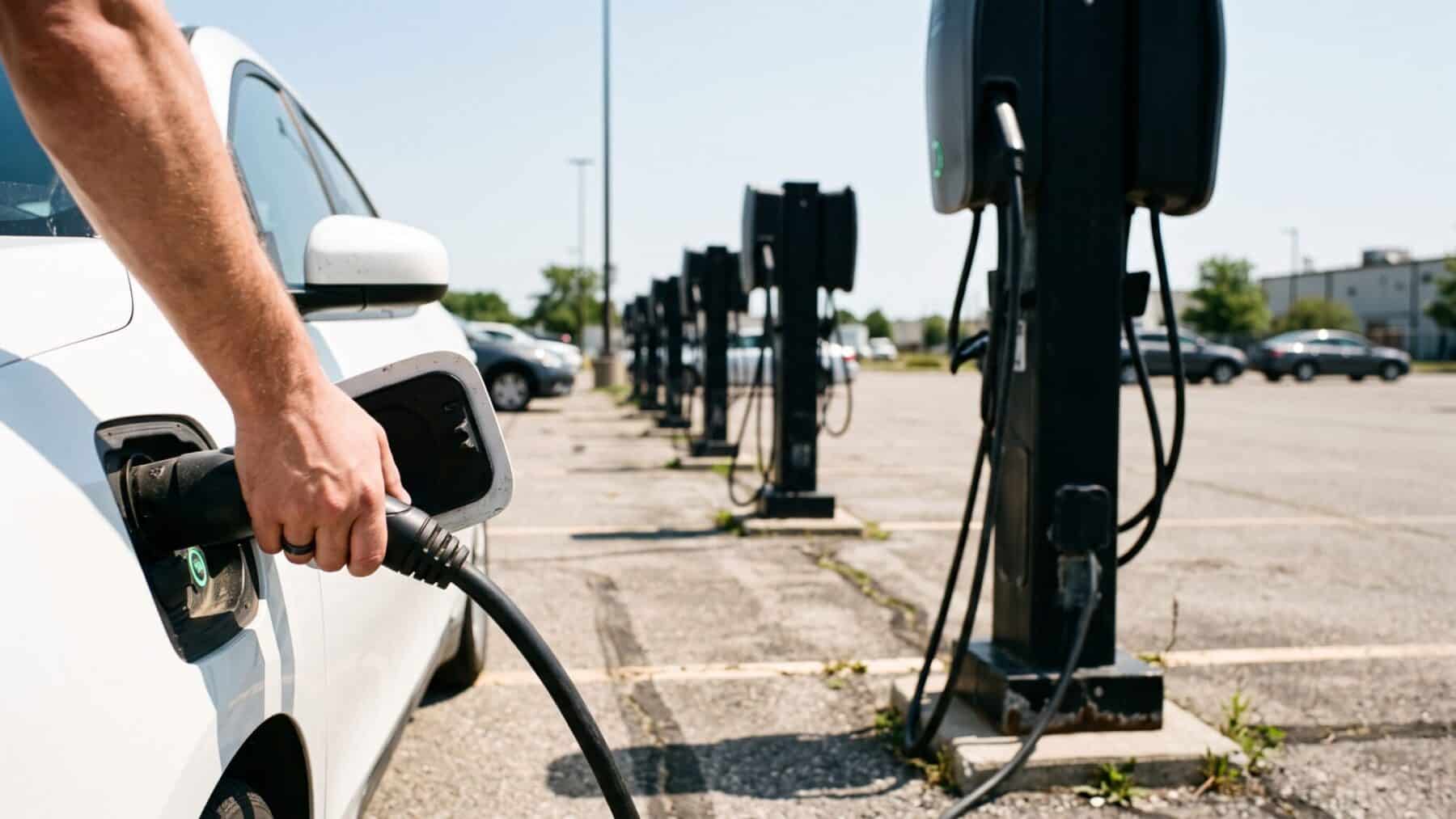
A new peer-reviewed study published in iScience proposes a data-driven framework for placing public electric vehicle charging stations at locations and times aligned with surplus solar generation, offering a grid-management tool that could reduce both peak stress and the carbon intensity of every charge.
The solar mismatch problem
Early EV adopters relied on home charging, creating evening loads poorly aligned with solar generation. Existing demand-side management strategies often rely on time-of-use pricing or automated control, which can limit equitable access. That mismatch has grown into a structural challenge for grid operators: the hours when drivers typically plug in are precisely the hours when solar output has already tapered off and fossil-fuel peakers are ramping up to meet evening demand.
In summer, cooling accounts for more than 50 percent of demand and over 70 percent of peak demand. Layering unmanaged EV charging on top of that cooling peak compounds the problem, requiring utilities to dispatch the most expensive and often most carbon-intensive generation on the grid.
Without controlled charging, EV charging demand may overlap with existing peak loads, further intensifying grid loads during peak periods and posing risks to the security and stability of the distribution system.
The newly published framework argues that as public charging is deployed, location selection may support charging when solar is abundant. The study was received November 29, 2025, revised March 11, 2026, and accepted July 29, 2026.
What the framework proposes
Utilities must incorporate EV charging demand alongside variable generation. This study develops a replicable, data-driven framework to identify candidate locations for public EV charging based on the overlap between observed visitation and grid-favorable charging hours.
The framework advances a different lever: steering public infrastructure investment itself toward sites and service windows that coincide with midday solar surplus, before any price signal is needed.
Many countries, including the United States, have analyzed the effects of EV charging on load distribution and proposed solutions including delayed charging, using EVs as stable power storage, shifting EV charging to daytime hours, and transferring EV loads from peak to off-peak periods through demand response. The new siting approach adds a proactive infrastructure planning layer on top of those reactive tools.
The stakes are substantial. As GCN has reported, the EIA’s Annual Energy Outlook 2026 projects that overall electricity generation will grow between 25 and 50 percent by 2050, with EV and data-center demand accounting for up to 80 percent of that growth. How that load lands on the grid hour by hour matters as much as how large it grows.
Grid and cost implications
The rapid adoption of electric vehicles puts growing pressure on electricity grids by driving up peak demand, and grid tariffs can help mitigate this impact by encouraging more efficient use of grid capacity. But tariff tools are downstream fixes.
Researchers behind the new framework contend that upstream siting choices could neutralize part of the problem before it reaches the billing stage.
Utilities that encourage EV charging in areas requiring infrastructure anyway, or that already have surplus capacity, capture maximum rate benefit. Those that allow uncoordinated charging in constrained areas face infrastructure costs without offsetting utilization gains, transforming a rate-reducing opportunity into a rate-increasing burden.
That infrastructure cost is already visible at scale. A prior NREL-led analysis estimated distribution grid upgrade costs for EV charging at up to $2.3 billion across five states, and found that managed charging strategies could reduce that figure to $1 billion, a decrease of more than half.
Equity and access considerations
Drivers without home chargers, including renters and residents of multi-unit buildings, depend on public infrastructure and cannot easily respond to overnight price signals that reward off-peak charging. A siting framework anchored in solar alignment could benefit those users without requiring them to navigate rate schedules or smart-charger hardware.
EVs offer flexibility in the time and location where they use energy and may sit idle for long periods, making their relationship to the grid a potentially symbiotic one. Determining additional capacity requirements will depend on several variables and the decisions of stakeholders and customers.
Researchers argue that public charger placement is one of the least-used levers for exploiting that flexibility, and one of the most durable.
The study is published open-access under a CC BY license, allowing utilities, regulators, and municipal planners direct access to the siting methodology as they finalize infrastructure investment decisions ahead of anticipated EV load growth over the next decade.
