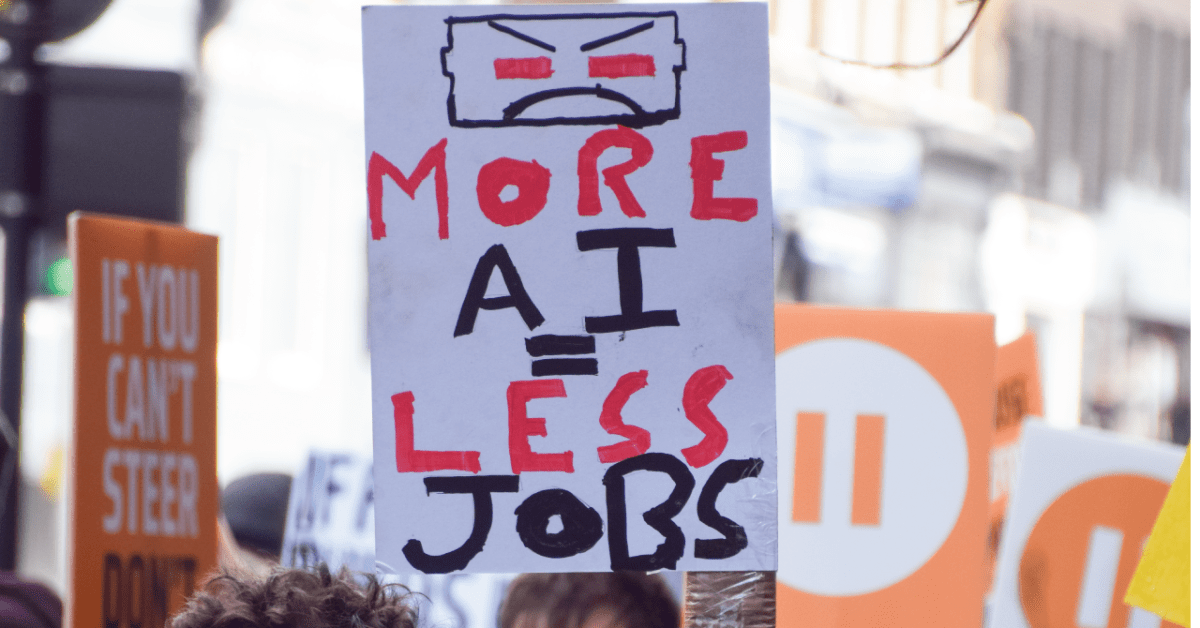
For the first time since Pew Research Center began tracking the question, a majority of young Americans say artificial intelligence leaves them more worried than enthusiastic. Some 55% of US adults ages 18 to 29 now say they are more concerned than excited about AI in daily life, up from 47% last year and just 31% in 2021.
The finding comes from a Pew Research Center survey of 42,151 adults across 36 countries conducted February 8 to May 13, 2026, with US data drawn from separate surveys totaling 8,607 adults, bringing the full study to 37 countries.
A generation’s mood reversal
The shift is striking because younger people use AI tools more often than older adults, yet their enthusiasm has cooled the most. Excitement moved the other way: 11% of adults under 30 were more excited than concerned in 2026, down from 25% in 2021.
Since 2024, the share of Americans ages 18 to 34 who are more concerned than excited has jumped from 40% to 55%. The figure has remained stable or gone down among those ages 35 to 49 and those 50 and older. Those under 35 are now as likely as those ages 50 and older to say they are primarily concerned, a notable departure from the gap that once clearly favored youth optimism.
This generational convergence in anxiety parallels broader shifts in how Americans view technology. A separate Pew survey of 9,750 US adults found roughly half already consider their own smartphone use excessive, suggesting a wider mood of digital ambivalence across age groups.
Younger people know more but worry more about jobs
In nearly every country surveyed, younger adults are more likely than older adults to say they have heard or read a lot about AI. In the US, awareness has grown more among adults ages 18 to 34 than among those 50 and older since 2022.
The survey finds that people overall are more likely to believe AI will lead to fewer jobs rather than more jobs in their country, and this pessimism is especially common among young people in some countries. In the Philippines, the age gap is among the largest: 36% of adults under 35 say AI will lead to fewer jobs over the next 20 years, compared with only 11% of those 50 and older.
In the US, 71% of Americans said they believe AI will lead to fewer jobs over the next 20 years. When the same question was asked two years ago, only 64% of Americans thought AI would lead to fewer jobs in the workforce. Young adults who use AI most heavily are, paradoxically, among the most worried about its long-term labor effects.
Concern rising across borders
In Sweden, the share of adults under 35 who are more concerned than excited rose from 24% to 45%, while the share of those 50 and older expressing this view rose from 36% to 43%.
Concern among young people has also risen in Poland, Brazil, Japan and Australia. Awareness is climbing fast too: in several countries, younger adults are considerably more likely to report high AI awareness than they were last year, while older adults in those countries showed little change.
The pattern suggests younger adults who were the most enthusiastic early adopters are reassessing AI as it shifts from novelty to a force affecting livelihoods. Researchers have noted similar dynamics in other daily-life domains; a separate study found that shared everyday experiences predict life satisfaction as reliably as income or employment, suggesting how generations relate to transformative technology carries real emotional weight beyond the workplace.
Trust and who people want in charge
A separate component of the Pew report, covering 12 countries and 13,696 adults, found that across those 12 countries, China emerged with a median of 43% trust to regulate AI effectively, compared with 35% for the US and 34% for the EU. Pew associate director Laura Silver has noted that views of a country’s trustworthiness on AI regulation tend to track closely with broader opinions of that country.
In five of the 12 places surveyed, Bangladesh, Malaysia, Pakistan, Sri Lanka, and the West Bank and East Jerusalem, China is the country people trust most to regulate AI. The Philippines is the only country surveyed where the US is more trusted than both China and the EU.
The full report, published September 17, represents one of the broadest cross-national snapshots of how ordinary people, and especially younger generations, are reckoning with a technology that has moved faster than public comfort in nearly every country studied.
