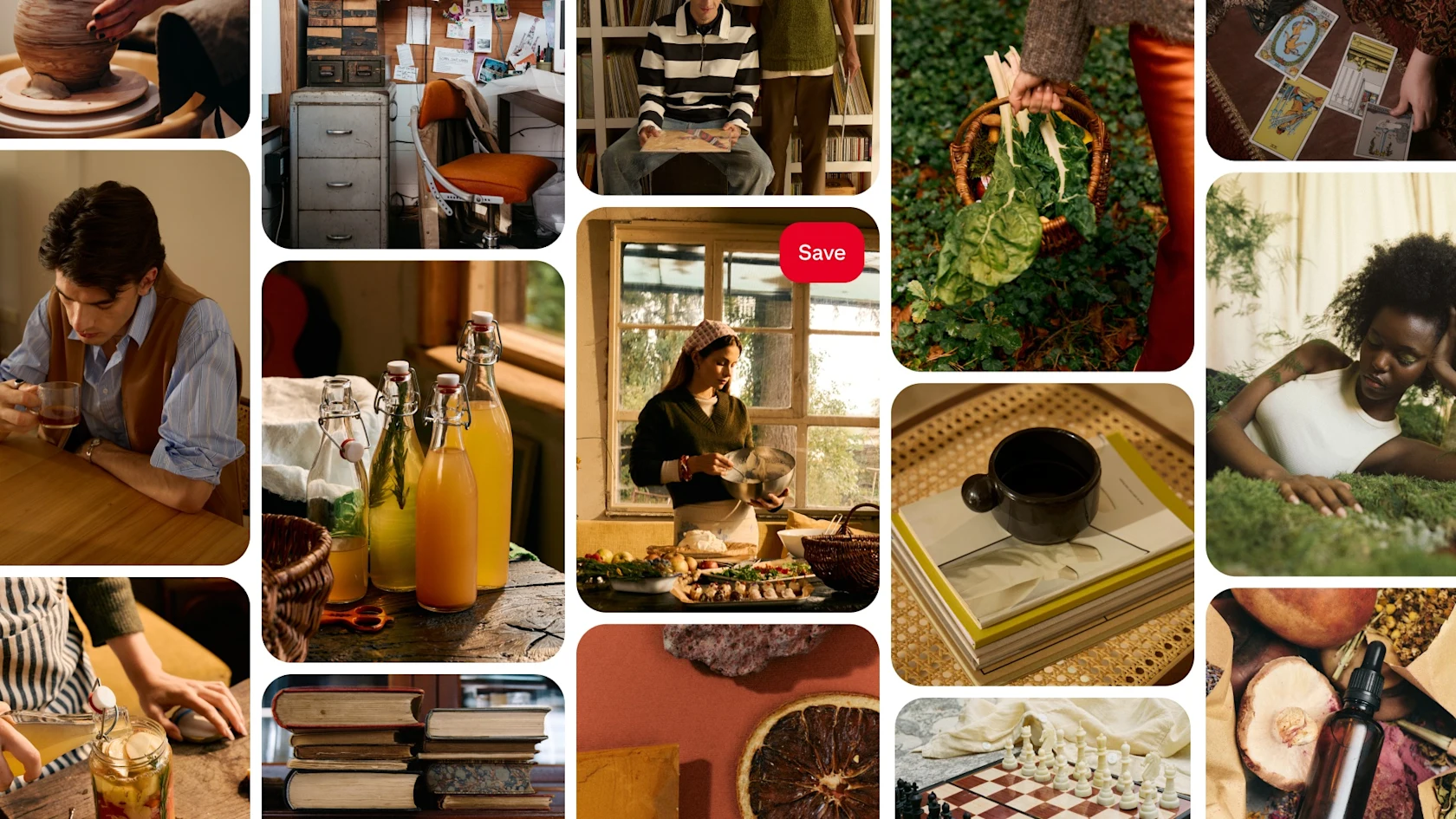
Americans are putting down their phones and picking up embroidery needles, fermentation jars, and watercolor brushes in numbers that Pinterest’s new trend report documents in detail.
After years of always-on feeds, people are choosing hands-on pastimes that command attention, reduce stress, and make free time feel more satisfying, with 51% of Gen Z respondents saying having a hobby contributes to their joy.
Pinterest’s 2026 hobbies report
Pinterest’s latest report, “Find Your Joy: 2026 Hobbies Trend Report,” explores the hobbies shaping the season and the broader shift toward more sensory, self-expressive pursuits. The report reveals a growing interest in creative activities that encourage slowing down and making something by hand.
The report drew from the platform’s internal global data, looking at searches from May 2025 versus May 2026.
The report grouped hobbies into nine categories: Kitchen Witch, Cosmic Reset, Home Café Engineering, Backyard Botanist, Weekend Equestrian, Secondhand Sidequest, Handmade Hacker, Curated Clutter, and Casual Crafter. The breadth of the list reflects how varied the analog turn has become, stretching from foraging-inspired kitchens to miniature-room building and thrift-store archaeology.
According to Sydney Stanback, Pinterest’s Global Trends and Insights Lead, “After years of always-on feeds, people are craving the satisfaction of having something tangible to show for their time.” She added: “People want their downtime to feel rewarding and personal.”
The search numbers behind the shift
Some of the biggest search increases include making a birthday magazine (1,713%), banana coffee syrup recipe (916%), crystals and their meanings (606%), and herbal apothecary (595%).
Searches for tarot cards for beginners climbed 558%.
Crafting on Pinterest is swinging toward hands-on hobbies that feel personal, giftable, and beginner-friendly. There is also strong momentum around miniature worlds: dollhouse DIY, tiny food printables, and terrariums that turn spare materials into collectible-scale scenes, often with an upcycled twist.
Traditional mediums are being remixed with niche aesthetics like goth pottery and medieval-inspired fiber crafts, creating a landscape that is tactile, experimental, and detail-obsessed.
Thrifting is shifting from bargain hunting to treasure hunting, with people searching for never-worn and hard-to-find archival pieces , then using techniques like sashiko stitching and visible mending to make them their own.
Users of the platform are increasingly seeking inspiration online for offline pursuits with real-time results, including tactile crafts, edited collections, analog practices, and slow, sensory kitchen projects that turn into something you can actually feel.
What is driving the analog revival
After years of always-on feeds, people are choosing hands-on hobbies that feel grounding, creative, and more fulfilling. This fall, Pinterest has seen people embrace this shift through tactile crafts, analog rituals, curated collections, cozy kitchen projects, and nostalgic style moments as they look for more intentional ways to spend time offline.
The trend dovetails with data showing that Americans are scrutinizing how they spend leisure time and money. Only 45 percent of Americans plan a paid summer vacation this year, the lowest share in six years, which may be redirecting leisure energy closer to home and into low-cost pastimes.
Separately, the pull away from digital platforms is consistent with findings that roughly half of US adults consider their own smartphone use excessive, a discomfort that appears to be translating into concrete behavioral change.
Eight in ten monthly Pinterest users say the platform “motivates them to try new things,” and the rise of screen-free hobbies is one of the clearest signals of this moment.
Low barrier, high reward
The Casual Crafter category covers low-commitment yet creative and personal, giftable crafts, with searches including hand embroidery art (up 1,351%) and beaded bag charms DIY (up 965%).
The Backyard Botanist category frames the outdoors as an analog art practice. Pressed flowers, watercolor sketchbooks, and illustrated field guides get the slow, observational treatment, including herbarium-style botanical layouts, annotated mushroom studies, and bird identification spreads painted from life.
The category is rooted in classic naturalist illustration but filtered through a personal, accessible sensibility.
If the search trajectories seen in the Pinterest data continue, the analog revival shows no sign of slowing. The birthday magazine figure alone, up 1,713%, suggests people are not just dabbling. They are committing.
For a generation raised on instant digital gratification, the appeal of something slow, tactile, and wholly their own appears to be a feature, not a limitation.
