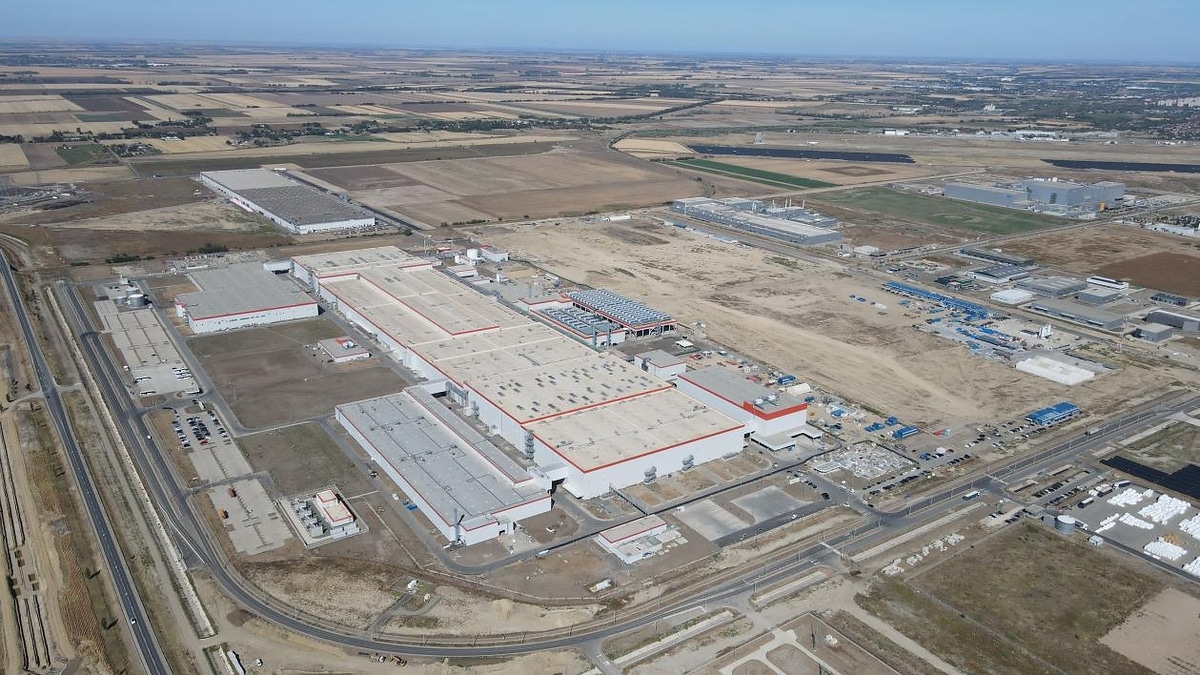
CATL activated the first two production lines at its newly built battery cell plant in Debrecen, Hungary, on September 22, starting a trial production phase that moves the world’s largest lithium-ion battery manufacturer one step closer to opening its biggest factory outside China.
Trial run follows years of construction and permitting
CATL began trial production on September 22, 2026, at its newly built cell factory in Debrecen, having fulfilled all preconditions required to commence the trial run. The purpose of trial production is to set up, optimise and validate the production equipment and manufacturing processes ahead of the start of series production.
CATL announced the construction of its second European battery plant in Debrecen in August 2022, with the aim of integrating into the European automotive and e-mobility supply chain and better serving leading European automakers. Construction of the first cell building started in summer 2023 and by spring 2026 the building had been equipped with the most advanced technology.
After obtaining the occupancy permit in August 2026, the company obtained all relevant permits and completed all preconditions required by its IPPC permit prior to starting trial operations on September 22 on the first two production lines of its cell manufacturing facility.
A 100 GWh target and Europe’s largest CATL site
The plant’s first phase carries 34 GWh of capacity, with the full site planned for 100 GWh, which would make Debrecen CATL’s largest production base outside China once fully built out.
The company has manufactured battery modules in Debrecen since the fall of 2024, producing 537,000 to date. The shift to cell manufacturing represents a deeper level of vertical integration at the site, with cells being the core electrochemical components that modules are assembled from.
As a strategic manufacturing hub, CATL’s Debrecen plant will supply leading European automakers, which have already built significant electric vehicle production capacity in Hungary in recent years. The Debrecen plant is set to supply battery cells to Mercedes-Benz European production sites in Germany and Hungary. Another confirmed customer is BMW, which manufactures the all-electric BMW iX3 just a few kilometres away, with the supply of battery cells from Hungary to BMW’s Debrecen plant scheduled to begin in 2027. Hungary has attracted major EV assembly investment, making the country one of Central Europe’s fastest-growing automotive corridors.
CATL’s cell output there will feed directly into that regional supply chain, a dynamic that matters for automakers navigating the pressures of EV rebates and tariff-driven costs on both sides of the Atlantic.
Regulatory hurdles preceded the launch
Occupational safety issues affecting nine employees due to nickel exposure were detected in some areas of the facility, and the Hajdú-Bihar County Government Office had temporarily suspended operations in those areas. Prior to issuing the occupancy permit, the Hajdú-Bihar County Government Office carried out regular on-site inspections at CATL’s facilities to follow up on previous issues that had raised serious concerns among local residents. Authority representatives confirmed that the company had resolved all deficiencies identified earlier in the permitting process.
CATL Debrecen said it will continue cooperating and working closely with the government and authorities in order to keep high standards on environmental issues as well as the health and safety of its employees. The company added that environmental and occupational health indicators will be monitored throughout the trial phase, with results submitted proactively to authorities.
Context in CATL’s wider European push
Debrecen is CATL’s second European cell plant, complementing its first facility at Erfurter Kreuz, where CATL started operations at the end of January 2023, the company’s first plant outside China. The Chinese battery giant has been expanding in Europe as automakers seek to localise supply chains and comply with battery content rules tied to EU trade agreements.
CATL did not disclose a timetable for full-scale output, but the activation of the first two lines marks the first direct cell output from the facility , a milestone that brings a planned 34 GWh first-phase capacity within sight.
The Debrecen plant complements CATL’s other product ambitions in the region, including the TECTRANS II commercial truck battery unveiled earlier this year, as it builds toward a position as a major cell supplier for European-assembled EVs.
CATL’s official press release confirmed the September 22 start date and the trial production scope.
