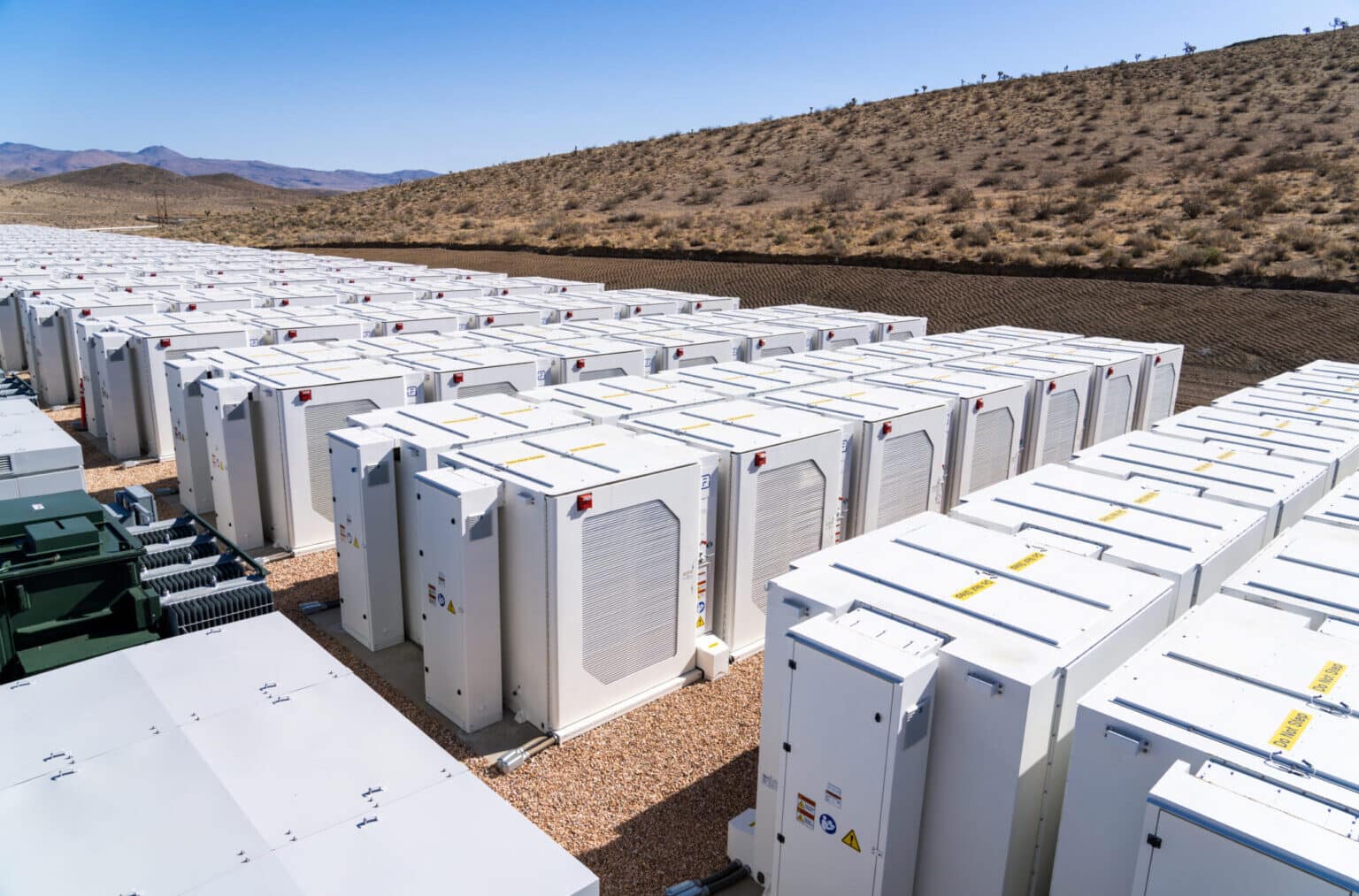
Energy storage integrator Fluence and Chinese battery manufacturer EVE Energy have signed a framework agreement covering up to 206 gigawatt-hours of battery deliveries between 2027 and 2031, one of the largest long-term supply arrangements ever disclosed in the global energy storage industry.
The deal carries notable complications for Fluence given EVE Energy’s recent listing on a Pentagon roster of Chinese military-linked companies.
Scale and structure of the agreement
EVE Energy said in a stock exchange filing that its subsidiary Hubei EVE Power signed the agreement with Fluence Energy Global Production Operation, LLC, following earlier cooperation between the companies.
The parties agreed on a committed delivery volume of 16 GWh for 2027, with a further 190 GWh of capacity reserved for 2028 through 2031.
The scale of the agreement is equivalent to approximately 1.7 times EVE Energy’s total power and energy storage shipments for the full year of 2025, which reached 121.2 GWh.
EVE Energy said it could not yet estimate the boost to its finances that the deal would bring, but its share price saw a sharp 6, 7 percent jump when it made the announcement.
According to EVE Energy, the agreement is a framework arrangement, and specific product specifications, quantities, prices, delivery schedules and quality requirements will be determined through subsequent purchase orders.
The company also warned that changes in industry policy, market conditions or other unforeseen factors could affect implementation.
Fluence’s position in the market
Fluence is a joint venture established by Siemens and AES, and is a leading US energy storage integrator with deep engagement in the AI data center sector. According to management guidance, Fluence has already signed supply agreements with two hyperscalers.
The announcement came two days after Fluence revised down its fiscal year 2026 guidance. The company issued its revised guidance on September 16, citing US supply chain delays. The revision reduced expected revenues to approximately $2.4 billion from a prior guidance midpoint of approximately $3.0 billion, while the expected adjusted EBITDA loss widened from around $10 million to approximately $200 million.
Fluence has not communicated anything publicly regarding the EVE deal, though it still has significant business outside the US, including projects under construction for power firm LEAG in Germany.
The supply arrangement also signals the direction of the broader US storage build-out. Battery storage is among the fastest-growing power technologies globally, and US developers are racing to keep pace: the domestic grid storage pipeline is targeting a record volume of additions this year.
The Pentagon flag
On June 8, 2026, the US Department of Defense released an updated version of its list of Chinese military companies, pursuant to Section 1260H of the National Defense Authorization Act for Fiscal Year 2021. EVE Energy was among the companies added to that list.
The designation does not itself automatically impose sanctions.
It does, however, raise considerations that can restrict future US government procurement and may complicate business with US partners, especially in sectors connected to defense supply chains, capital markets, and government contracts. Lenders, insurers and project owners routinely scrutinize these factors before financing a storage asset.
What the deal means for the storage pipeline
EVE Energy mainly manufactures in China, with its non-China facilities to date largely serving the electric vehicle market. That manufacturing footprint matters because federal tax credits under the One Big Beautiful Bill condition storage incentives on supply chain compliance rules that restrict components sourced from certain foreign entities.
The question of whether cells from a Pentagon-listed Chinese supplier would qualify has not yet been formally answered by regulators.
Fluence’s move to lock in large-volume cell supply years in advance reflects a structural shift under way across the industry. Relative certainty around tax policy and demand from large load customers are among the factors driving the country’s energy storage build-out.
The pressure to secure cells early is compounded by import tariffs that have raised equipment costs significantly since early 2025.
Grid planners and regulators are also tracking the speed of storage deployment closely. The broader question of who pays to connect all of that new capacity to the transmission system remains unresolved. A Senate bill currently under debate would shift upgrade costs directly onto large electricity users rather than spreading them across ratepayers. How that cost allocation question is settled could shape the economics of projects that rely on agreements such as the one Fluence and EVE Energy filed last week.
