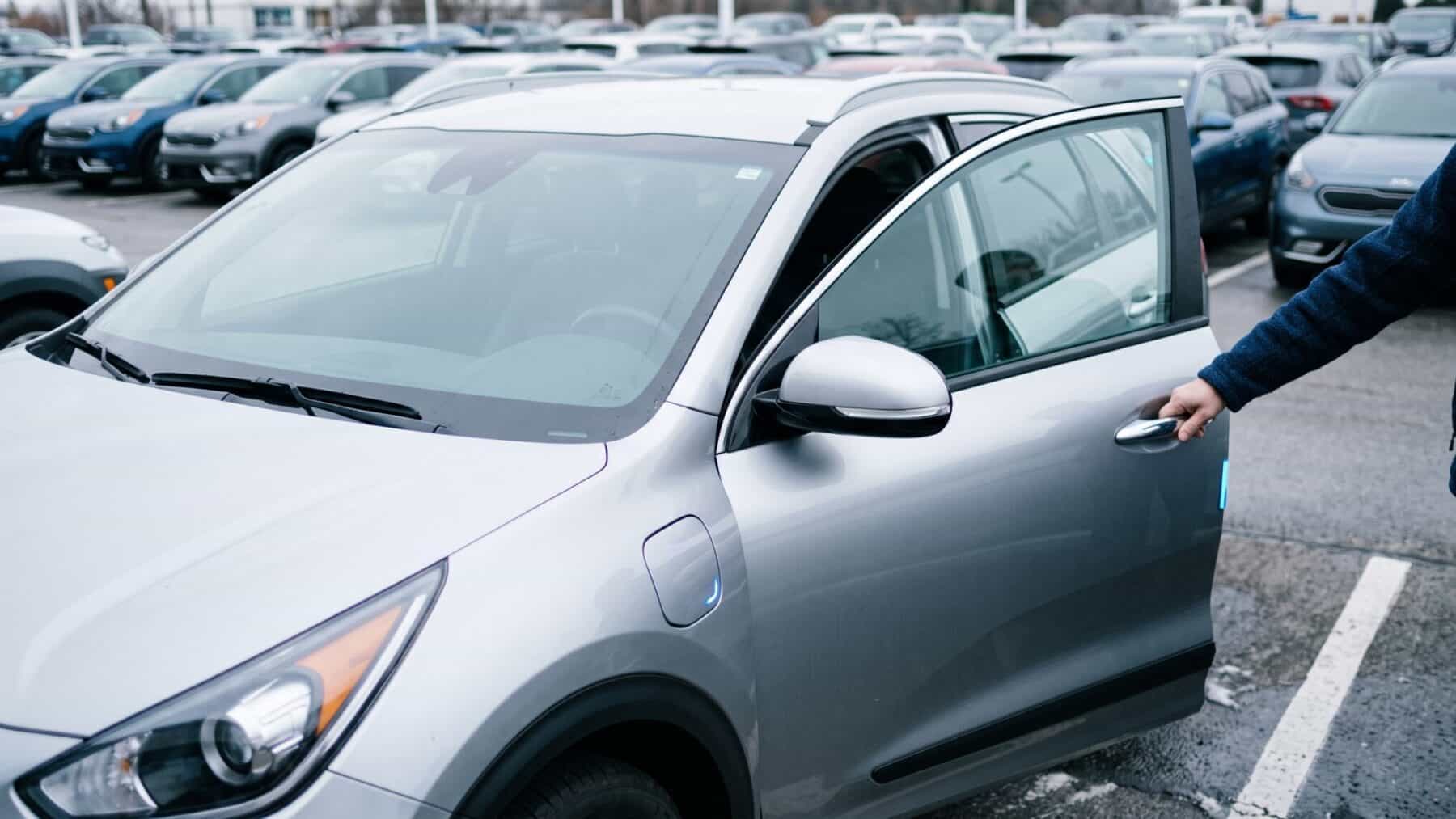
Dealer lots for one Korean automaker spent the summer selling faster than factories could restock them.
That shortage was not an accident.
It is the clearest sign yet of a sales quarter unlike any the brand has posted before.
Showroom floors across the country kept emptying out models almost as soon as shipments arrived.
Behind the empty spaces sits a number that surprised even close industry watchers.
So what actually pushed the sales count that high?
What turned a strong summer into a record quarter
The engine behind the jump was not one blockbuster model but a wide spread of gains across nearly every nameplate in the lineup at once. Eight key Kia models achieved double-digit year-over-year sales growth, including Seltos (+66 percent); Niro (+47 percent); K4 (+43 percent); Telluride (+42 percent); Sorento (+37 percent); Carnival (+21 percent); K5 (+15 percent); and Sportage (+10 percent), which is a far harder thing to pull off than one hot seller carrying the rest.
That breadth mattered. When one plant slowed, another model picked up the slack, and the combined volume kept climbing instead of stalling.
Underneath that spread sat a second force: a surge in hybrid and electrified demand that outran even the company’s own growth in gas models. Shoppers who once treated a hybrid badge as a premium option increasingly treated it as the default choice, and dealers restocked accordingly.
That shift did not happen overnight. Kia’s hybrid sales jumped 85.3% to 110,451 vehicles in the first half of the year, building across earlier quarters until the gains compounded into the biggest three months the brand has ever logged.
Inside the numbers that made the quarter
Kia America closed the third quarter with retail sales increased 19 and 9 percent year-over-year, reaching 70,429 units in September and 221,664 units in the third quarter , with overall third quarter total sales reaching 236,659 units, an increase of 8 percent over the previous third quarter sales record , according to the company’s own sales release. September alone brought 77,009 units, an 18 percent increase that set a record for the month on its own.
Behind those totals, the Telluride three-row SUV carried outsized weight. The model posted 11,927 September sales and has now moved 110,038 units for the year.
So did the Carnival minivan, up to 6,804 units in September and past 61,540 for the year, alongside steady climbs from the Sportage, Sorento, Seltos, Niro, K4 and K5. That is eight nameplates pulling the same direction at once.
The sharpest growth came from the electrified side of the lineup. Hybrid and total electrified models continued their strong growth in September, rising 152 percent and 60 percent year-over-year, respectively , a pace that outstripped every segment the brand sells.
Where this fits inside the wider market
None of this happened in isolation. Hyundai Motor and Kia said they sold a combined 920,383 vehicles in the US market from January to June, including Genesis models, up 3 percent from a year earlier and their highest-ever tally for a first half , with a record hybrid share building across the group’s lineup this year.
And the timing lines up with a broader industry pattern. Hybrids are expected to account for a record share of U.S. new-vehicle sales in the third quarter, a trend that rival brands have also raced to capture with new production lines.
Even so, the result stood out because of how broadly it was shared. Some competitors leaned on a single hybrid trim to carry a quarter. This brand spread its growth across segments, from minivans to compact SUVs to its flagship three-row model, all at once, a shift that narrowed the gap with far larger sellers.
How the company reported and framed the numbers
The figures come from Kia America’s own quarterly sales disclosure, the same recurring report the company has issued every month and quarter for years to track performance against prior periods. “With record-breaking September and best-ever quarterly sales, Kia continues to demonstrate the strength of its brand, product portfolio and retail network,” said Eric Watson, vice president, sales operations, Kia America. Company materials add that the gains reflect Kia’s wide range of models and powertrains, built to serve different kinds of drivers.
That kind of self-reported record claim is standard across the auto industry, but it is also easy to verify against the unit counts themselves, which is why the raw sales totals above carry more weight than the superlative framing around them.
Where the record still has limits
Yet records like this one carry a built-in ceiling. A quarter driven partly by restocking after earlier shortages cannot repeat the same percentage jump forever, since year-over-year comparisons get harder once the prior-year base is already elevated.
Which means some of the September surge reflects timing as much as raw demand.
Deliveries that slipped from August into September, or dealer inventory finally catching up to existing orders, can inflate a single month’s total without signaling a permanent new plateau. The Telluride’s gains also depended partly on expanding production capacity through the year, and that kind of supply-driven growth tends to flatten once a factory nears its practical limit.
Still, the underlying hybrid shift looks sturdier than a single quarter’s noise, since that demand built steadily across multiple reporting periods rather than spiking once.
What the record means for the months ahead
For a brand once seen as a budget alternative to larger rivals, a fourth consecutive annual sales record on track after three straight years of all-time highs now puts it on a very different footing heading into next year. The company has said it expects this positive momentum to continue into the new year and beyond as new electrified models reach showrooms.
That matters for shoppers too, since a brand selling everything it can build has less reason to discount.
Buyers eyeing a Telluride or a hybrid Sportage in the coming months should expect tighter inventory rather than the clearance deals that often follow a slower quarter. Even so, the story remains a genuinely positive one for an industry that has spent much of the year absorbing tariff costs and uneven electric vehicle demand.
Whether the pace holds through winter will depend on supply as much as demand. For now, the number stands on its own as the best quarter this brand has ever reported in the US market.
