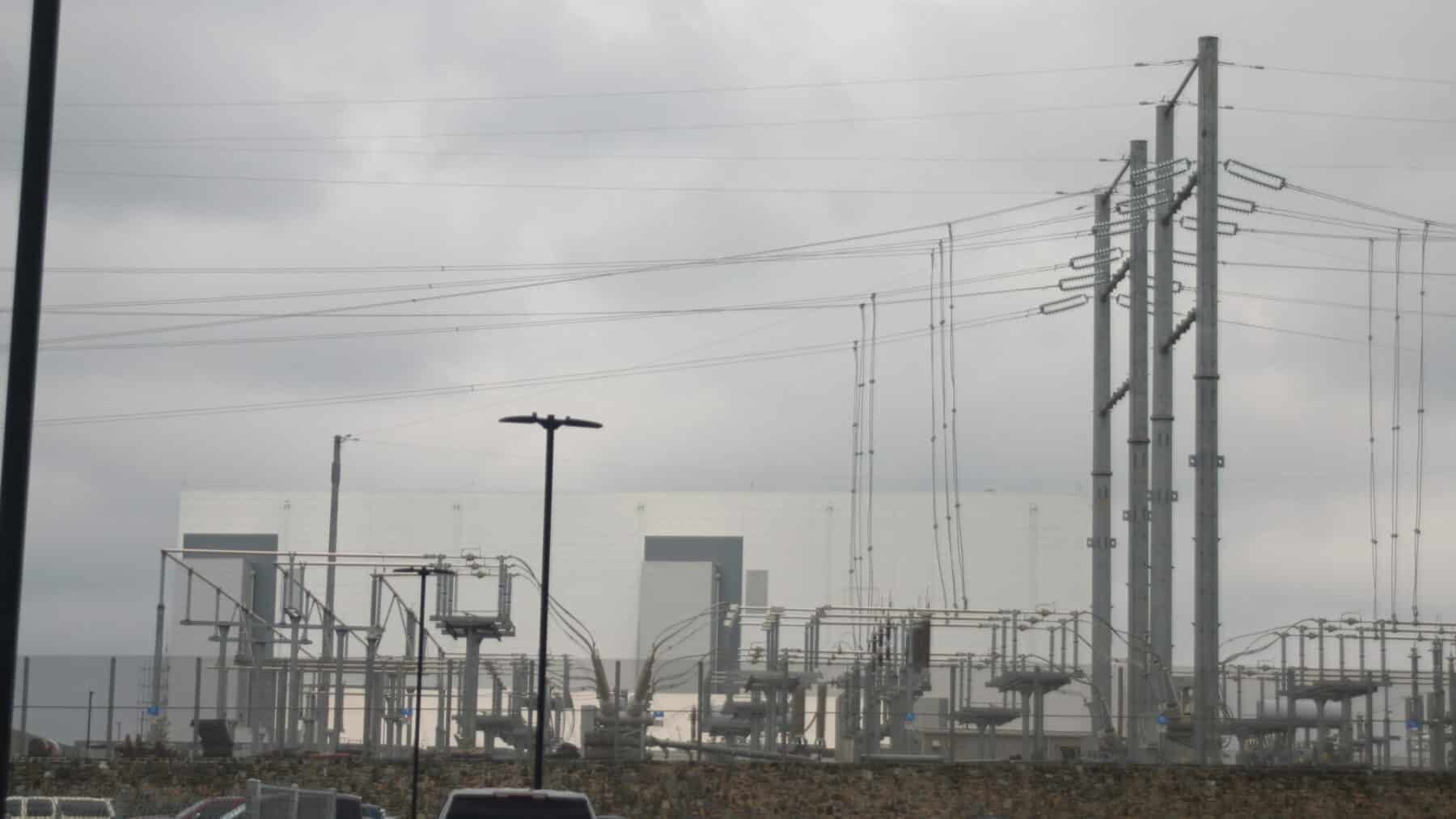
A switchyard outside Milwaukee still hums with equipment tied to power plants that stopped running years ago.
Nobody draws electricity from them anymore.
Yet the bill for building them never actually closed.
Every month, a line on local electric statements quietly covers that unfinished debt.
Regulators just decided how much bigger that line gets, and who else has to share it.
Why old, retired equipment still shows up on a current bill
Utilities do not pay for power plants in cash up front. They borrow, build, and then recover the full construction cost from customers over decades, long after the plant starts generating. When a plant retires early, whatever is left unpaid does not vanish, it simply gets reclassified as a stranded asset and stays on the books.
We Energies’ customers still owe roughly $1 billion for the utility’s “stranded assets,” power plants and generators retired before the utility’s customers fully paid off their value. So the charge on a monthly bill is not for electricity flowing today.
It is a leftover construction loan from equipment that already went dark. When the utility pulled the plug on its once-mighty Pleasant Prairie coal plant in 2018, ratepayers still owed $775 million toward We Energies’ investment in the plant, plus a return for shareholders. That debt rarely draws attention the way a headline rate hike does, but it compounds like any unpaid balance, and it was already baked into this case before a single data center entered the conversation.
A sixth straight rate hike lands as new mega loads crowd onto the grid
Wisconsin’s Public Service Commission voted Thursday to approve a roughly 7% increase in We Energies’ electricity rates spread across 2027 and 2028, the utility’s sixth consecutive rate hike. That is smaller than what the utility originally asked for, but it still lands on top of five previous increases residents have absorbed in recent years.
Meanwhile the backdrop has shifted sharply. We Energies proposed the rate increase in March, when the utility still awaited commission input on a pitch to bill ratepayers for a quarter of the costs of building new power plants for new data center customers.
Those new plants exist for a specific reason, massive data center campuses planned for towns like Port Washington and Mount Pleasant. So the case became a test every state with data center growth is now asking.
Should an ordinary household split the bill for generation it will never use, the same question regulators faced in a Michigan data center contract built around a different financial backstop.
The commission’s answer, and the numbers behind it
Commissioners rejected that plan a month later, instead ordering We Energies to assign the power plant construction costs directly to its current and future large data center customers , rather than spreading a quarter of them across everyone else’s bill.
That decision did not erase every shared cost, though. Ratepayers could still pay for a portion of transmission infrastructure built to serve data centers, since transmission cost sharing is mostly outside the Wisconsin Public Service Commission’s authority. Those powers rest with the Federal Energy Regulatory Commission, which is considering a proposal from the American Transmission Company, the utility that owns and operates most of Wisconsin’s grid, to charge data center operators based on their projected transmission needs.
There is also a side deal working the other way. A pending agreement between We Energies and Oracle, a partner in the Project Lighthouse data center campus in Port Washington, could also save ratepayers millions. The commission has yet to approve the agreement.
So the net effect on an average bill still depends on pieces being negotiated.
Where the arithmetic still gets messy for regulators
This time, the commission did not simply leave the retired-plant debt untouched. The commission took a moderate approach on Thursday, extending the timeline for We Energies to recoup its investments in the “stranded assets.” The longer payment period will reduce customers’ monthly payments on the remaining balance by spreading those costs over six additional years. The roughly billion dollar balance tied to retired plants keeps accruing regardless, on a timeline now stretched further into the future.
The commission chair used the hearing to argue the underlying rules need a rewrite. “We heard you loud and clear that utility rates are too high, and that your monthly bills are already a financial burden,” PSC Chair Summer Strand said. Strand described extending the payment timeline as the best option in the limited pool available under state law, slipping in a critique of state lawmakers for limiting commissioners’ flexibility. “We do not have any action from the policymakers in this state to help with stranded assets,” she said.
And the guaranteed shareholder return built into every rate case adds friction of its own. We Energies’ shareholders typically earn a 9.8% return on their investment, though that rate rises to roughly 10.5% or more for dollars spent building infrastructure to power data centers. Both utilities had asked the PSC to authorize an increase to 9.9%. CUB proposed that We Energies’ return on equity be 9.1% instead of the proposed 9.9%, which would save consumers more than $100 million in 2027 and a similar amount in 2028. Regulators ultimately split the difference, setting the rate at 9.5%. The decrease from We Energies’ original ask will save ratepayers roughly $60 million over the next two years as the utility ramps up construction.
What the ruling means for the next utility bill
For a typical household, the outcome is a smaller increase than first proposed, arriving in two steps across 2027 and 2028 rather than all at once. That phased approach echoes how other states have handled fast moving cost spikes, including a case where a utility fuel bill climbed sharply before regulators spread the gap across years of charges instead of one shock.
So the real headline is not the percentage increase itself.
It is the precedent on cost allocation, a ruling that data center operators, not neighboring households, absorb the price of power plants built specifically for them. Tom Content, executive director of the Citizens Utility Board of Wisconsin, said the PSC had some leeway to go further on its own in the rate cases to help We Energies and WPS customers save money.
Even so, the stranded plant debt, the transmission costs, and the shareholder return fight all remain open threads the commission plans to revisit. The next rate case is already expected to reexamine several overspends regulators flagged this time, according to the commission’s own comments after the vote, detailed in the commission’s ruling coverage. For now, the billion dollar legacy bill stays on the books, just spread a little further out.
