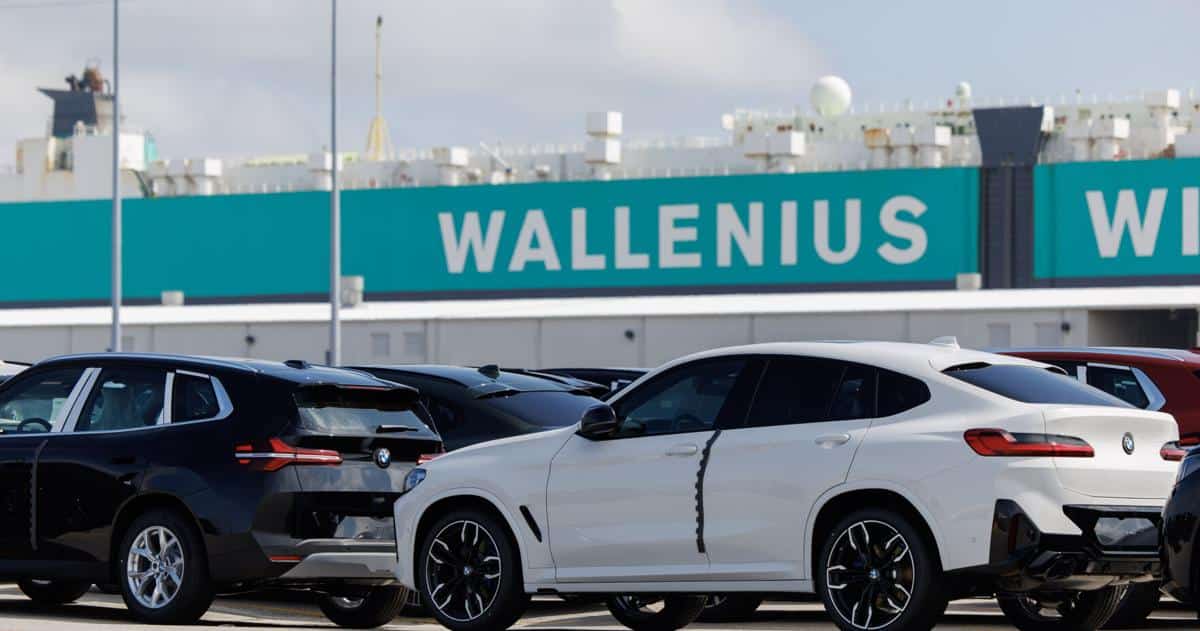
BMW is asking the Trump administration for tariff relief, arguing that its $1.7 billion expansion of the Spartanburg, South Carolina plant and its status as the top American vehicle exporter by value justify friendlier duty treatment.
The German automaker paid the U.S. over $1 billion in import duties last year , according to a report from Automotive News and a report from The Drive published this week.
Automaker makes its case in Washington
BMW is making a case to the Trump administration for tariff relief, based on a $1.7 billion investment in its South Carolina assembly plant, as well as its status as the U.S.’s largest automotive exporter by value.
BMW Manufacturing CEO Robert Engelhorn confirmed the company is in active discussions with federal officials over the matter.
“Our business model is to export, so for sure we are in close contact with the federal government,” Robert Engelhorn, CEO of BMW Manufacturing, said. “We are looking towards free trade. We are looking toward the lower tariffs.”
The push comes as BMW begins production of its first American-built electric vehicle, the iX5, at Spartanburg. BMW began building the iX5 at its sprawling Spartanburg, South Carolina plant this week, marking the first time an EV has been assembled at the U.S. factory, the largest manufacturing complex BMW operates worldwide.
The addition of an EV to the lineup is part of the same expansion BMW is citing in its tariff argument.
Why BMW says it deserves a break
Spartanburg has carried an outsized role in American auto trade for more than a decade.
Engelhorn said Spartanburg builds about 1,500 vehicles a day and ships half of its output to 120 countries, which has made BMW the largest U.S. car exporter by value for more than a decade , according to a plant tour detailed by BMW Blog.
A University of South Carolina economic study tied to the plant found it supports tens of thousands of jobs in the state. Economist Joseph Von Nessen of USC’s Darla Moore School of Business presented the findings on stage with BMW Manufacturing CEO Robert Engelhorn, crediting BMW with supporting 55,327 jobs in South Carolina and $4.4 billion in wages and salaries.
BMW’s export math is now shifting as the iX5 ramps up. With the addition of the iX5, Plant Spartanburg is approaching the point where it could soon export just as many vehicles as BMW imports.
Of the roughly 400,000 products assembled at the South Carolina complex last year, BMW built 412,799 X models at Spartanburg in 2025, the seventh time the plant has produced more than 400,000 vehicles in a year , with roughly half shipped to about 120 foreign markets, according to Automotive News reporting cited by Headlight News.
That balance between imports and exports is central to BMW’s pitch that its US footprint already offsets much of what it brings in from overseas.
Part of a wider industry trend
BMW paid more than $1 billion in import duties last year and says its $1.7 billion U.S. expansion and export role justify lower tariffs, such as those sought by Toyota and Audi. BMW is just one of the foreign manufacturers seeking tariff relief as they expand export production.
The pattern echoes other recalibrations across the industry, including automakers absorbing added costs from steel, aluminum and semiconductor tariffs that have pushed EV sticker prices and overall vehicle costs higher this year.
The current US tariff structure imposes a Section 232 duty on most imported vehicles, with rates varying by trade agreement, while vehicles assembled domestically, including at free-trade-zone facilities like Spartanburg, face a lighter burden limited largely to imported components.
That structural advantage has not stopped BMW and its German peers from pressing for a formal reduction, especially as automakers juggle supply chain disruptions that have also hit chip-dependent suppliers like those profiled in coverage of Bosch’s new chip unit.
What comes next
BMW has not set a firm timeline for when any relief might be granted, and the Commerce Department has not publicly responded to the automaker’s request.
Engelhorn’s comments suggest talks are ongoing rather than concluded, with the company framing its South Carolina investment as leverage in future negotiations.
For now, Spartanburg remains BMW’s largest production and export hub worldwide, and the addition of the iX5 gives the company a new argument that its US manufacturing footprint is growing, not shrinking, even as it seeks to lower what it pays at the border.
