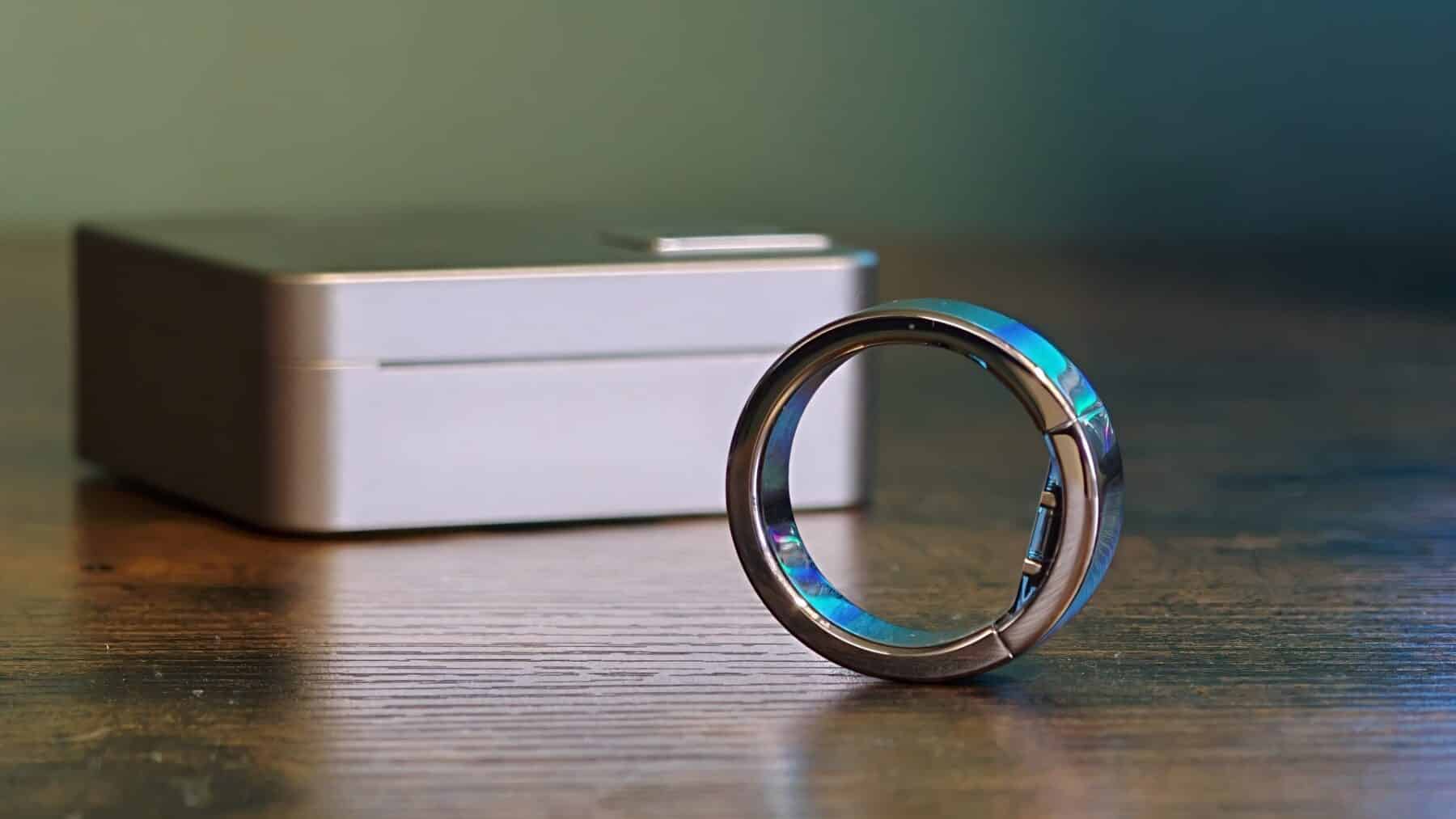
A finger wearing a slim metal band can now go nearly two months without finding a wall outlet.
That is not a typo, and it is not a projection from a lab. It is a shipping consumer product, sold right now, with a number stamped on the box.
Most fitness trackers still beg for a charger every night or two. This one is built to disappear from your routine almost entirely.
So how does a ring smaller than a stick of gum manage it?
The engineering behind the two month stretch
The answer starts with what the ring is made of and what it is not made of. In February 2026, Ultrahuman announced the Ring PRO, a third-generation smart ring with a titanium unibody construction, a dual-core processor and a stated battery life of up to 15 days. A titanium unibody shell replaces the multi piece plastic and metal builds common in earlier rings, cutting seams, joints and the extra circuitry that usually drains power keeping separate components in sync.
Inside that shell sits a dual core processor built specifically to split simple always on sensing from heavier processing tasks. The chip only wakes its power hungry side when it actually needs to crunch data, a different approach from rings that run one processor flat out around the clock.
Then there is the case, which is doing more than holding a spare charge. The company’s own announcement describes a magnetic docking system it calls UltraSnap, and independent coverage reports that it is designed to reduce heat and preserve battery health .
Less heat during charging means less long term stress on the cell. That is part of why the case can keep topping up the ring for weeks without cooking the battery.
What the ring and its case actually look like in daily use
Picture a ring roughly the width of a wedding band, available in Bionic Gold, Space Silver, Aster Black, and Raw Titanium finishes , paired with a case barely bigger than a pack of gum. You slip the ring onto the case and it snaps into a magnetic cradle rather than a fussy charging pin.
That pairing is the whole point. On a single charge, the ring is rated up to 15 days, with Turbo Mode delivering roughly 12 days and Chill Mode more than 15 , depending on how many sensors stay active.
Slide it into its case between wears, and with the PRO Charging Case you can go up to 45 days between wall charges , with up to 250 days of health data stored on-device, extendable to a year with the case .
For comparison, rings that track sleep and heart rate around the clock have historically needed a nightly or every other night charge. A wrist tracker fell 4 percent in shipments this spring as the category shifted shape, and battery anxiety has long been one reason people abandon wearables altogether.
The numbers behind the record claim
Ultrahuman’s CEO Mohit Kumar said Ring PRO is “a breakthrough in wearable technology, delivering category-defining battery life within the demanding constraints of a smart ring.” The underlying numbers back up that framing: 15 days on the ring alone is roughly double what most rival rings claim on a single charge, and the case-extended 45 days pushes that gap much wider.
Independent coverage backs up the core figures rather than just repeating the company’s press materials. One hands on report found battery life reached around 12 to 15 days after extended wear , a touch below the absolute ceiling but still far beyond what competing rings typically manage under similar conditions.
Context matters here. The current leading smart ring on the market, Oura’s Ring 5, is typically 6-9 days per charge , and the maker’s own support documentation states that a fully charged ring typically lasts 6-9 days .
That is the baseline this new ring is measured against. It is also the ring most Americans already own, since Oura is far ahead in smart rings, with about 74% of global shipments in the first half of 2025, research firm Omdia estimates .
Where the record has real limits
None of this means every owner will see 45 days between wall outlets. Battery life and longevity depend on Oura Ring size, Oura App settings, feature configuration, activity, battery age, usage, and many other factors; actual results will vary , a caveat that almost certainly applies across the category, including this new titanium model.
Battery life depends on ring size and settings, feature configuration, activity, battery age and usage. Turning on continuous blood oxygen sensing is consistently one of the heaviest drains across smart rings, and that pattern is unlikely to spare this new titanium model.
So the headline 15 day figure assumes a lighter sensor load, and heavy daily workout tracking will shorten it. Even so, the case changes the math in a way rivals have not matched yet.
A ring running at its lower end of roughly 10 to 12 days, backed by a case holding weeks more charge, still outlasts the entire charge cycle of competing rings by a wide margin. That gap is the actual news here, more than the ceiling number alone.
What it means for anyone who has ever quit a wearable over charging
The broader smart ring category is growing fast enough that battery life has become a real competitive battleground rather than a footnote. Counterpoint Research data shows smart ring shipments jumped 49% while smartwatches grew just 6%, with Oura leading at 74% market share, followed by Ultrahuman at 9% .
Rival makers are racing to cut the one complaint that pushes people back to a plain watch or no tracker at all. That race is why this launch matters beyond one product line.
A subscription free experience, a magnetic charging case and a titanium build together suggest the next competitive front in wearables is not another sensor. It is simply making the device easier to forget you are wearing.
For now, the 45 day combined figure stands as one of the longest runtimes openly marketed by any mainstream ring maker. Whether rivals match it within a year, as they tend to do with headline specs, will say a lot about how much charging anxiety was really holding this category back.
