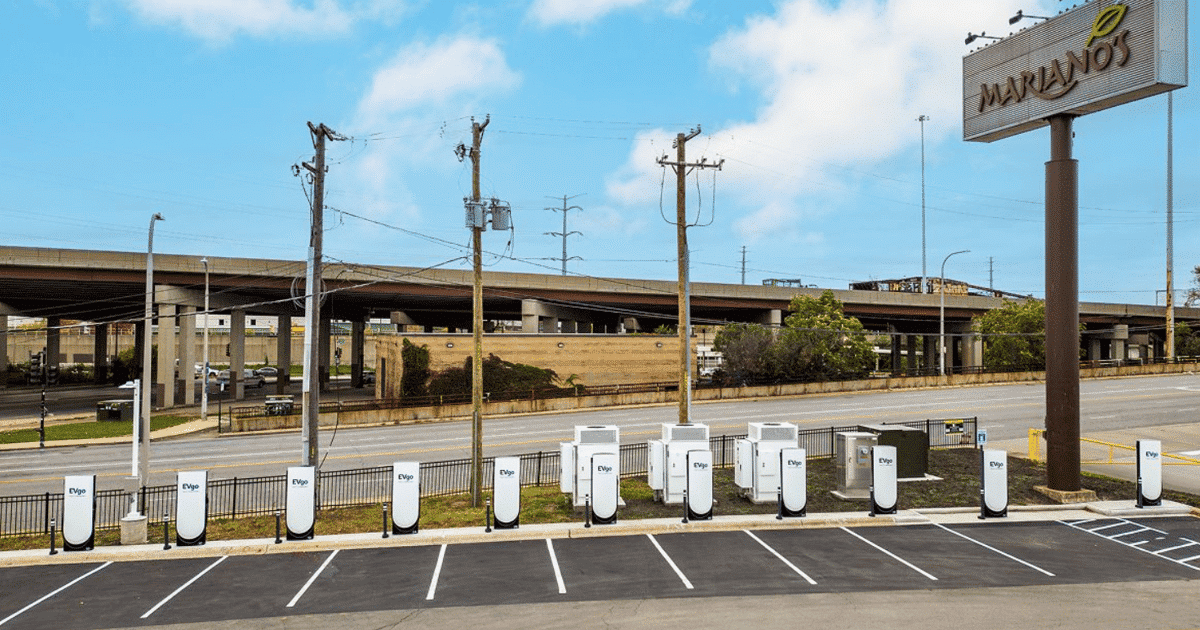
A driver pulls off the interstate, parks beside a thick charging cable, and watches a screen climb toward 400 kilowatts in minutes.
That kind of stop barely existed at most convenience stores two years ago.
Now it is routine at a fast growing chain of charging stalls built by a group of carmakers, and the network has become the single largest source of that top charging speed anywhere in the country.
So how did a joint venture nobody had heard of three years ago get there first.
What makes a 400 kilowatt plug different from a typical fast charger
Most public fast chargers installed over the past decade cap out well below 400 kilowatts, which means a driver sits longer even when the car itself can pull more power. A newer generation of hardware changes that ceiling, letting a compatible battery accept a much heavier jolt of electricity in the same ten or fifteen minute stop.
The company behind this buildout, known as IONNA, was founded on an idea that automaker collaboration would create a better charging experience for drivers. Because it started from scratch rather than retrofitting older stalls, it skipped straight to the newest charging cabinets on the market.
That timing became a real advantage. The fresh buildout meant choosing hardware that hit the 400 kilowatt rating now considered the fastest public standard in the country, and the automaker-backed network, which uses Alpitronic hardware and in-house-developed software, says it is now the largest 400 kW charging network in the US.
Because every site went in with that same baseline, the network avoided the patchwork of speeds that frustrates drivers at older charging corridors. A stall built last spring charges at the same rate as one built last month.
A buildout that moved from highway test sites to everyday gas station stops
The scene at these stations looks less like a standalone charging lot and more like a normal fuel stop with a fast plug bolted on. That is by design, since much of the recent growth has come through a partnership with convenience retail rather than isolated charging depots.
Earlier this year the operator struck a deal with the convenience chain Circle K. The partnership includes more than 350 sites in scope under the “Rechargeries @ Circle K” banner, with the plan taking over Circle K’s existing US charging portfolio, upgrading about 85 current charging sites and building additional stations at high-traffic locations that do not yet have chargers. More than 40 Rechargeries have opened at Circle K locations since the partnership was announced in April.
The pace accelerated fast. Circle K sites are typically four 180kW CCS plugs, though some swap one for a 100kW CHAdeMO plug, and IONNA is upgrading those to 400kW chargers with both NACS and CCS connectors, covering nearly every EV currently on the road.
The count behind the claim and how fast it actually grew
The hard number landed at the end of September, when the company made its growth official rather than letting outside trackers estimate it. It announced it had surpassed more than 180 live charging sites nationwide, more than doubling the size of the network since the beginning of 2026.
That starting point matters for scale. The company started the year at 80 sites, hit the 100th site right on its second-year anniversary, and nine months into the year had over doubled in size, according to CEO Seth Cutler.
An outside scorecard backed up the claim, with IONNA ranking highest among DC fast charger stations in the J.D. Power 2026 U.S. Electric Vehicle Experience Public Charging Study in its first year of award eligibility, with a score of 807 on a 1,000-point scale. Seth Cutler, the company’s chief executive, said the industry has treated charging scale and charging quality as a tradeoff, and that the growth and first-place customer satisfaction ranking show drivers can and should expect both.
Behind the stalls sit eight familiar names from showrooms rather than tech startups. Its founding members include BMW, General Motors, Honda, Hyundai, Kia, Mercedes-Benz, Stellantis, and Toyota, giving the venture a built in customer base already driving compatible EVs.
Where the claim gets complicated once you look at total plug count
Being the largest 400 kilowatt network does not mean being the largest network overall, and that distinction matters to a driver just hunting for any open plug. Tesla Supercharging remains a benchmark for the industry, with a solid, stable satisfaction score and the highest number of stalls, even as it lost the top JD Power ranking it had held for years.
Even so, raw plug count only tells part of the story for someone road tripping in a car built around the fastest available charging. A site with fewer stalls delivering a heavier jolt can still move more cars through in an hour than a larger lot stuck on older gear.
That gap between speed leadership and size leadership is why automakers backed a dedicated project rather than waiting on existing operators to upgrade, with plans to build 30,000 high-power charging bays by 2030. Reaching that target depends on how quickly travel centers keep signing on, since permitting delays remain the ordinary friction that slows any buildout this size.
What it means for drivers deciding where to plug in next
For an ordinary driver, the practical upside is simpler than the corporate math behind it. A stop built around 400 kilowatt hardware can mean the difference between a quick coffee break and a long wait staring at a slow climbing percentage on the dash.
None of that erases the uneven coverage that still frustrates drivers outside major interstate corridors. A fast charging site is only useful if it sits along the route someone is actually driving, and rural coverage gaps remain real even as headline numbers climb.
Still, a carmaker backed network competing on raw speed, not just plug count, gives drivers another option beyond the two or three names that have dominated public charging for years, and that competition tends to push prices and reliability in the right direction over time.
