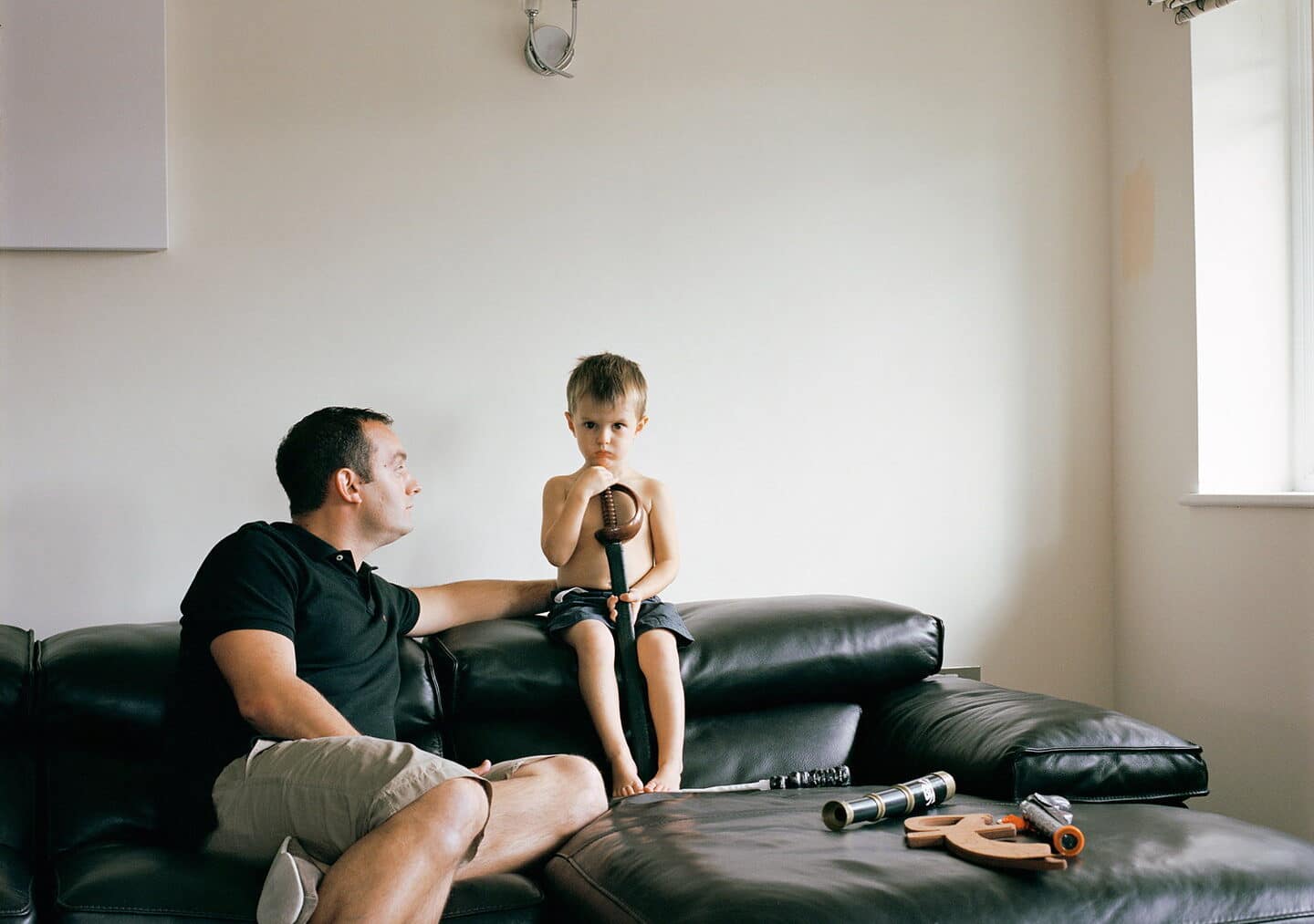
The share of American children in single-parent households who live with their father has more than doubled over the past half century, according to new estimates released by the Census Bureau on November 17.
In 1976, fewer than 1 in 10 (7%) children with one parent lived with a father. By 2026, that share grew to 19%.
Two-parent households still the norm, but shrinking
Newly released estimates from the U.S. Census Bureau’s historical America’s Families and Living Arrangements tables show that 71% of children live with two parents, a shift from 50 years earlier when 80% did so.
Among children living with one parent, those living with their father more than doubled over the past half-century. By 2026, that share grew to 19%.
Most of these statistics come from the 2026 Current Population Survey Annual Social and Economic Supplement (CPS ASEC), which has collected statistics on families for more than 60 years, including the 1976 statistics cited here.
The data detail household characteristics, living arrangements, couple types and children. In CPS data, unmarried college students living in dormitories are counted as living in their parent(s)’ home.
Households are also getting smaller and older
In 2026, there were 40.5 million one-person households, accounting for 30% of all households, up from 21% in 1976.
The share of householders age 65 and older rose from 20% five decades ago to nearly 31% in 2026.
In 2026, more than half (60%) of adults ages 18 to 24 lived in their parental home, compared to 18% of adults ages 25 to 34.
Separate Census Bureau data published in America Counts show the average size of U.S. families living in the same residence was 3.1 people in 2026, while the average household size was 2.5 people.
A longer-running shift in custody patterns
The growth in father-headed single-parent households fits a trend researchers have tracked for decades using the same federal survey series. Earlier Census Bureau historical tables on children’s living arrangements, as cited by the federal Office of Juvenile Justice and Delinquency Prevention, show that while most children in single-parent families lived with their mothers in 2023, an increasing proportion were living with their fathers.
Between 1970 and 2023, the proportion of children in single-parent homes living with their fathers grew from 1.1% to 4.2% when measured as a share of all children rather than just those in single-parent homes.
The bureau’s most recent annual snapshot before this update had found that 80% of one-parent family groups were maintained by a mother as of 2022, underscoring that mothers still head the large majority of single-parent households even as the father share climbs.
That 2022 data also showed differences in how single parents arrived at their status. Among one-parent family groups, 41% of single fathers were never married and 38% were divorced, compared to 51% of single mothers who were never married and 29% who were divorced.
Why the numbers matter for family life
The shift arrives alongside other changes this desk has tracked in how American parents juggle work and home life, including a recent survey finding that parenting tasks spill into work hours.
It also follows broader findings on how families build and maintain relationships outside traditional networks, echoing Pew Research Center work showing that hobby communities turn strangers into support systems for parents navigating new household structures.
The Census Bureau’s full historical tables, which break down living arrangements by age, race, marital history and household type, were published alongside the November 17 release.
