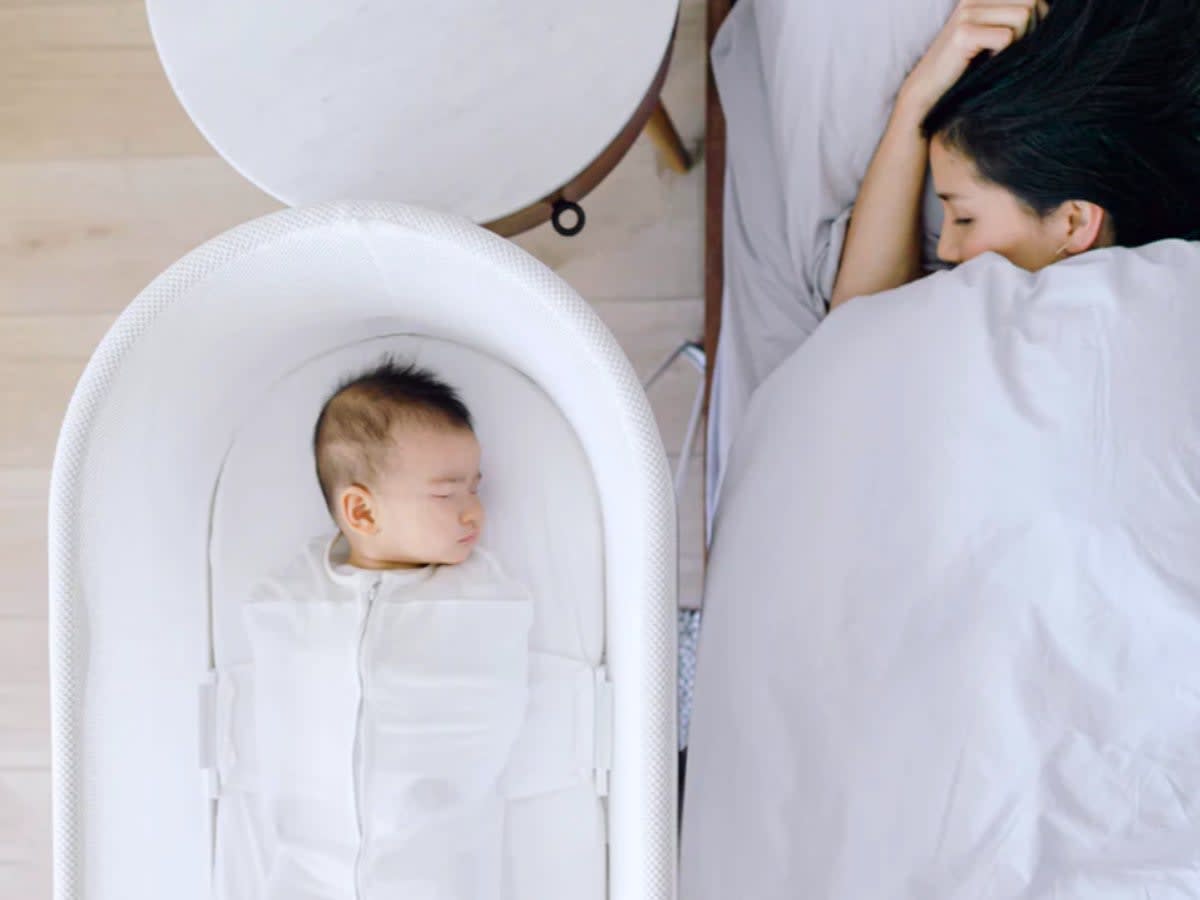
A bassinet rocks itself in the dark, and a baby’s cry fades into silence within seconds.
No parent touches a button.
The crib simply senses, decides and moves on its own, reading sound and motion the way a sleepless parent never could.
That same device, bought secondhand for a few hundred dollars, can suddenly lose some of its most useful settings, because a screen inside the app just asks for a credit card instead.
So what actually decides whether this machine keeps doing everything it once did for free?
How the extra features actually get switched off
The bassinet in question is the Snoo Smart Sleeper, an internet-connected crib made by Happiest Baby that uses built-in microphones and motion sensors to detect a baby’s cries, then responds with graduated rocking and white noise through a companion smartphone app. Happiest Baby’s own support documentation confirms that the free version of the app still includes the Motion Limiter, remote level controls, volume settings and the sleep tracker, so the bassinet still rocks and plays sound for any owner, with or without a subscription. But other settings, like locking the rocking at one chosen level all night, only answer commands that the app sends over Wi-Fi, and those sit behind a paid tier.
That link is also the maker’s lever. When Happiest Baby rolled out a new subscription model in July 2024, it did not alter the physical crib at all, it simply moved certain settings behind a paid tier, so a change on a server many miles away reached directly into a nursery.
The result is that functions like Level Lock, which keeps the bassinet’s rocking fixed at a single level all night, along with the full sleep and feeding log, weaning mode, and custom soothing responsiveness can stop responding the moment a new owner signs in without paying. The sensors and motor still physically exist and still rock a crying baby using the free Motion Limiter, but the finer controls stay behind a paid plan tied to that particular account.
Inside the nursery where the bill lands
Picture the exact moment this hits hardest: a family receives a hand-me-down bassinet from a friend or buys one off a resale site for $500 to $900, roughly two to three times the cost of an average bassinet, and plugs it in expecting the same crib they watched work for someone else’s baby.
Instead they hit a paywall for the settings they wanted most. A father who bought a secondhand unit, Andrew Gwin, likened the new pay structure to having to shell out extra to use an iPhone’s camera or a car’s radio, calling it a way to punish those who go to the secondhand market.
Because a bassinet is only useful to parents for roughly five to six months before a baby outgrows it, resale has always been part of how families afford the device at all. That short window is exactly why the fee stings so quickly, and if parents pay for five months of access, that adds an extra hundred dollars on top of the hefty purchase price.
Why the subscription exists, according to its maker
The subscription itself runs a premium monthly charge of $20 per month for parents to access certain features for the smart bassinet, according to coverage that first detailed the pricing change. Lexi Montee Busch, the company’s vice president of marketing and communications, defended the shift directly, telling Fortune that parents don’t need a premium subscription to get the key “smart” benefits of the Snoo, and that those who buy or rent it from Happiest Baby or an authorized partner get free access to the premium tier.
The company also pushed back on claims that secondhand units lose their core function. Parents who purchase or rent the bassinet from Happiest Baby or an authorized partner get free access to the premium app subscription for nine months, meaning only true hand-me-downs and unauthorized resales face the fee right away.
Parents online were not reassured, and the backlash spread fast. One parent asked on Reddit whether any company exists that is not focused on endless growth and continued gouging of its clients, and the frustration prompted review bombs and group brainstorms for collective action among owners who felt blindsided.
Working parents already describe how little separation exists between daytime routines and overnight baby care, a pattern GCN has previously examined. A locked setting at 3 a.m. adds one more small friction point to that same stretched schedule.
Where the fee does not apply, and where it still bites
Not every household feels this the same way. Families who buy the bassinet new directly from Happiest Baby or an authorized retailer get nine months of free premium access for each child who uses it, since that free premium access is tied to the original purchase itself.
The complication shows up specifically in the secondhand market, which is unusually large for this product because of that short five to six month usage window. A device built to be passed between families, friends or sold on resale apps now carries a recurring bill for its extra settings that the original buyer never had to pay, and that gap is exactly where the anger has concentrated.
There is also a rental option some parents may not know about. The company confirmed that parents can instead rent a bassinet for $159 a month to get all the subscription features included, which sidesteps the used-market paywall entirely but at a steeper ongoing cost, a tradeoff that trims the upfront price while adding to the monthly one.
That tension, between a product built for a single short season of life and a software layer that now outlives any one owner, is not unique to nurseries. It echoes how other gadgets increasingly separate the hardware a buyer owns from the features a company still controls, long after the purchase is complete.
What parents are learning to check before they buy
None of this means the bassinet stops rocking or soothing a baby. The core motion response to crying, the white noise, the fabric swaddle and the basic restraint system remain fully functional regardless of subscription status, since those core safety elements were never moved behind the paywall.
