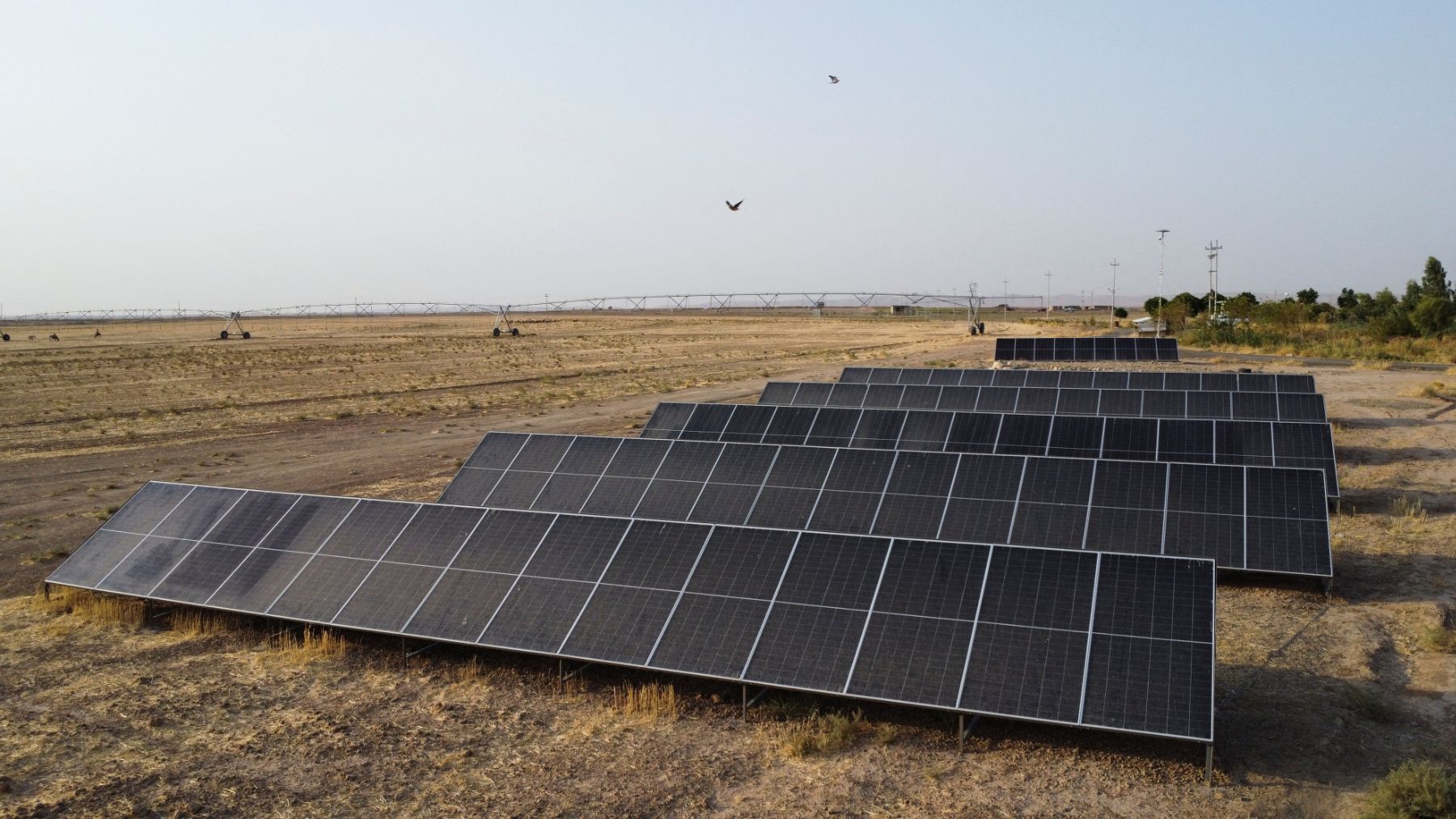
Iraq seems to be making significant progress towards solar energy development. Plans are currently underway for 1,000 small solar energy projects which will be implemented during the course of the next three years. Plans are also underway for the establishment of one of the first large-scale power plants. The bigger aim is to integrate renewable energy into the national grid by 2030. By promoting solar energy across the various sectors, this can be accomplished.
Benefiting from the power of the sun
Weary of paying big bills for power supplies that are often cut off, wheat grower Abdallah al-Ali is among the rising number of farmers to have turned to solar panels to keep their irrigation systems running during the searing heat of the Iraqi summer. Iraqi summers are exceptionally hot, temperatures in the range of 48°C (118.4°F) is really not that uncommon. On the other hand, winter temperatures can go the other extreme and drop to about 0°C (32°F).
A member of the Organization of the Petroleum Exporting Countries, and one of the world’s leading oil producers, Iraq has struggled to provide its citizens with energy since the 2003 U.S.-led invasion that toppled Saddam Hussein. In the ensuing turmoil, under-investment and mismanagement have left the national grid unable to cope with demand.
On some summer days when temperatures can exceed 40 degrees Celsius (104°F), it provides electricity for only around half of the time, according to a Reuters witness in Mosul, in the northern agricultural province of Nineveh. Mosul is regarded as the capital of Nineveh Governorate. It is the second largest city in Iraq overall. The monthly power bill for al-Ali was nearly a million Iraqi dinars ($763.94). Since installing solar, he said he has been paying the national grid 80,000 Iraqi dinars and his supply has become reliable.
The demands laid down by energy
Apart from its oil riches, Iraq has vast solar potential that the authorities say they will use to close the gap between supply and demand, at the same time, reducing carbon emissions. The country has a plan to install 12 gigawatts of solar capacity by 2030, according to the ministry of electricity, which includes delivering a 1 GW solar plant for Basra this year. Peak summer demand in 2025, meanwhile, is expected to reach 55 GW, while supply stands at just 27 GW, according to estimates by Iraq’s electricity minister in January.
Al-Ali is not the only citizen who has not waited for the government to act. Farmers across Nineveh can use both rooftop panels and ground-mounted arrays, placed on farmland, to power irrigation systems and supply household needs. In urban areas, panels are tightly packed on the flat roofs, which characterize Mosul homes, to maximize energy generation. Hassan Taher, a Mosul resident and agricultural engineer, said switching to solar had transformed his home life.
When things start falling apart
The surge in demand has also been felt by local businesses. Mohammed al-Qattan, who runs Mosul Solar, a solar installation company, said interest soared in 2024 and 2025, especially from rural communities, where he said 70% of his clients lived. Although increasingly cost-effective, solar panel systems in Iraq still cost between 5 and 10 million Iraqi dinars, with the average 5–6-kilowatt system priced around 5 million dinars.
In urban areas, many householders take out a subscription for backup from a generator, which costs between 50,000 and 100,000 dinars per month. Solar systems installed are off grid, meaning their owners are nearly self-sufficient in energy, said Ahmed Mahmoud Fathi, a director in the Nineveh branch of the state electricity company.
The energy grid in Iraq is suffering some critical challenges at the moment. One of these is the chronic electricity shortages caused by the increased demand. Gas flaring in this part of the world is also commonplace, and accounts for environmental pollution as well as resource waste. Geopolitical tensions also play a role here. Especially the matter concerning the US sanctions. This have prevented Iraq from being able to make payments for their energy imports.
GCN.com/REUTERS.
