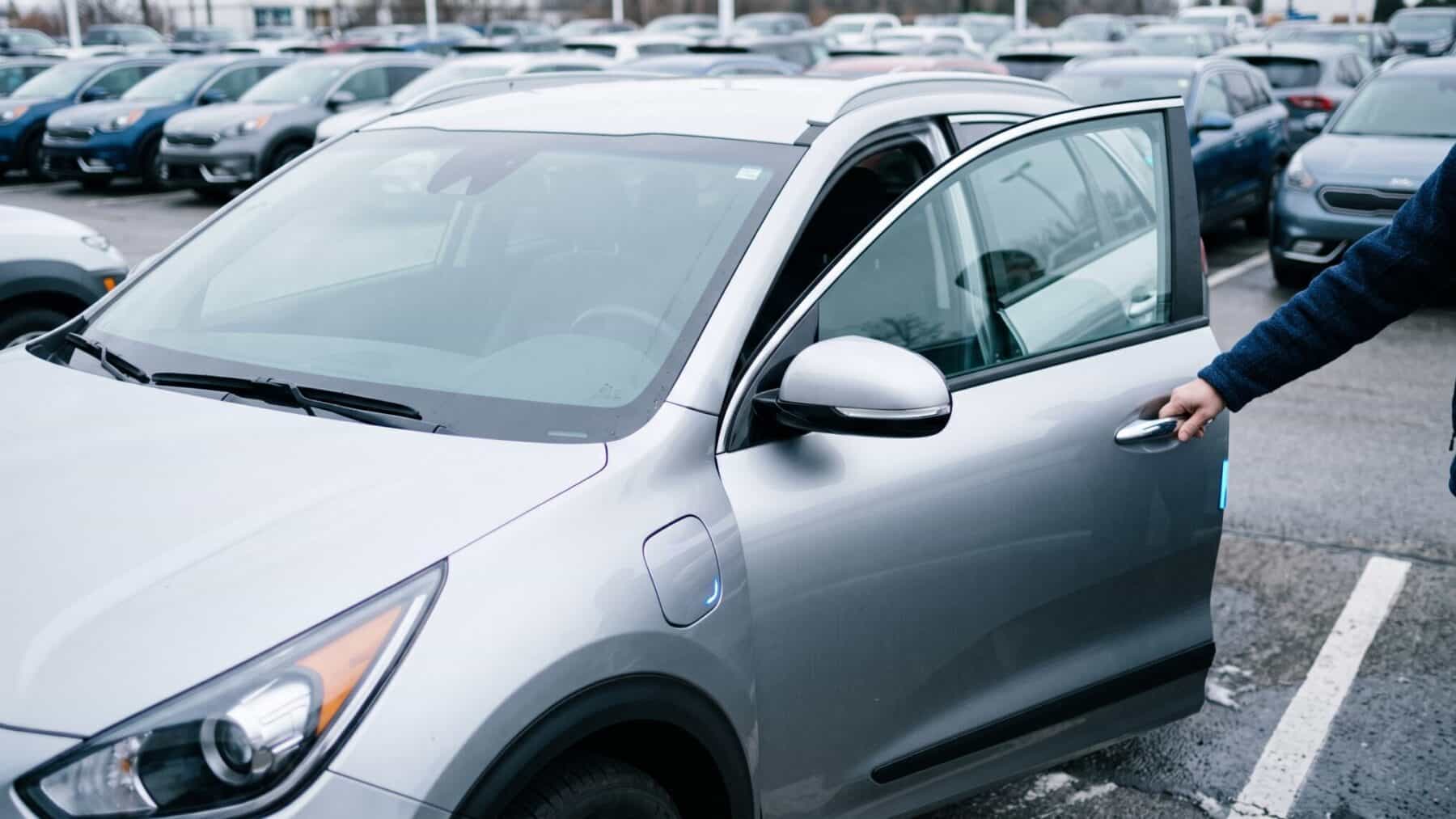
Walk onto almost any franchise dealer lot this fall and something looks different.
The back rows are filling up with clean, low-mileage electric cars. Window stickers are coming down. The cars turning up fastest are barely three years old, still inside their factory warranties. A math problem was baked into millions of lease contracts a few years ago, and it is only now coming due.
How the residual value formula mis-fired on electric cars
Every car lease is built around one number: the residual value, which is the automaker’s or finance company’s prediction of what the vehicle will be worth when the driver hands back the keys at the end of three years. The monthly payment is essentially the difference between the car’s sale price and that residual, spread across the lease term.
Get the residual right and everyone is roughly made whole at the end. Get it wrong, and the finance arm absorbs a loss for every car it has to remarket.
With electric vehicles leased heavily between late 2022 and through 2023, residuals were set using gas-car depreciation patterns, early-adopter enthusiasm, and government subsidy assumptions. None of those inputs held. Rapid model updates and falling battery costs pushed new-EV prices down, while the elimination of the federal used-EV tax credit, which expired September 30, 2025 under the One Big Beautiful Bill Act, hit used values at the same moment those lease returns began arriving.
EVs are depreciating more steeply than gas cars, with some luxury and older-range segments retaining well under half their original value, far below what the original lease contracts assumed. So when those cars arrive back at dealerships, the finance companies take the loss, not the original lessee. The buyer who walks onto the lot this fall inherits a car whose price has already been written down to match reality.
What the wave actually looks like on the ground right now
Three-year-old residual values have sunk to a five-year low of 66 percent, and off-lease availability this year adds roughly half a million units compared to last year, a 25.7 percent increase. The electric-vehicle slice of that wave is even more striking.
The share of EVs among lease returns is projected to jump to 8 percent in 2026 from just 2 percent in 2025. In raw terms, roughly 215,000 of those lease returns expected in 2026 will be EVs specifically, according to Cox Automotive data. That is a supply event unlike anything the used-car market has processed before.
The vehicles in that pipeline are not beat-up rentals. Most are 2022 and 2023 models with fewer than 40,000 miles, often still inside their factory warranties and the federally mandated eight-year battery coverage. For a buyer priced out of both new EVs and nearly-new gas cars, the timing is unusually favorable.
The hard numbers behind a used-EV deal today
Three-year-old used vehicles averaged $31,548 in the first quarter of this year, the second-highest first-quarter price on record. That headline figure sounds expensive, but it conceals a real shift in value, with residuals falling to just 66 percent of MSRP, the lowest retention rate in half a decade, according to Edmunds.
For electric vehicles specifically, the average used EV listing price in March was $34,653, with the gap to comparable gas vehicles narrowing sharply from a wide premium a year earlier to just over $1,000, according to Cox Automotive. Early this year, 44 percent of used EVs sold for under $25,000, up from 39 percent just a few months earlier, according to Cox Automotive. That price shift happened fast, driven almost entirely by the lease-return surge.
The brand mix matters too. Roughly half of EV lease maturities heading into 2026 came from Tesla, but the share is shifting toward mainstream brands including Hyundai, Chevrolet, and Ford as the year progresses, according to Cox Automotive. Meanwhile, new cars have continued to climb past elevated average transaction prices, pushing even more buyers toward the used aisle.
Where the opportunity is narrower than it looks
Not every off-lease EV is a clean deal. EVs dominated the list of vehicles that lost more value than projected in the Edmunds residual analysis, which means the depreciation curve is steeper and less predictable than for a comparable gas model. A buyer who needs to resell in two years carries more price risk than the sticker suggests.
Battery health is the other variable that wholesale prices do not fully capture. A three-year-old EV with 38,000 hard highway miles may show less remaining range than the same model with 38,000 city miles.
Certified pre-ownership programs include battery inspections, but independent lot inventory often carries no such check. Buyers who skip a battery-state report before signing are accepting a hidden variable that a price tag alone cannot resolve.
CDK Global and broader industry estimates put total EV lease returns in 2026 at more than 300,000 units, with that figure expected to climb sharply in 2027 as EV lease maturities continue to grow. The bigger wave arrives later. Buyers who wait another twelve months may find even more inventory and softer prices, though financing costs and policy changes are impossible to predict that far out.
What buyers should actually do with this information
The practical upside is real, but it requires a different checklist than a gas-car purchase. A three-year-old electric sedan or compact SUV priced under $25,000 lands in the same monthly-payment territory as a mainstream compact sedan and brings substantially lower fueling costs. For drivers who commute within a predictable range, the ownership math tilts clearly positive at current prices.
The eight-year, 100,000-mile federal battery warranty that automakers must provide means any lease return still inside that window carries meaningful protection. Most 2022 and 2023 models hitting lots right now qualify.
Checking the VIN against the original sale date before signing is the single most important step, because the warranty transfers with the car only if the mileage and time limits have not been reached.
The residual-value miscalculation that hurt finance companies is, in the most direct sense, a transfer of that loss to whoever buys the car next at the written-down price. For a buyer who plans to own long term and charges at home, this is one of the more structurally sound used-car windows in a decade.
