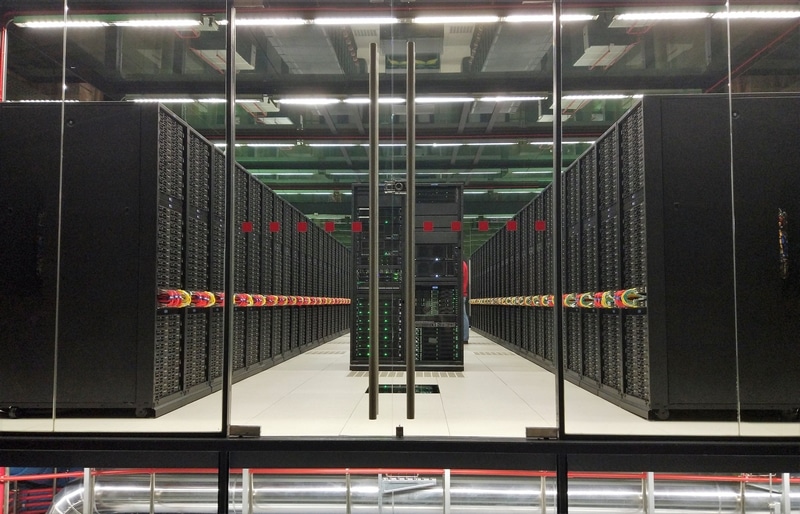
The Barcelona Supercomputing Center has moved its AI Factory Accelerator Programme out of pilot mode and into full operation, giving Spanish startups ongoing access to sovereign supercomputing power, technical mentoring and training.
NVIDIA detailed the shift in a blog post published this week, noting that many participating companies also belong to its Inception program for early stage AI startups.
What changed this week
The Barcelona Supercomputing Center (BSC)’s AI Factory Accelerator Programme, now in full operation following a pilot initiative, gives startups access to sovereign compute, technical support and training to support innovation across industries.
Many of these companies are also members of the NVIDIA Inception program for cutting-edge startups, and as of today, access to some of the BSC AI Factory services are available through the NVIDIA Inception portal.
The arrangement links two systems that previously ran in parallel: BSC’s own compute allocation process and NVIDIA’s startup support network.
The programme now sits alongside NVIDIA Inception, with some BSC AI Factory services available through the Inception portal, as the two initiatives combine compute access with training, mentoring and startup resources.
Inside the MareNostrum 5 pipeline
BSC AI Factory, powered by NVIDIA accelerated computing and the MareNostrum 5 supercomputer, is among Europe’s first AI factories and the first in Spain, and has delivered more than 800 services to private and public-sector clients since its April 2025 launch.
The facility stands as one of Europe’s first AI factories and the first in Spain.
NVIDIA also flagged more capacity on the way. An upcoming extension of MareNostrum 5, BSC’s public infrastructure serving scientific and technological innovation, powered by NVIDIA accelerated computing, will deliver supercomputing access through the BSC AI Factory and other AI Factories across Europe.
That expansion mirrors a broader pattern across the industry, where providers are racing to link data center capacity into larger pools, much like the cross-country fiber link that recently cut AI training time at two US facilities.
Startups building on the platform
Three Inception members were recently named the BSC AI Factory Accelerator Programme’s AI Champions at the pilot initiative’s demo day.
Qatium builds water-network AI using NVIDIA cuGraph, PhysicsNeMo and Nemotron, OneCareAI works on atrial fibrillation detection via NVIDIA NIM, and Avatia built a voice-first, multi-agent system that provides pharmaceutical companies with agentic coworkers that support sales representatives and give doctors transparent, curated information about medicines , using NIM, Nemotron 3 and NeMo Curator.
Qatium’s water-network platform, already used by more than 250 utilities in 16 countries, is now in early production with its Neural Water Intelligence technology, powered by proprietary AI models trained on MareNostrum 5. The company’s work sits in the utilities sector, one of the areas NVIDIA highlighted as a target for the accelerator alongside healthcare.
NVIDIA described the Inception side of the arrangement as more than raw processing power. The company said Inception complements the BSC programme with NVIDIA Deep Learning Institute open courses, business mentoring, venture capital connections and other resources.
Why it matters for European AI
The move reflects a wider push by European governments and research institutions to build AI infrastructure that does not depend entirely on US cloud providers.
The initiative aims to give Spain-based startups sovereign compute power, technical expertise, and training to build AI applications with European infrastructure.
For founders, the practical benefit is cost. The program gives participating companies direct access to BSC’s supercomputing resources, the kind of hardware that typically costs millions to access through commercial cloud providers.
That kind of access matters for AI labs everywhere, where the pace of code changes and model iteration has accelerated sharply this year, forcing engineering teams to rethink basic infrastructure like version control and deployment pipelines, a shift GCN covered in an AI lab’s code merges earlier this year.
The Barcelona program is part of a continental network of similarly styled AI factories backed by national governments and the European Union, each pairing public supercomputing capacity with private sector mentorship.
As enterprises increasingly build AI features directly into everyday productivity software, including the recent integration of core office applications into Microsoft’s Copilot app, the demand for accessible, lower cost training infrastructure is expected to keep growing across the region.
