Recent events in Venezuela involving the kidnapping of President Nicolás Maduro by US forces continue to generate repercussions and impact in other countries. In Chile, the religious sphere has also spoken out; more specifically, the Catholic Church in Chile has appealed to the international community for dialogue and prayers for the Venezuelan people.
Chile mobilizes Church and faithful in appeal for regional dialogue
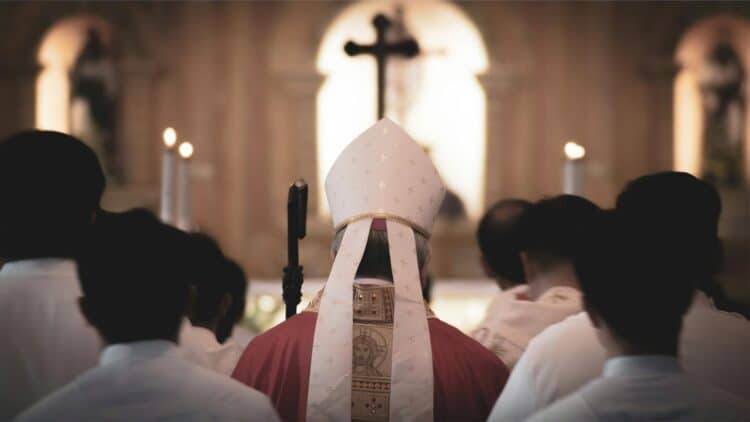
The Permanent Committee of the Chilean Episcopal Conference took the initiative to send a public message asking people to pray for Venezuela. This is not the first time the Catholic Church has spoken out on the matter; the statement follows recent declarations by Pope Leo XIV and Venezuelan bishops, who expressed concern about the latest political events in the neighboring Latin American country. From the Chilean bishops’ perspective, the Christian response to all this uncertainty should always be one of seeking serenity and listening.
The content of the released document invites parishes and communities to dedicate some time to prayer during their masses and other meetings, focusing on this issue. In addition to attempting to create regional unity around the matter, the Chilean Catholic Church conveys a message that faith can act as a bridge to understanding when political dialogue seems to fail.
Following the Pope’s words, the bishops, within their faith, speak about the importance of entrusting their prayers to the intercession of Our Lady of Coromoto and Saints José Gregorio Hernández and Carmen Rendiles. The choice of saints is not random and reinforces the religious identity of the Venezuelan people.
Latin American churches advocate for peaceful solutions in the face of military action
The Chilean document does not appear alone. In the United States itself, representatives of the Episcopal Church reacted skeptically to Maduro’s arrest, conveying a message from the perspective of unauthorized operation and also reflecting on the need to respect the sovereignty of countries and the importance of following international law.
These leaders discussed past resolutions condemning the preemptive use of military force, although they also acknowledged that, in extreme cases, interventions could be discussed. Among the criticisms, one could highlight issues of a lack of respect for the individual sovereignty of countries, while also conveying a message of peace and legality within the precepts of the Christian church.
Global religious voices warn against intervention and defend peaceful dialogue
In addition to pronouncements from the Chilean Catholic Church and episcopal leaders, the World Council of Churches issued a statement affirming that the operation represents a flagrant violation of international law, also warning of the dangerous precedent that could arise from it. Despite coming from different religious voices, they all share a common appeal that reinforces peaceful discussions and respect for the Venezuelan people’s will.
Hospitality and prayer strengthen ties with Venezuelans living in Chile
Although the requests were primarily focused on Venezuelan territory, the Chilean bishops also addressed their own country. Chile today has a considerable number of Venezuelans living within its borders, many of whom actively participate in parish life. For them, the message comes as a gesture of welcome and support amidst the current situation.
The document discusses the importance of reaching out and creating bonds of fraternity, arguing that unity through prayer can strengthen communities and alleviate shared suffering. The proposal encourages more humane relationships between Chileans and migrants.
Historically, religion and politics are intertwined, mainly due to the churches’ great capacity to reach their audiences. The request from the Chilean bishops does not offer immediate political solutions, but it is capable of influencing possible paths towards a solution that prioritizes dialogue in contexts of high polarization. The church is trying to keep alive the Venezuelan faith and hope for a resolution to the conflicts in the country.