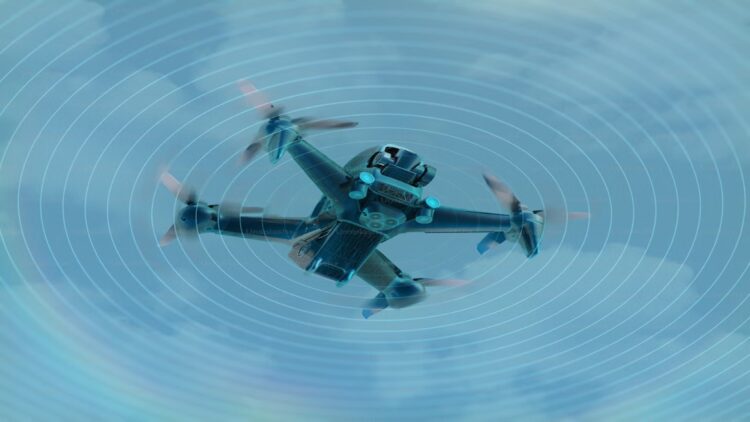
The battle beneath the waves is going through a technological shift, as traditional giants in the defense industry compete with agile technology start-ups in submarine warfare. This new industry is valued in the billions in terms of revenue, which will change the tactics of navies across the globe. This is much like the drone revolution that evolved air warfare in battles fought on land, as this technology is now being developed below the ocean’s surface, where stealth is essential.
Defense giants face startup disruption in underwater warfare
Conventional defense contractors such as BAE Systems, General Dynamics, and Boeing must now face unprecedented competition from the likes of Anduril, a technology startup, as well as Germany’s Helsing, in the mounting demand for underwater drones. The Royal Navy in the UK is exploring investments in uncrewed underwater vehicles (UUVs) as part of its efforts to better track its submarines, as well as secure its strategic undersea infrastructure.
“This represents a real step-change in the underwater battle space. What this means is that navies will be able to scale up in ways that simply were not possible before, and that will be achieved with much reduced costs compared to traditional manned submarines,” explains Scott Jamieson, managing director of BAE Systems’ Maritime & Land Defence solutions. Such a technological shift opens avenues for smaller companies to compete with the existing giants with innovations that offer shorter cycles of innovation.
However, the tech startups assert that they can do so faster and more affordably than established firms. Anduril, led by a fundraiser for Donald Trump, Palmer Luckey, is exploring production facilities in the UK, compared with Helsing, which launched its facility in Plymouth, home to a Royal Navy base. They surpass conventional defense industries in their pace, as prototyping takes decades with traditional acquisition.
Geopolitical tensions fuel the pressing need for seabed surveillance
The growing threat of geopolitics, as well as recent attacks on vital undersea infrastructure, has notably spurred the demand for underwater surveillance systems. The Royal Navy is particularly working on tracking Russian underwater nuclear capabilities via the Greenland-Iceland-U.K. (GIUK) gap, a strategic chokepoint through which NATO allies can track Russian activity within the Atlantic. Australia is pouring $1.7 billion into its ‘Ghost Shark’ submarine, designed particularly with countering Chinese submarine activity in mind.
Recently, there have been events that show weakness in global communications, energy and infrastructure. There was the attack on the Nord Stream pipeline in 2022, the attack on the BalticConnector pipeline, which is between Finland and Estonian pipelines in 2023, as well as cuts on telecommunications cables within Swedish waters. Recently, the UK government reported that the Russian surveillance ship, Yantar, was seen navigating within UK waters so as to identify cables within the ocean. There was a reported 30% increase in Russian ships threatening UK infrastructure.
Critical infrastructure that may be at risk includes:
- 60 undersea cables for data & energy communications around the British Isles
- Oil and Gas Pipelines between European Countries
- Telematic networks providing internet communications worldwide
- Power cables that connect national electrical grids
Project Cabot speeds rapid technology deployment
The Ministry of Defence’s Project Cabot is a big shift in the traditional procurement model, with a focus on speed and cost-effective development of underwater surveillance systems. According to the Royal Navy, this project represents ‘anti-submarine warfare as a service,’ where the ‘software as a service’ paradigm is applied in this case to anti-submarine warfare.
Such is the battle for control of the seabed, as it represents the transformations taking place in the world of military technology, in which the speed of innovation beats the conventional strengths associated with procurement. With underwater drone wars being a likely scenario, the firms that will emerge on top in this industry will be those that strike the right chord between innovation and functionality.