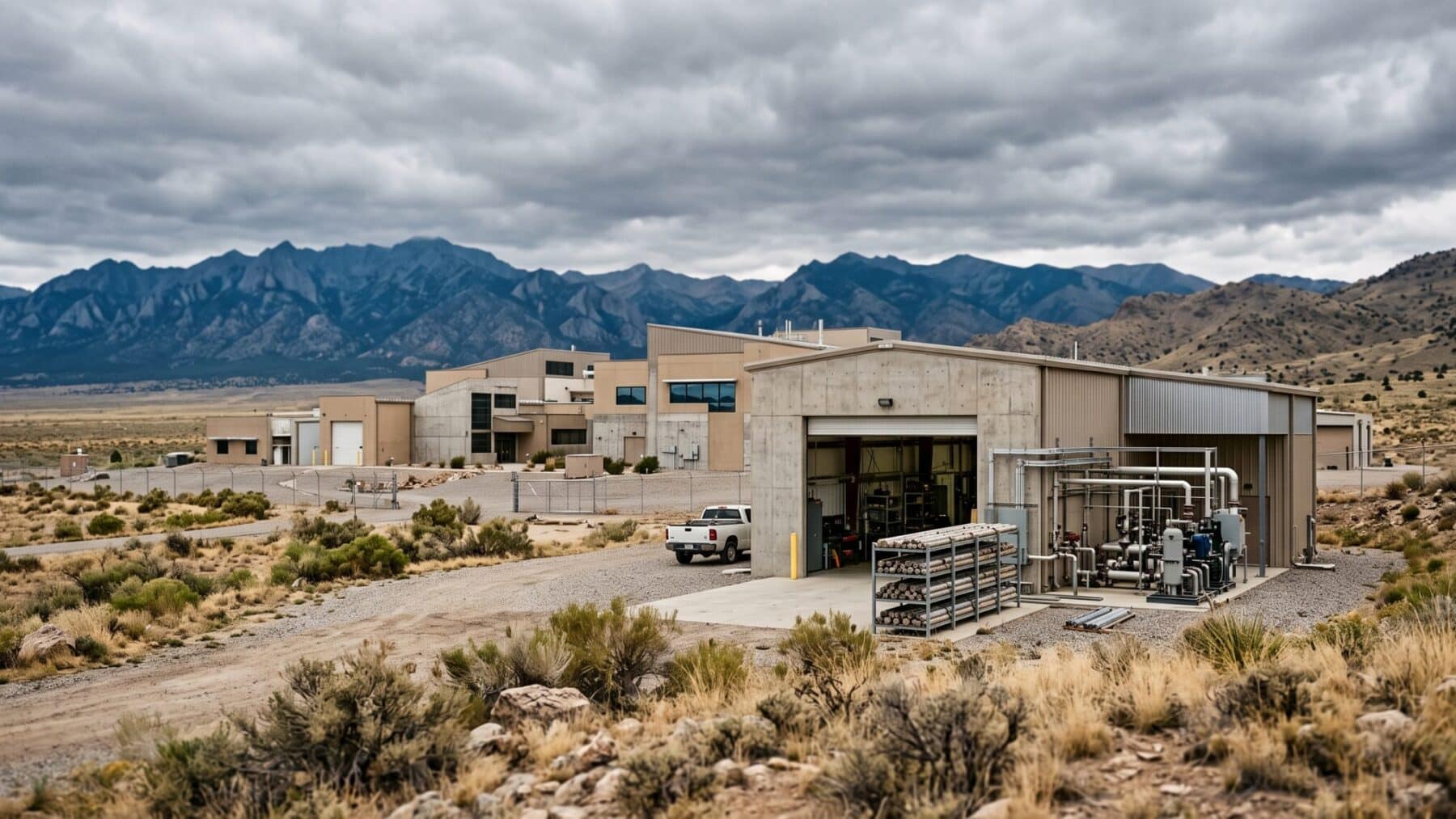
The U.S. Department of Energy launched its Geothermal Center of Excellence at an in-person event hosted at the National Laboratory of the Rockies (NLR) campus in Golden, Colorado, bringing together DOE leadership and staff, NLR and National Energy Technology Laboratory (NETL) leadership, laboratory staff, and industry to advance the center’s vision and priorities. The launch took place on Sept. 3.
The launch marks the federal government’s most direct institutional commitment yet to scaling domestic geothermal power beyond its current niche foothold on the grid.
What the center will do
Established by the Hydrocarbons and Geothermal Energy Office (HGEO), the center will unite expertise and world-class capabilities from across DOE’s national laboratories to accelerate the discovery and development of gigawatt-scale geothermal energy, resource discovery, and commercial development. It is located on the NLR campus in Golden, Colorado, and is led by NLR and enabled by NETL. Nine other national laboratories will support the work.
The new center is at NLR’s South Table Mountain Campus in Golden, Colorado, strategically located near the areas of greatest geothermal opportunity in the western United States.
About a dozen federal employees from the department’s hydrocarbons and geothermal energy office are assigned to the site, with contractors across the lab network.
The center will support DOE’s goals by driving innovation and serving as industry’s main entry point to the national laboratories. An invitation-only Industry Advisory Board will provide objective insight into industry-relevant geothermal research needs, accelerate industry-lab partnerships, and advise on center priorities.
By connecting industry stakeholders with laboratory capabilities and facilities, the center aims to help address priority technical barriers and cost-effectively scale and accelerate widespread geothermal deployment.
Federal funding and near-term project signals
DOE had already announced a funding opportunity of up to $171.5 million for next-generation geothermal field tests as well as characterization and confirmation drilling for geothermal resources. Haustveit said awards are due in the coming weeks and that an enhanced geothermal project in Utah would add 100 megawatts to the grid “in the coming weeks.”
That funding notice is consistent with how the department has structured earlier geothermal support, including a $14 million pilot to convert a Pennsylvania shale gas well to geothermal power.
Assistant Secretary of Energy Kyle Haustveit, who delivered opening remarks at the September 3 launch, told reporters that “a private-public partnership is what we need to unlock at scale geothermal.” He said the center would leverage the national laboratories’ scientific and engineering expertise in partnership with industry to unlock gigawatt-scale power generation, expand American energy production, and deliver more affordable, reliable, and secure energy to the American people.
Industry backdrop: first commercial EGS nearing operation
The center opens as Fervo Energy’s Cape Station project in Milford, Utah, is on track to send power to the grid next month, which would make it the first enhanced geothermal system in the U.S. to reach commercial operation.
Fresh off a May IPO that raised nearly $2 billion, Fervo Energy is developing the multi-phase Cape Station geothermal development located in Beaver County, Utah, northeast of Milford. Phase I is on track to begin delivering clean power to the grid by late 2026, reaching approximately 100 megawatts of operating capacity by early 2027. Phase II is targeted for 2028.
Southern California Edison has agreed to buy 320 megawatts of geothermal power from Cape Station under two 15-year power purchase agreements.
Fervo’s chief executive Tim Latimer attended the Golden launch event alongside representatives from Ormat Technologies and DOE leadership, underscoring the degree to which the new center is intended to serve as a bridge between federal research capacity and operating developers. Earlier this year, PNNL, Fervo, and NVIDIA built an AI digital twin to manage geothermal reservoirs in real time, demonstrating how deeply the lab-industry partnership model has already taken root.
Scale ambitions and the resource case
Geothermal energy’s ability to provide an around-the-clock, low-emissions source of power is attracting renewed attention as global electricity demand rises and power systems place a growing premium on firm supply. Despite that interest, geothermal energy still supplies less than one percent of global electricity demand, according to the IEA, even as countries like Kenya and Iceland have achieved widespread adoption.
Combining new drilling and materials technologies with real-time downhole sensor data has cut well costs by up to 30 percent and may extend asset lifetimes beyond 25 years.
If project costs continue to decline, the IEA predicts that geothermal energy could meet 15 percent of the growth in global electricity demand between 2024 and 2050.
The new center in Golden is designed to compress that timeline by giving companies a single, organized gateway into the full breadth of the national laboratory system’s drilling, reservoir, and materials science capabilities.
