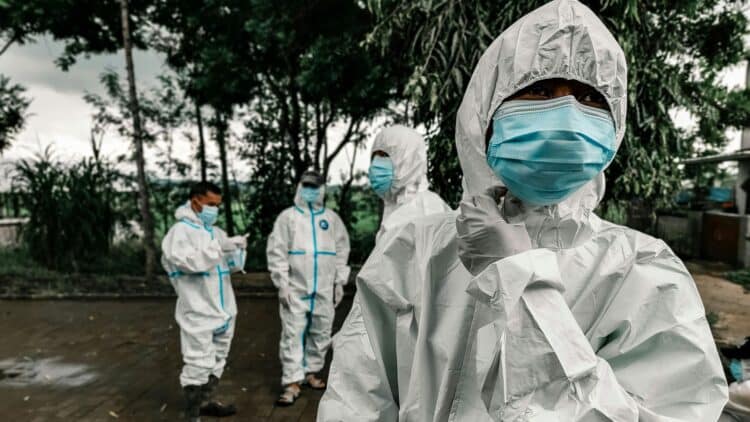
On December 1, 2025, the DRC Ministry of Public Health announced that the Ebola Virus Disease outbreak in the Kasai Province had been contained. This announcement came after the WHO standard of 42 full days, which is two times the maximum incubation period, without a case being recorded after the last patient had been discharged on October 19.
The outbreak’s timeline
This outbreak started in September 2025 in the Bulape Health Zone, and it was responsible for a total of 64 cases (53 confirmed and 11 probable) and 45 deaths. Health authorities and their international partners managed to stop the hemorrhagic outbreak, even with the depth and remoteness of the sector, which severely constrained both road and telecommunication infrastructures.
As a result of these efforts, the outbreak has been contained within a relatively short period. Thanks to the work done by the WHO and partner organizations, the Ebola outbreak was tamed within three months, a record time when compared to previous outbreaks.
Field Innovations and Rapid Vaccination
Vaccination and its rapid implementation played a crucial role in this process. 47,500 vaccinations were administered to an increasing circle of primary and secondary contacts of infected individuals. For the first time, the WHO and its partners brought in an IDTM (Infectious Disease Treatment Module) to the field. This is an innovative medical unit designed to balance safety, dignity, and humane treatment of patients. This is a significant innovation in the outbreak response framework.
The rapid response to the outbreak will additionally provide positive changes in the health and welfare of the people of the Kasai Province. The WHO and its partners brought water relief to the people of Bulape by laying a piped water supply to the hospital and public water points. Positive changes will continue as health facilities are designed and built to improve the region’s health and safety.
Improving Health Systems and Infrastructure
The capacity of a community to withstand future health risks is improved when positive changes are made according to an emergency response. These actions and the upgrades made to health emergency response systems demonstrated in Kasai are an example of the potential value of health emergency response systems.
The Ebola Virus Disease (EVD) has not been reported outside of the Democratic Republic of Congo (DRC), making the risk of spread remain very low. The DRC’s Ministry of Health and the CDC both continue to report DRC domestic EVD cases. Therefore, the CDC issued a Level 1 Travel Health Notice, indicating that the risk is low, and that individuals should take regular travel precautions.
Global and Local Impact
In the United States of America, the CDC issued a Level 1 Travel Health Notice, indicating that the risk is low and that individuals should take regular travel precautions. For the DRC, though, the outbreak has particularly highlighted the still-existing weaknesses in rural communities.
Vigilance moving Forward
Surveillance is extended following the official end of the outbreak. Ninety days of enhanced surveillance have begun to ensure that any relapses of the outbreak will be dealt with swiftly. Multiple survivor support and care programs will be developed, providing complete support systems for the medical, psychological, and social rehabilitation of Ebola survivors. Programs expanding to provide holistic support for survivors will incorporate multiple sectors of restoration, including social and medical support.
Healthcare workers and the global community are to be commended for the successful conclusion of the Ebola outbreak in the DRC. The Ebola Virus Disease outbreak calls for the utilization of vaccines and effective coordination. The country remains on alert for future outbreaks. However, the ability to quickly contain the outbreak demonstrates the effective and rapid response that can be achieved with the right resources, community involvement, and proper coordination.
While the DRC moves to more advanced forms of monitoring, the knowledge gained and the improvements made to the infrastructure will create more robust health systems and more protective communities against future outbreaks.