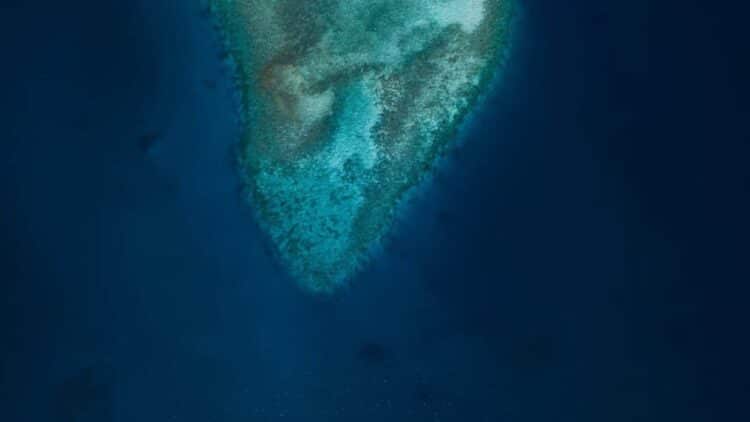
Life on small islands often comes with unique difficulties, from the growing impacts of climate change to the burden of expensive energy. Many remote Pacific nations still depend heavily on fossil fuels, raising an important question: how can they lower costs while meeting the needs of their populations? This article explores how Tokelau turned to solar power—and how that decision transformed life on the islands.
The renewable energy project at Tokelau
Tokelau is a tiny Island nation. It is made up of three coral atolls, all with a combined area of 10 square kilometers. These three atolls are Atafu, Nukunonu, and Fakaofo, and have a combined population of 1,500 citizens. Despite the population, the country has managed to build solid solar power systems that benefit everyone and reduce energy costs. But how were they able to do it?
The project to build these powerful systems began in 2012. It was funded by the New Zealand Aid Programme and realized by PowerSmart and the energy consulting firm IT Power Australia. To build these systems, installations comprising approximately 4,032 photovoltaic panels, 392 inverters, and 1,344 batteries were carried out across the three atolls. These installations were completed quickly, with a smaller budget than planned.
At the end of October 2012, the project was completed. About three powerful solar systems with battery storage were made. Each system is among the largest off-grid solar power systems in the world. Altogether, they produce approximately 150% of the electricity demanded in Tokelau. This is way higher than the 90% initially planned.
Challenges of going solar in the Pacific
Although this project has brought a lot of benefits to Tokelau, there are also a lot of challenges. One challenge faced by Tokelau is that it is extremely remote. The closest atoll to Tokelau is 500km north of Samoa, and transport to this region isn’t easy, as there are no airstrips. Therefore, if there are faults in these powerful solar technologies and certain parts of the system need replacement, it is challenging to transport materials into the country due to the location.
Climate change also poses another threat to these solar power systems. Harsh weather conditions, such as strong winds, rising sea levels, and high temperatures, can cause damage to these systems. Therefore, the materials used to build these systems must be designed to withstand any adverse conditions. If there is damage to any part, it becomes difficult to replace due to the poor transportation network.
PowerSmart was purposefully chosen for this project.
Switching from fossil fuels to solar energy was really crucial to Tokelau. And considering the Island’s topography, it is a place that is susceptible to the harsh conditions of the climate. To design systems that could survive the harsh conditions of the Island, PowerSmart was chosen as the contractor, as they have experience in developing systems for harsh and remote environments. Reducing the need for fossil fuels has benefited the Island’s environment and the economy, similar to the ambitious solar project in America.
Other Pacific nations are following Tokelau’s footsteps.
Aside from Tokelau, which was formerly reliant on fossil fuels, many other Islands around the Pacific are also highly dependent on these fuels. And the cost of importing these fuels is so high that many of these islands are struggling to cope. Therefore, most of these Islands are tilting towards renewable sources of energy as a long-term solution. With the Tokelau project already a success, it is only a matter of time before the Islands start using solar energy to power their country.
Despite being a remote island in the Pacific Ocean, Tokelau can cater to its small population by offering a cheaper means of power. With three solid solar energy systems that withstand the harsh climate conditions, there is less reliance on fossil fuels, resulting in lower spending on imports, just like this megaproject, changing the course of the renewable energy industry.