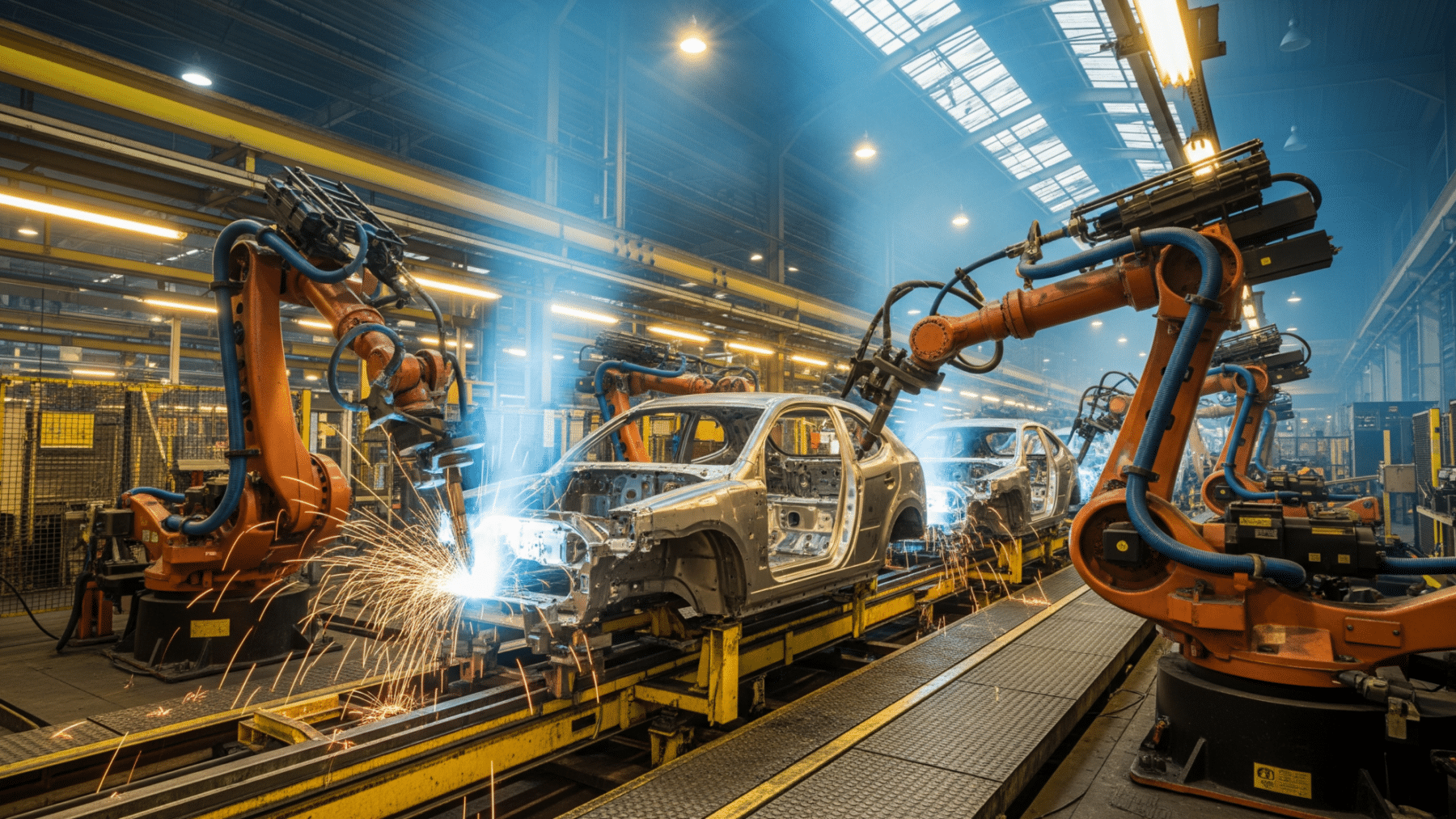
Something crossed a threshold inside the world’s factories last year, and most people who work in offices, shops, and warehouses had no idea it happened.
The count of industrial robots running simultaneously on factory floors worldwide passed 4.6 million units, a milestone confirmed by the most comprehensive annual survey of the industry.
The number is staggering. And the decade-long trend behind it is even harder to ignore.
A record that has been quietly building for years on every continent
The World Robotics 2025 report from the International Federation of Robotics showed 542,000 industrial robots installed worldwide in 2024, more than double the number from 10 years ago, with annual installations topping 500,000 units for the fourth straight year.
IFR president Takayuki Ito called 2024 “the second highest annual installation count of industrial robots in history, only 2% lower than the all-time-high two years ago.”
That is not a blip. That is a structural shift in how the world makes things.
The total number of industrial robots in operational use worldwide reached 4,664,000 units in 2024, an increase of 9% compared to the previous year.
One region is running so far ahead that the gap almost defies comparison
Every region added robots, but the scale in Asia made every other market look like a warm-up act.
Asia accounted for 74% of new deployments in 2024, compared with 16% in Europe and just 9% in the Americas.
Inside that Asian dominance, one country stood alone.
China is by far the world’s largest market, representing 54% of global deployments, with 295,000 industrial robots installed there, the highest annual total on record.
For the first time, Chinese manufacturers sold more robots in their home country than foreign suppliers did, with their domestic market share climbing to 57%, up from about 28% over the past decade.
America’s factories are finally catching up, but the rebound only tells half the story
The United States had a genuine comeback year, and manufacturers took notice.
US robot installations grew, with the country accounting for 68% of all installations across the Americas, according to IFR data.
The sectors driving that rebound included automotive and general manufacturing, logistics, and material handling, not just the legacy auto plants that historically powered American robotics demand.
If you’ve wondered why your warehouse robots are getting smarter, this is the data behind the push.
The IFR forecast that global robot installations are expected to grow by 6% to 575,000 units in 2025, with the 700,000-unit mark set to be surpassed by 2028.
The density number no one in American manufacturing wants to talk about
Here is the real reveal: raw installation counts flatter the United States badly.
When the IFR measures robot density, the number of robots operating per 10,000 manufacturing employees, the US ranked 8th globally at 307 robots per 10,000 workers, compared with a global average of 132.
That sounds strong until you check the leader board. South Korea leads the world with 1,220 robots per 10,000 workers, Singapore ranks second with 818, followed by Germany at 449 and Japan at 446. Sweden (377), Denmark (329), and Slovenia (315) all sit between Japan and the US in the rankings.
China, the world’s largest market for industrial robots, has five times more operational robot stock than the US , according to IFR’s official press release accompanying the World Robotics 2025 report.
For a country that pioneered industrial automation and still ranks among the top markets by annual installs, eighth place in density is a complicated number to explain to a factory floor worker wondering about job security.
It also explains why Washington and major manufacturers have been in a race to automate faster, a conversation that intersects directly with debates about AI in the workplace and what the next wave of automation actually costs workers and companies alike.
Why the decade-doubling pace is likely to keep accelerating from here
Robotics investment has surged globally, with significant capital flowing into humanoid and AI-driven robotics platforms throughout 2025, signaling strong investor confidence in the sector’s next chapter.
Annual robot installations have now more than doubled over the past decade, and the forces behind that doubling, labor shortages, reshoring drives, and AI integration, show no sign of letting up.
The global market value of industrial robot installations has reached an all-time high of US$16.5 billion.
For American factories trying to close the density gap, the math is straightforward: the robots are available, the investment is flowing, and the cost of waiting keeps rising.
The milestone of 4.6 million machines running simultaneously is not just a statistic. It is the clearest signal yet that the factory floor of the next decade will look nothing like the one your parents worked on.
