
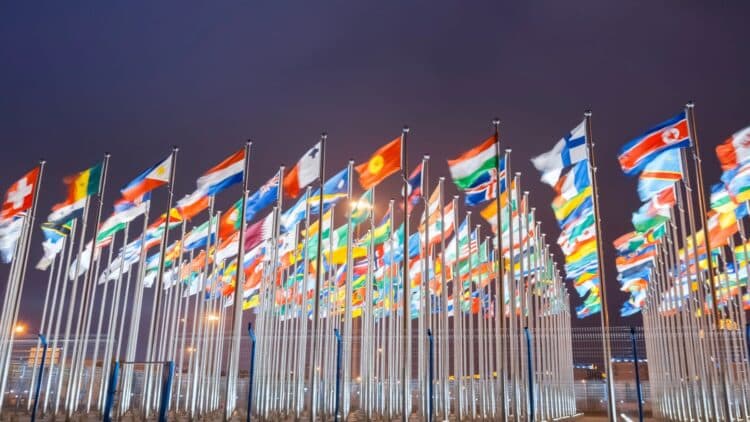
World leaders are set to hold a historic summit in January 2026 to strengthen respect for international humanitarian law (IHL), a first for the world. This summit will be the first to strengthen respect or international humanitarian law in the IHL framework to be held in IHL conflict zones. This initiative, the first of its kind, shows the world’s growing concern brought to the IRC’s attention about the humanitarian norms being lost in the midst of violent conflict and the sufferings of civilians.
Collective diplomatic engagement and intent
After months of the ICRC’s Global Initiative on International Humanitarian Law, the ICRC’s intent on alleviating humanitarian crises, the enacted change for the enforcement of IHL frameworks through the declaration from the IHL mutual agreement. ICRC heads of state’s recognition of their mutual agreement underscores the priority in humanitarian crises of the world. The declaration reads:
“The rules of war exist to preserve humanity, even in times of conflict.”
Representatives of humanitarian organizations, major powers, and regional blocs, as listed for the 2026 summit, will attempt to remedy systemic breaches of humanitarian law by illegal strikes on civilian infrastructures, disproportionate use of explosive ordnance, and humanitarian access obstruction.
There have been deadly new trends in recent, ever-changing conflicts arising from humanitarian law breaches. Hospitals have been attacked, humanitarian aid convoys have been targeted, and whole civilian populations have been confined to besieged cities.
Each of these de-legitimizes humanitarian law’s core values and justifies the requirement for unified action on the globe to safeguard the threatened core values.
The ICRC’s objectives for the summit
ICRC cites three objectives for the summit agenda:
- Developing Mechanisms for Strengthening Compliance: Accountability gaps for states and armed groups’ breaches of humanitarian law must be resolved.
- Civilians must be protected to a greater degree: Practical provisions must be made to secure civilian healthcare, potable water, and food supply, all of which must be available during conflicts.
- Promoting humanitarian access: Humanitarian agencies must be protected in carrying out their activities in conflict areas. There must be no political or military obstruction.
Having agreed to a global summit, state leaders will be the first to testify to the severe discord relating to asymmetric warfare and the enforcement of humanitarian norms.
However, warfare done by non-state actors, urban combat, and cyber warfare put more pressure on the international recognized humanitarian laws. It was accepted that the legal frameworks governing warfare must be revised to be relevant and effective.
The voices of humanitarians and what they can expect from the summit
ICRC chief Mirjana Spoljaric welcomed the global summit, calling it “an opportunity to reaffirm the world’s commitment to humanity.” She reminded all that the summit must go beyond mere statements and that compliance must be actioned.
“Every day, we see the consequences of non-compliance that impact whole families, their hospitals, and worse. The principles of this summit must be put into practice.”
Negotiations will take place during the first half of 2026, and working groups will be expected to submit drafts governing enforcement, monitoring, and other related frameworks. The ICRC will organize the first session of the dialogue between state and non-state militaries and civil society. Many believe success will depend on crossing the political bridge within and between states and other parties to opportunism and exploitative dominance.
Increased complications of warfare and the rising crisis of civil suffering must be addressed in the 2026 summit. Through the enforcement of humanitarian law, the goal of the world’s leading countries is to again bring some degree of humanity to warfare, as well as to uphold the principles of international relations for the past hundred years. Protecting civilians is not an option; it is an obligation.
