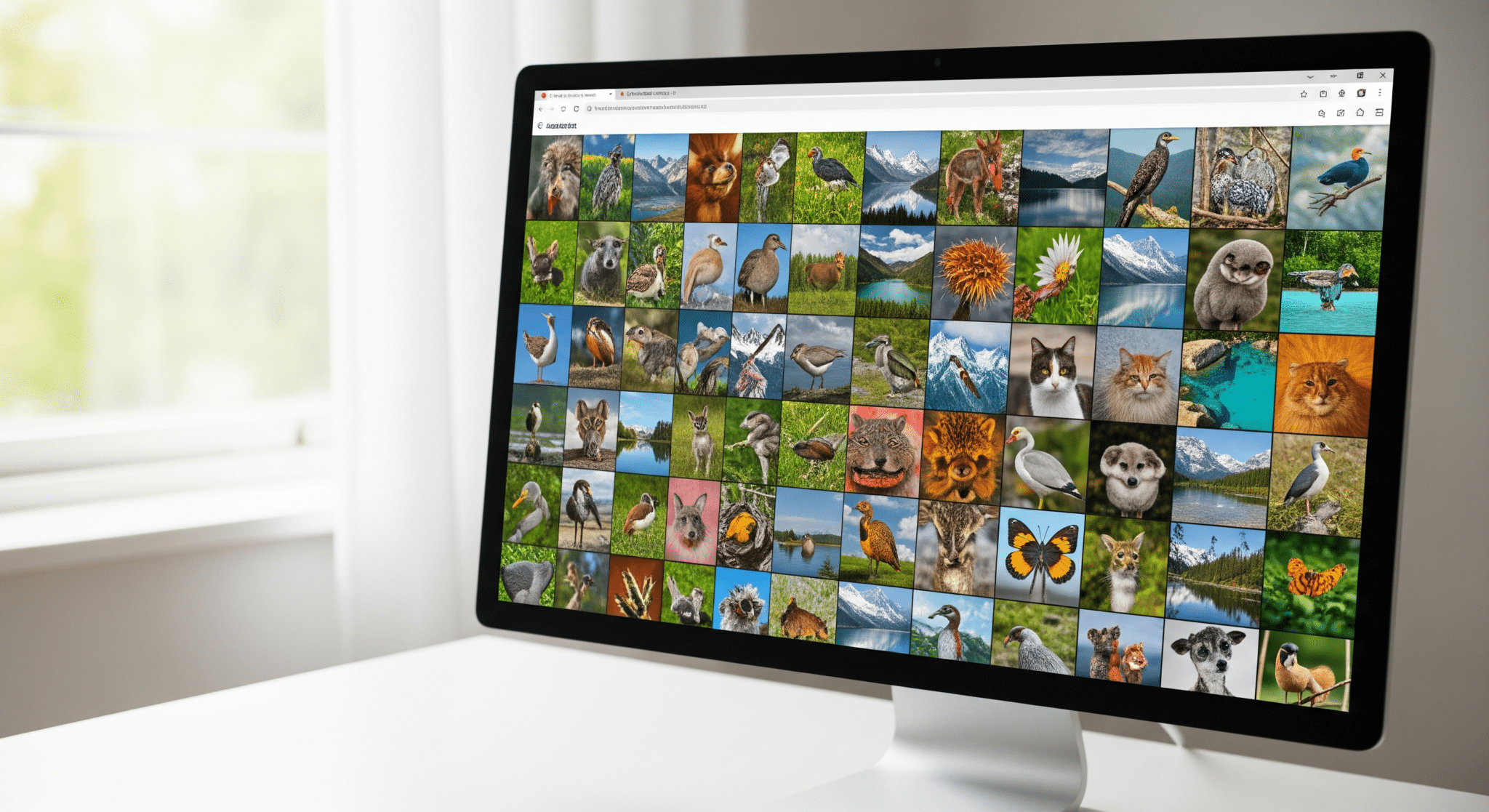
Google marked the 25th anniversary of Google Images this week by unveiling a redesigned, personalized homepage and introducing AI-powered image generation directly inside Search, the company announced on its official blog.
A tool born from a viral fashion moment
It was February 2000 when Jennifer Lopez wore a jungle-print dress, designed by Donatella Versace, to the Grammy Awards, and seemingly overnight it became a fashion legend, as well as the most popular search query Google had seen at the time.
But back in 2000, search results were still just a list of blue links. When the Search team realized they were not able to directly surface the results that people wanted, a picture of Jennifer in the dress, they were inspired to create Google Images.
Google paired a recently hired engineer, Huican Zhu, with product manager Susan Wojcicki, who would later become CEO of YouTube, to build the feature, and they launched Google Image Search in July 2001.
At launch, the service indexed 250 million images, a number that grew to 1 billion by 2005 and 10 billion by 2010.
New personalized homepage rolling out in the U.S.
Google is introducing a refreshed Google Images experience with a dynamic homepage that displays a continuously updated gallery of images based on individual interests, allowing users to browse visual content before entering a search query.
Images and ideas found in the gallery can be saved to Collections, which appear as tabs at the top of the main gallery, making it easier to return to previously saved themes or continue exploring based on images that caught your eye.
The redesigned Google Images homepage will begin rolling out over the coming weeks for desktop users in the U.S. in English. Users will need to sign in with a Google Account to access the experience.
The update reflects a broader push by Google to make its products more AI-aware, similar to the Gemini-powered features it recently introduced across Waze.
Nano Banana 2 Lite brings image generation into Search
Google is also adding image generation to AI Overviews. Powered by Nano Banana 2 Lite, this is rolling out over the coming weeks in English for all countries that support AI Mode image creation.
Google says the capability is particularly useful when a search query requires a specific picture that does not yet exist on the web.
This kind of AI integration into core search products is part of a wider industry trend, with companies racing to embed generative capabilities into everyday tools, from search engines to content creation suites.
Two decades of visual search milestones
Over the years, Google Images has gained features including Similar Images in 2009 to find pictures without relying on text alone, Search by Image in 2011 to let the image do the work of navigation, Google Lens in 2018, and Multisearch in 2022 marking a significant step into multimodal search, allowing users to search with text and images at the same time.
In 2024, Google built Circle to Search to help users search anything on their Android phone screen. With a simple gesture, like circling, highlighting, scribbling or tapping, users can select what they are curious about on their phone screen and get more information right in the moment, without switching apps. Circle to Search is now available on more than 580 million Android devices around the world.
In 2025, when a user uploads or snaps a photo, AI Mode can process the entire scene. Using a “visual image fan-out” technique, it breaks a single image search into dozens of sub-queries to understand the full visual context and deliver relevant results.
Google said the latest updates build on more than two decades of developments in visual search, which has evolved from helping users find images on the web to supporting AI-powered multimodal search experiences combining text, images and live video.
