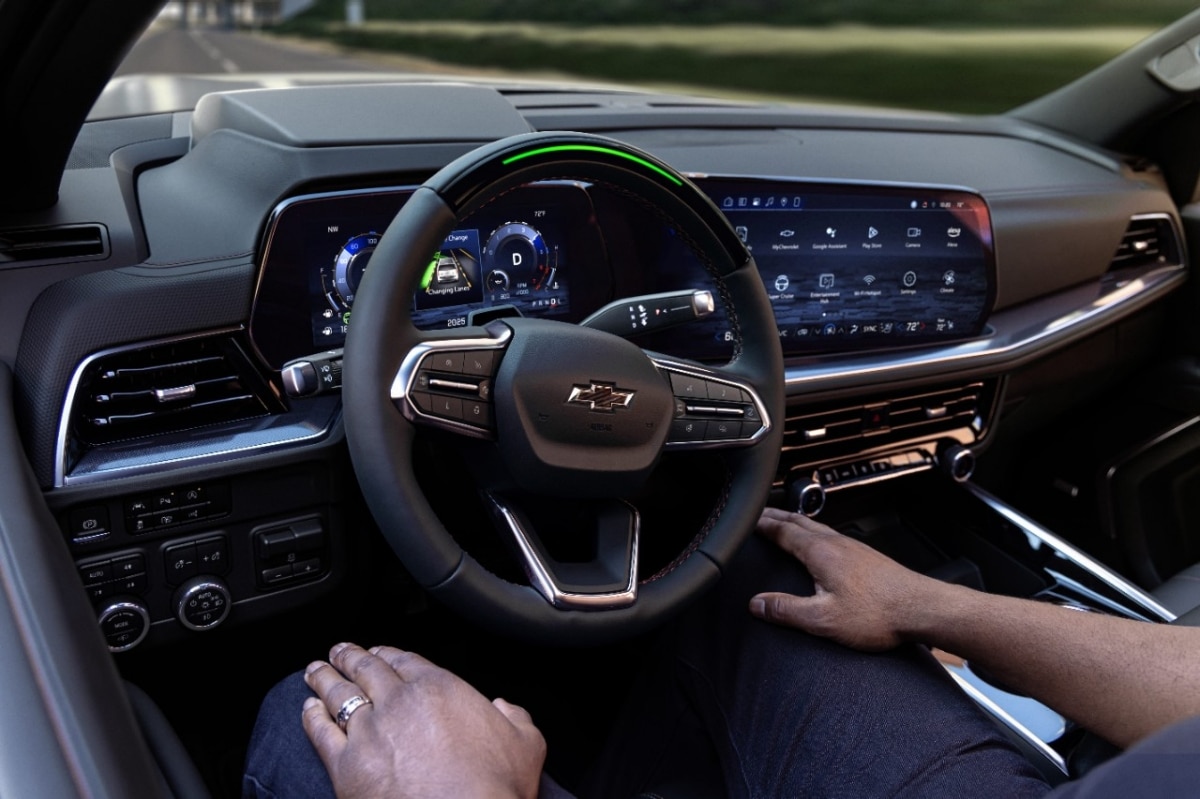
Picture the moment the salesperson demonstrates it.
The lane holds. Nobody reaches for anything. The wheel steers itself. It feels like science fiction made real, and that sensation is baked into the pitch for every truck and SUV that ships with a hands-free driving system today.
What the showroom rarely clarifies is what happens at the end of month 36.
The hardware never leaves the car. The capability does. And the moment that distinction clicks, the entire value proposition of the feature looks completely different.
Why the feature works differently once the clock runs out
One US automaker has sold hands-free highway driving since 2017, and new buyers receive three years of service bundled with select vehicles. The feature is not locked behind a mechanical part. It lives in software, and software can be switched off remotely the moment a subscription lapses.
That is the mechanism most buyers never think through at signing: the hardware stays in the car, but the capability that uses it disappears entirely. Cameras, radar modules, and processing chips all remain installed and functional. They simply stop being activated.
A commuter who drives mostly surface streets finds the feature unavailable on the roads they use most, long before the subscription question even comes up.
What the system actually does when it is switched on
A hands-free highway system handles steering, acceleration, and braking on compatible roads, relying on cameras, radar, and GPS to keep the vehicle centered in its lane. A driver-facing camera watches eye position continuously and flags any extended glance away from the road. The system is designed to feel invisible when it is working well, which is partly why drivers forget it will eventually cost them something.
Coverage varies sharply by brand. One automaker’s system covers roughly 130,000 miles of pre-mapped roads, while a rival’s covers more than 750,000 highway miles across the US and Canada. The gap between what “works on highways” sounds like and what it means in practice can be hundreds of miles of road for any given driver.
Heavy rain, snow, or fog can degrade performance, because precipitation affects forward-facing camera visibility. Faded lane markings have the same effect. For anyone driving in the Midwest in February, that is a significant fraction of winter commuting days.
The numbers behind who keeps paying and who does not
In earnings materials, the automaker told investors it expects approximately 160,000 additional customers introduced to Super Cruise as the system becomes standard on redesigned full-size pickups. Buried nearby is the part that did not appear in any press release: the attach rate once the prepaid trial runs out sits in the 30 to 40 percent range, roughly three to four out of every ten eligible customers move to a qualifying paid plan.
After the free period, one automaker charges $39.99 a month for standalone access. A rival’s trial and post-trial pricing differ and vary by plan. Three years of free access trains a driver to rely on the feature, then presents a recurring bill at the exact moment the novelty has worn off.
The manufacturer has stopped treating the feature as a vehicle option and started treating it as revenue. CEO Mary Barra has set a target of growing annual Super Cruise revenue to $2 billion within five years, while GM reported more than $5.4 billion in deferred revenue from OnStar services, including Super Cruise, at the end of 2025. A feature sold at the dealership as part of the vehicle is actually a recurring income stream, with renewal terms that can change each year.
So the math for the automaker is straightforward even at a 35 percent attach rate. More equipped vehicles on the road means more potential subscribers, and every renewal compounds.
Where the system reaches its hardest limits
The subscription wall is not the only friction point. Under SAE International standards, these are Level 2 systems: hands-off steering is permitted, but drivers must keep their eyes on the road at all times. Buyers who walk away thinking the car drives itself have misread what they bought.
Driver-assist software resets have, in documented recall cases across the industry, stripped multiple safety functions at once, rearview camera, pre-collision assist, lane-keeping assist, and blind-spot monitoring can share a dependency on a single module. For context on the broader picture, automatic braking calibration issues have triggered recalls across commercial trucks as well.
Independent reviewers have noted that some systems provide limited on-screen feedback, little more than a small steering-wheel icon in the instrument cluster, leaving drivers with minimal information about what the system is actually doing, or when it is about to disengage.
What buyers can do before signing and after the trial ends
The clearest first step is treating the hands-free feature as a separate line item, not a permanent capability bundled into the sticker. Drivers who rack up significant highway miles can justify the annual fee far more easily than city drivers who rarely encounter a compatible road, making it worth mapping a typical weekly route against the system’s covered network before committing.
If a one-time purchase option is chosen, the feature attaches to the vehicle’s VIN rather than the buyer. It carries over to whoever buys the car used but cannot transfer to a different vehicle. That distinction changes the used-car value equation in ways most buyers do not model at signing.
GM ended 2025 with more than 620,000 Super Cruise subscribers, an 80 percent increase from 2024, a sign that the subscriber base is growing quickly as more equipped vehicles roll off the trial clock. More features, not fewer, are likely to follow this same path from included hardware to gated capability.
Buyers who understand the trial clock before they sign are the ones who get to make a real decision when the bill arrives.
