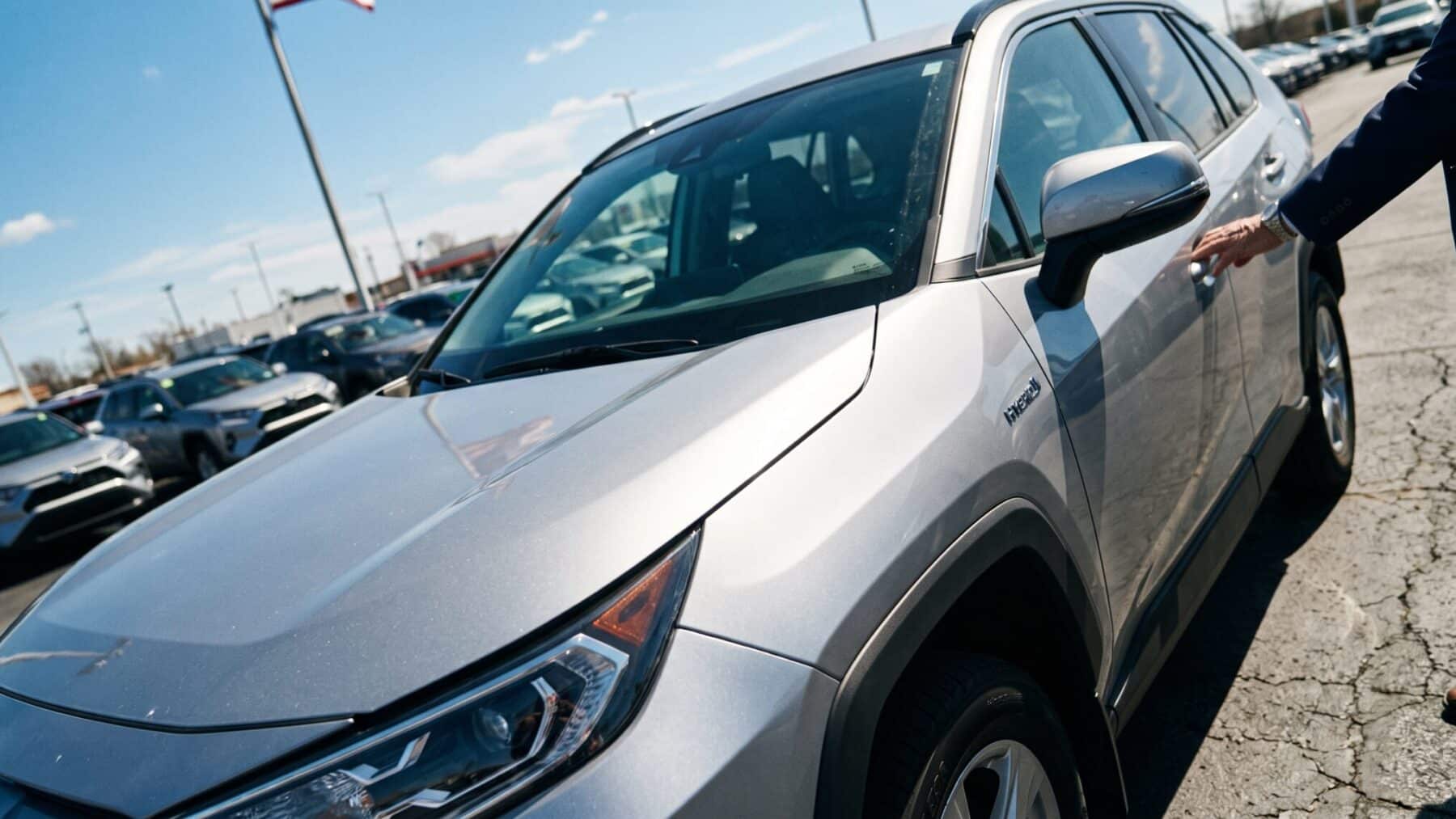
Walk into almost any US car dealership right now and the lot tells the story before a salesperson says a word.
The hybrid rows stretch longer than they did a year ago. The electric section has more breathing room than dealers expected. A powertrain that industry planners once called a stepping stone has become the destination. And the sales numbers behind that shift are rewriting a ranking that has stood almost without interruption for nearly a century.
How a hybrid powertrain turns the economics in its favor right now
A conventional hybrid carries two power sources but demands nothing extra from the driver. The gasoline engine charges a battery pack during normal driving, and the electric motor steps in under acceleration and at low speeds, cutting the fuel load precisely when engines burn the most. No home charger, no route planning, no range anxiety on a long highway run.
That self-sufficiency became a market advantage the moment the federal tax credits for battery-electric and plug-in hybrid vehicles expired on September 30, 2025. Conventional hybrids were never eligible for those credits, so they lost nothing when the incentives vanished. Buyers comparing sticker prices suddenly found the gap had widened considerably in the conventional hybrid’s favor over battery-electric alternatives.
Fuel savings close the deal. Hybrid buyers can save somewhere between 30 and 50 percent on fuel costs, recovering the added upfront cost over a base gas model in roughly two to three years. At current pump prices, that math is impossible to ignore.
What the dealership lots actually looked like this spring
The demand surge showed up starkly on dealer forecourts. The 2026 RAV4 switched to a hybrid-only model range, meaning total RAV4 sales were constrained while production retooled. Inventory remained tight at dealers across the country, with some buyers waiting months for specific trims.
Supply, not demand, was the ceiling.
Toyota’s Georgetown, Kentucky assembly plant began RAV4 Hybrid production on June 22 and is expected to play a central role in meeting demand for the rest of the year. In the first half of this year, hybrid car sales rose while battery-electric sales declined, reaching a record market share of 16 percent in the second quarter alone, roughly two and a half times the share of pure EVs in that same period.
Three automakers command the bulk of those hybrid sales. The global hybrid pioneer holds the largest share of US hybrid sales by a considerable margin. Two Japanese and Korean brands follow. Not one of the three dominant players is an American brand.
The hard numbers behind the record and where they come from
Between the second quarter of 2025 and the second quarter of 2026, hybrid electric vehicles reached a record 16 percent of light-duty vehicle sales. That figure comes from the US Energy Information Administration‘s latest analysis of the new-vehicle market.
Battery electric vehicle sales landed at 6 percent of new light-duty vehicles sold, down from 7 percent a year earlier. Plug-in hybrid electric vehicle sales fell from 1.9 percent to 1.4 percent over the same period.
The leading hybrid automaker topped US auto sales with more than one million vehicles delivered in the first half of this year. The broader electrified segment, including hybrids, now accounts for 24 percent of new light-duty vehicles sold.
Where the strategy gap is starting to cost the other side
The flip side of the hybrid surge is a growing penalty for automakers that placed a heavier bet on battery-electric vehicles. Through the first half of this year, the main US rival sold 1,335,461 vehicles, a decline of 6.8 percent, while the hybrid leader sold 1,243,390, up 0.5 percent. The gap between them has narrowed to approximately 92,000 units, the closest margin since 2021.
That narrowed gap is the closest since the leading hybrid brand briefly topped its rival in US sales, a result partly driven by supply chain issues at the time. This time the mechanism is purely commercial.
When hybrids are driving industry growth, the trailing automaker does not have the same hybrid ammunition as its rivals. Strong trucks and a growing EV portfolio are real assets, but in the middle of the market the consumer mood is clearly shifting toward fuel efficiency without full EV commitment. Other than one brief exception in 2021, the same American automaker has led US sales since 1931. Readers curious about how the same brand’s BEV sales also surged can see that hybrid and electric strategies are running in parallel.
What the market looks like from here and what could still change the outcome
Forecasters are not ready to call a dynasty change just yet. The trailing automaker’s advantage heading into the second half stands at just over 90,000 units. That is a manageable buffer if truck and fleet sales hold, but a razor-thin one if hybrid demand accelerates further.
Several brands with little hybrid history are now fast-tracking new nameplates. Industry forecasters project hybrids will account for a significantly larger share of all passenger vehicle sales by the mid-2030s. Even automakers trimming their electric programs are racing to launch new gas-electric models.
Affordability will remain the engine driving that growth. Average new-vehicle prices and elevated loan rates above 6 percent mean monthly finance payments are stretching household budgets. A hybrid that trims the fuel bill by 30 to 50 percent spreads real relief across a household budget in a way that a more expensive electric vehicle, without a tax credit, currently cannot match.
Anyone weighing a nearly new alternative should note that more than 300,000 off-lease EVs are now flooding used lots, offering another path for buyers who want electrification at a lower entry price. The sales leaderboard for the full year is still open, but the hybrid has moved from stopgap to standard-bearer, and the automakers that understood that shift early are the ones with the longest waitlists right now.
