Walk into almost any mainstream US car dealership right now and the pitch has flipped.
Gas-only trims are quietly disappearing from window stickers.
The model that used to anchor the floor in a dozen powertrain options now comes in one: gas and electric together.
That shift is no longer a forecast. It is already in the sales data, and the numbers are bigger than most shoppers realize.
So what, exactly, is happening inside the drivetrain that made hybrids the fastest-growing segment in American auto retail?
How a hybrid splits the job between two power sources
A conventional hybrid carries two complete power systems in the same engine bay. A gasoline engine handles highway cruising, where it operates at its most efficient rev range, while one or more electric motors take over at low speeds, where combustion engines waste the most fuel through idling and acceleration. The two systems hand off seamlessly and the driver never touches a charger.
The key to the efficiency gain is regenerative braking, a process that captures the kinetic energy a car would otherwise shed as heat every time the driver lifts off the throttle or presses the brake pedal. That recovered energy feeds back into a small onboard battery, topping it up continuously so the electric motor is always ready to assist.
Because the battery is recharged by the car itself, a hybrid never needs a plug. That self-sufficiency is the single biggest commercial advantage hybrids hold right now. Range anxiety disappears entirely, and so does the hunt for a public charger, which remains the top complaint cited by drivers who considered an EV and pulled back.
What the US market looks like on the lot and on the ledger
In the first half of 2026, hybrid sales rose nearly 20 percent year over year, with hybrid market share climbing to a record 15.4 percent, a gain of nearly three percentage points in a single year, according to data from the Center for Automotive Research cited in CNBC’s July reporting. That record arrived while the overall new-car market softened.
The Center for Automotive Research noted that hybrids are currently the only major segment gaining share as gasoline, diesel, and fully electric vehicles all declined.
On the lot, the shift is visible. Some of the best-selling nameplates in the country are now available exclusively as hybrids for the current model year. The 2026 RAV4 is hybrid-only, Toyota dropped the gas-only version when it unveiled the sixth-generation model, and the Camry followed the same path for 2025. When a top-seller drops its gas-only trim, hybrid volume rises almost automatically, and dealers reorder accordingly.
The record numbers and where they come from
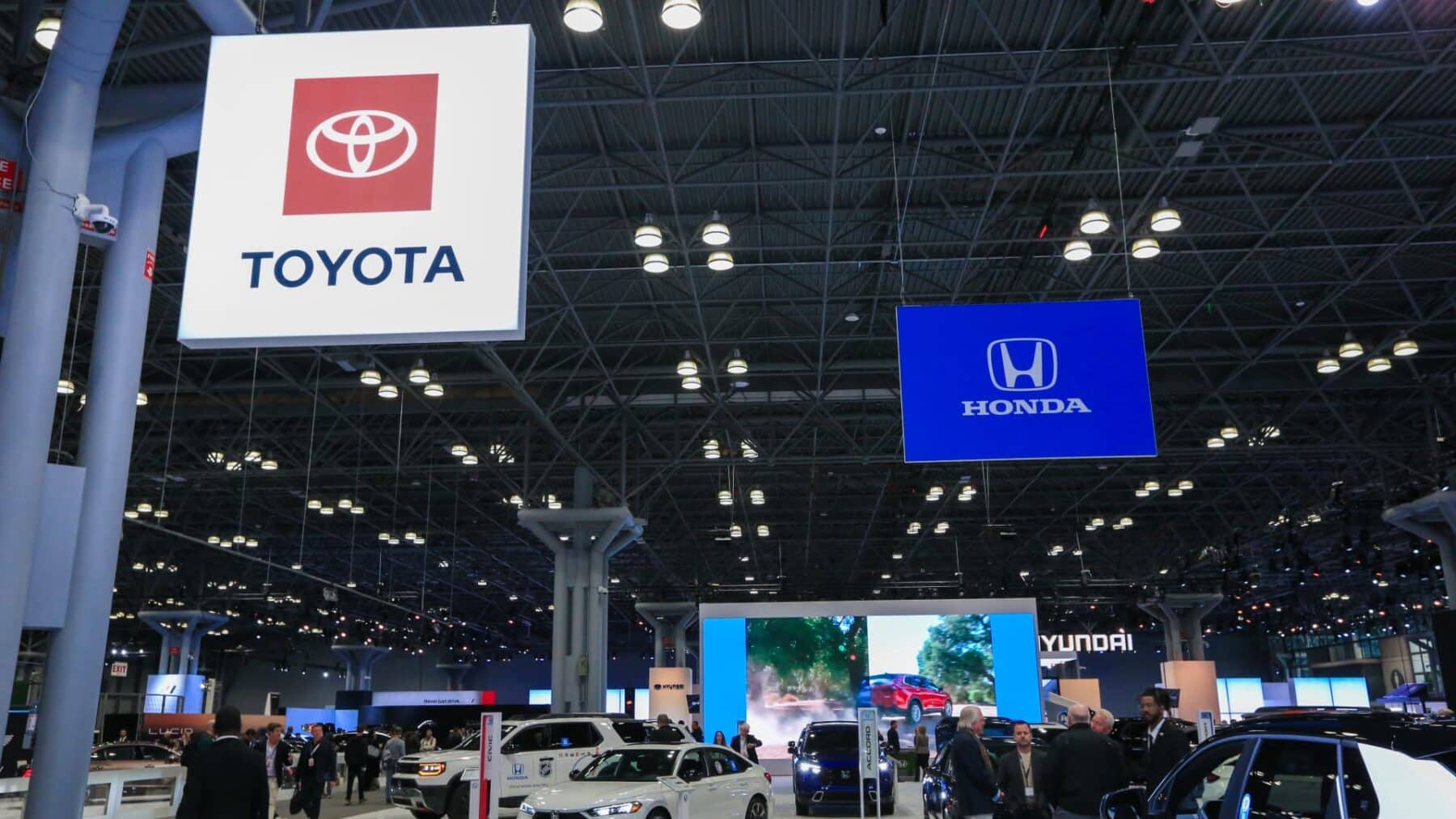
Hybrids captured a record 15.4 percent share of the US market, nearly three times the share of battery-electric vehicles, according to data from the Center for Automotive Research cited in CNBC’s July reporting. Three automakers, Toyota, the Hyundai Motor Group, and Honda, control approximately 86 percent of sales, according to automotive research firm Baum & Associates.
Toyota remains the clear leader, accounting for roughly half of all US hybrid sales. The company sold more than 600,000 hybrids in the first half of 2026 between its Toyota and Lexus brands. Hyundai Motor Group, which includes Hyundai, Kia, and Genesis, narrowly surpassed Honda in hybrid sales during the period after expanding hybrid offerings across a broader range of vehicles, including larger SUVs. Honda also posted record US hybrid sales, with hybrids representing nearly one-third of its total American vehicle sales.
The purely gas-powered RAV4 is gone, continuing a trend Toyota started with its Camry midsize sedan and Sienna minivan. The shift at America’s best-selling compact SUV is the clearest single signal of how fast the mainstream market is moving.
Where the hybrid surge runs into its own limits
Supply, not demand, is the binding constraint for the hottest models. Toyota dropped the gas-only RAV4 in part because buyers had already faced extended wait times for hybrid trims.
The price premium over a comparable gas model can still run several thousand dollars, though the 2026 RAV4 Hybrid LE opens at $33,350 including destination, $950 less than the 2025 hybrid’s comparable starting price, even with a full redesign. Battery plant bottlenecks remain part of the supply constraint, and retooling takes months while demand runs ahead of the build schedule. For anyone weighing a pre-owned model, it is worth understanding how battery warranty coverage works on a used hybrid before signing anything.
What comes next for gas-electric cars and American buyers
Analysts expect hybrid adoption to continue growing, with Baum & Associates forecasting hybrids could account for roughly one-quarter of all US vehicle sales by 2030. Either number between now and that horizon would be a new annual record, representing a segment that has roughly doubled its share in just a few years.
Toyota is preparing a new generation of batteries the company says will improve energy density and lower production costs, narrowing the price gap to a gas-only trim. Competitive pressure is accelerating launches from automakers that lagged on hybrids. Hyundai Motor Group narrowly surpassed Honda in hybrid sales during the first half of 2026 after expanding hybrid offerings across a broader range of vehicles, including larger SUVs. Honda, meanwhile, is developing a next-generation hybrid system designed for larger vehicles and SUVs.
More supply from more brands will eventually give buyers real choices on the lot rather than a lengthy reservation queue. The record market share is ultimately a vote cast one purchase at a time by ordinary buyers deciding that a car which charges itself fits American life better than one that requires a stop at a charger. And if you are shopping used, check whether connected features tied to a prior subscription have already gone dark before you sign.
