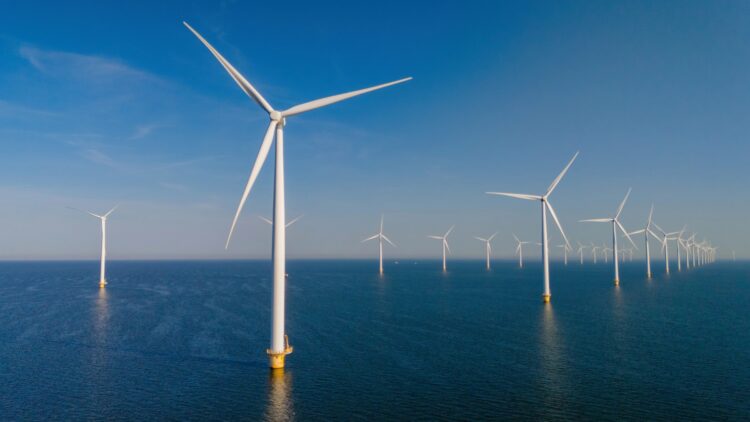
The Ministry of New and Renewable Energy in India is set to announce its maiden offshore wind tender off the coast of Tamil Nadu by February 2026. This historical project has followed comprehensive wind resource assessment studies by the National Institute of Wind Energy utilizing cutting-edge floating LiDAR technology. Preliminary indications point to great wind resources, with capacity factors between 45% to 50%, making Tamil Nadu one of the most preferred areas for offshore wind development in India.
Detailed wind studies show very promising nearshore resources
The National Institute of Wind Energy has installed advanced floating LiDAR technologies to collect comprehensive data about the wind resources for up to 12 months along the Tamil Nadu coast. The preliminary findings indicate very good wind resources with CUF factors much higher than those observed in Gujarat’s offshore regions. The promising data offer a great opportunity to undertake India’s maiden offshore wind project development venture in this crucial coastal region.
This is in addition to advanced wind monitoring technology that has enabled a precise assessment of offshore wind patterns to be identified, showing that there are ideal patterns for large-scale energy production. The entire offshore survey is expected to finish in January 2026, delivering full data needed for tenders. This approach ensures accurate data for investors on the ideal projects to pursue in Tamil Nadu’s large offshore wind resources.
The important findings are as follows:
- Capacity usage factor between 45% and 50% validated by LiDAR data
- The wind power potential is substantially larger than the actual offshore achievement in Gujarat
- Involves consistent wind patterns for energy production
- Strategically located near the coastline, which is ideal for interconnection and development projects
Government initiatives accelerate offshore wind sector development
The Indian government has launched Viability Gap Funding facilities to support the development of 1 GW of offshore wind energy in the primary stage. It has assigned 500 MW for development in both Gujarat and Tamil Nadu to assert its support for reducing reliance on onshore renewable energy technologies. This support structure has assisted in overcoming development barriers for new offshore wind projects.
The renewable energy segment in Tamil Nadu has attracted significant private investments to the tune of above Rs 5,700 crore for wind energy projects post-2021, adding 816 MW to new capacities. Another Rs 4,200 crore has also been committed for the development of an additional 600 MW capacity for wind energy projects. The state’s solar energy segment has attracted investments to the tune of Rs 23,500 crore for 6,736 MW capacity expansion.
Strategic timeline for tender implementation
The Ministry intends to launch the Tamil Nadu offshore wind project tender by February 2026, with finalized plans set for May-June 2026. This expedited schedule is indicative of the focus on priorities laid out by the government for RE growth and meeting obligations on climate action. The timely rollout also enables sufficient preparation for companies interested in participating in the project to contribute to meeting India’s aim to achieve 30 GW of offshore wind by 2030.
Opportunities for investments propel India to leadership in renewable energy
It is ranked fourth in global wind power capacity, with 52.14 GW of wind power installed onshore as of July 2025. Tamil Nadu also has 11.8 GW gross power, making it number one in wind energy and, therefore, the most preferable site for development at offshore locations. It would also seem normal for India to develop wind energy power from onshore to offshore areas.
The launch of India’s inaugural offshore wind farm tender for Tamil Nadu is a turning point for its renewable energy evolution. It integrates cutting-edge evaluation technology with government support. Abundant wind resources mapped via preparations using LiDAR technology form a firm basis for project execution. Private investment already pledged to Tamil Nadu’s renewable energy segment translates India into an emerging leader for sustainable energy R&D.