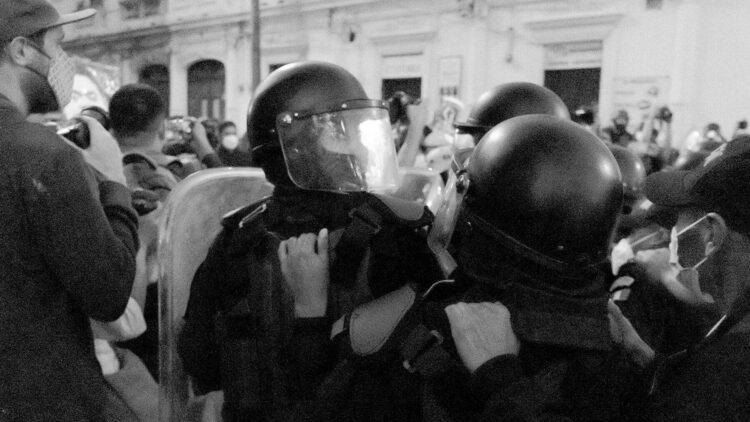
Political crises have plagued Iran in recent decades. With protests taking place throughout the country, Iran is facing one of the most delicate moments in its history due to an economic crisis marked by allegations of state repression. This crisis has led to a devaluation of the currency, which has significantly increased the cost of living for the population, and many people have become homeless.
Understand how the economic crisis in Iran is at the heart of the protests
In response to this crisis, the president called on the population to unite and, as a reward, promised to listen to their demands. Despite this, the president also delivered a harsh speech on security, increasing the feeling of tension among the population.
Recent protests in Iran began with merchants at the Grand Bazaar in Tehran, a very traditional location in the country. At the time, shopkeepers closed their stores in protest against the fall of the local currency. This Iranian currency has rapidly lost its value, directly affecting the prices of products within the country, such as food, medicine, or any basic market item needed for daily life. The population complains that salaries no longer cover these high expenses.
The country’s authorities have publicly acknowledged the difficulties faced by the population. Despite this, the country has yet to provide a practical response to the financial crisis, maintaining a climate of public dissatisfaction. For the protesters, these promises made by the Iranian government are insufficient.
Calls for dialogue mixed with blame
The president made a statement through the state broadcaster IRIB, addressing his response to the demonstrations by stating that he is willing to listen to all protests classified as legitimate, but emphasizing that these peaceful demonstrations differ from violent acts that also occur in the country. He added that foreign groups were accused of infiltrating the movements to increase their instability.
The Iranian government has made an accusation of sabotage by Israel and the United States, alleging that terrorist elements were responsible for orchestrating attacks on public buildings and also for causing localized fires in religious sites.
A strategy of dialogue and transfer of responsibilities
Therefore, in the end, the overall strategy of the discourse becomes clear: a certain level of humility in acknowledging the country’s internal issues and, in parallel, attributing responsibility for acts of violence to factors external to the country. This point of view, however, is not well accepted by many citizens who see it as an attempt by the government to absolve itself of responsibility for some of the dissatisfaction that, according to them, stems from everyday problems, not from external interference in the country.
Repression, deaths, and control of information
Iran’s unrest unfolds amid heightened global tensions. Statements from US President Donald Trump suggested that further sanctions or actions could follow if repression continues. Meanwhile, Iranian lawmakers responded with strong warnings, threatening retaliation if attacked.
The increase in acts of repression was one of the highlights of the most recent waves of protests. The media released figures stating that more than a hundred security agents were killed, and opposition groups abroad claim that this number is even higher, also including civilians, but without official confirmation of this.
Iran is going through a period of significant internal instability, mainly due to a society suffering from economic issues and a lack of future prospects that suggest improvement. The government, on the other hand, is trying its best to contain the crisis in the country through a message of national unity to overcome the obstacles. With accusations of external pressure and increased repression, the internal conflicts do not seem to be coming to an end anytime soon.