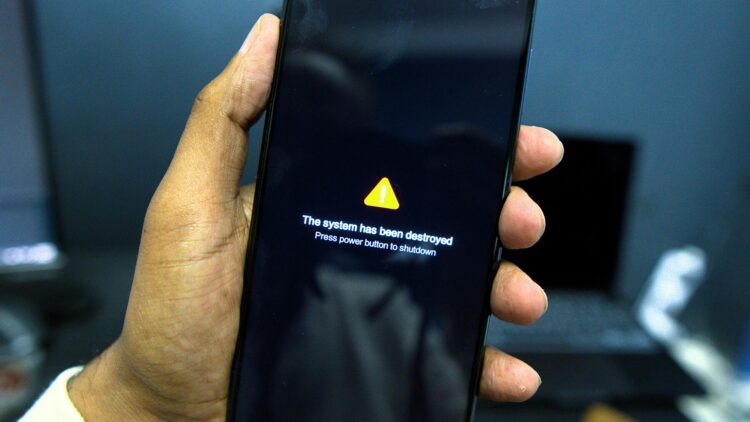
Japan’s nuclear regulatory system faces unprecedented scrutiny after a devastating security breach involving classified information. A Nuclear Regulation Authority official’s work smartphone disappeared during an overseas visit, containing highly sensitive contact details of personnel responsible for protecting nuclear facilities. The device held confidential names and information about staff members whose identities remain classified due to terrorism prevention protocols.
Shanghai airport event lays bare security weaknesses
The Japan Nuclear Regulation Authority faces growing pressure in the wake of the security breach that happened at the international airport in Shanghai in November. The Japanese official lost the work-issued smartphone in the process of removing his personal effects from the carry-on luggage during the security scanning process. The Chinese authorities at the international airport searched for the lost smartphone but couldn’t find it.
The smartphone had confidential contact information of the staff members in the nuclear security division, whose names are withheld because of the sensitivity of their duties. These individuals are responsible for the implementation of essential security protocols that shield the nuclear material in local power plants against possible terrorist attacks and theft. The Nuclear Regulation Authority confirmed that it had become impossible to remotely lock or wipe the data in the smartphone when it went out of communication range.
The work phones stay with the employees at all times, even while abroad, according to the current emergency response procedures at the Nuclear Regulation Authority. This is because the officials need to be immediately available to deal with emergencies like massive earthquakes and nuclear emergencies that could pose a threat to the public’s security across the country. However, this requirement has posed unexpected security risks when the employees go abroad for their own purposes and not for the government’s business.
Private travel schedules also create new diplomatic complexities
The incident was reported to the Personal Information Protection Commission of Japan by the Nuclear Regulation Authority in November. This is because the leakage of confidential information is a possibility. The disappearance of the mobile phone was discovered three days after the occurrence of the Shanghai airport incident. This is a short period during which the recovery of the mobile phone is less likely.
China has increased diplomatic pressure on Tokyo, especially in the wake of statements made by Japanese Prime Minister Sanae Takaichi in November about the potential use of the military to protect Taiwan in case of an attack. China considers Taiwan to be part of its territory and does not rule out the use of force to achieve reunification. This particular security incident takes place at a time when the relations between the two countries are already strained.
More advanced protocols aim to prevent breaches of information in the future
The announcement comes in the wake of Tokyo Electric Power Company’s move to restart the Kashiwazaki-Kariwa nuclear power plant, which is the world’s largest nuclear power plant and takes a significantly longer time to test its safety before resuming operations. Japan shut all its nuclear reactors following the massive earthquake and tsunami that led to the Fukushima accident in 2011.
So far, no misuse has been reported, but training on handling confidential info is on the cards
Officials of the nuclear watchdog have promised to evaluate the policy of using smartphones while introducing new measures that will prevent such occurrences in the future. The organization stated that there is no indication of misuse of the devices, although an investigation is still ongoing. Training sessions on the handling of confidential information when traveling abroad will be included in the new measures.
The resource-poor country plans to revive nuclear power as it aims to decrease fossil fuel use, realize carbon neutrality by 2050, and respond to increased power demand from artificial intelligence systems. The Nuclear Regulation Authority is currently examining the application from TEPCO on restart plans while implementing stronger security systems, thus avoiding information leaks.