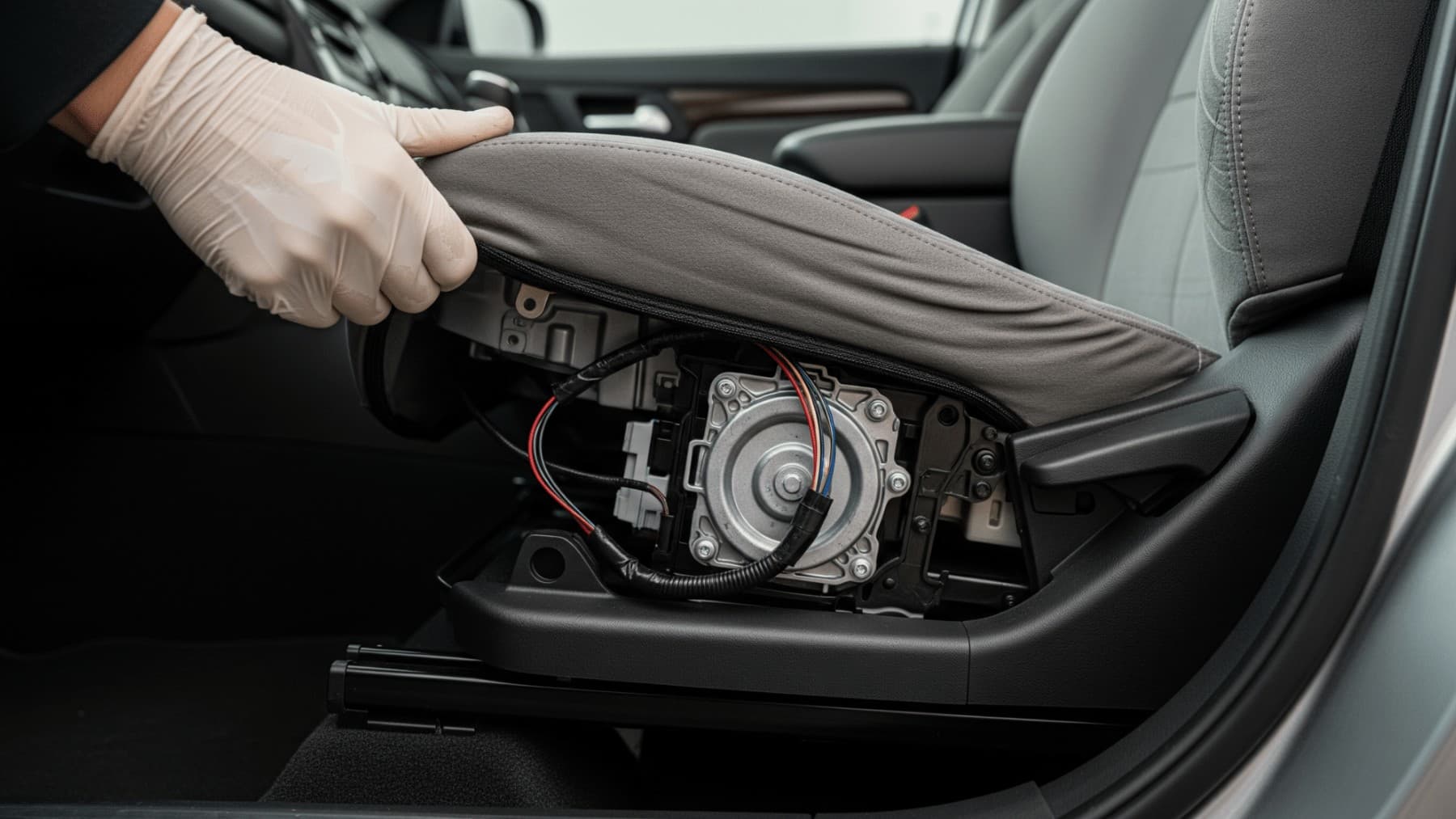
Kia America has recalled 462,869 model year 2020, 2024 Telluride vehicles built from January 9, 2019, through May 29, 2024, because a front power seat motor can run continuously and overheat, creating a fire risk whether the vehicle is parked or in motion. The action was filed with the National Highway Traffic Safety Administration under campaign number 26V430. The report date on the NHTSA filing is July 2, 2026. This action replaces the earlier recall 24V407. An internal investigation uncovered additional issues that could lead to the seat switch failing and also found that dealerships may not have completed the original recall repair properly.
What causes the fire risk
NHTSA documents state that an external impact with excessive force to the front power seat side cover and/or seat slide knob may cause the power seat switch to become dislodged, internally misaligned, or otherwise damaged. A misaligned or damaged seat switch, or an improper recall 24V407 repair, may lead to continuous operation of a seat motor. Over time, this can result in overheating of a seat motor, thereby increasing the risk of a fire while driving or while parked.
The constant electrical resistance overheats the motor to the point where it melts, creating a fire risk under the seat cushion. This can happen whether the vehicle is parked or being driven, which is why Kia and NHTSA are advising owners to park outside and away from structures.
Kia’s own tracking found 18 incidents tied to this defect between October 2024 and April 2026, including seven seat fires and 11 cases of melted parts, according to NHTSA. No crashes, injuries, or fatalities have been reported.
A superseding recall with a new fix
NHTSA’s acknowledgment letter states that vehicles already repaired under the previous recall will need the new remedy completed, because recall 26V430 replaces 24V407. In documents filed with NHTSA, Kia’s investigation into the issue found “sporadic dealer workmanship issues.” The company discussed a suspicion that dealers may have mistakenly reinforced the switch back cover and not replaced the switch.
Dealers will install an electronic fuse assembly, free of charge. The remedy component prevents continuous operation of a seat motor if the seat switch becomes dislodged, internally misaligned, or otherwise damaged.
Tellurides built starting on May 30, 2024, received a reinforced power seat switch mechanism from the factory and are not included in this recall campaign. Telluride models with manual front seats do not have the power seat motor assembly and are also excluded from this recall.
This recall is not the first fire-related safety campaign to affect the Hyundai Motor Group’s lineup in 2026. Regulators have also logged action on Hyundai and Kia’s EV battery recall, reflecting continued regulatory scrutiny of the automaker group.
What owners should do now
There are two possible problems: a stuck seat slide switch, and an improper repair of that switch from an earlier recall. NHTSA said the fire risk is serious enough that owners should park affected Tellurides outside and away from homes, garages, and other structures until Kia dealers can complete the new repair.
Warning signs include a sticking seat slide knob, a power seat that continues moving after release, inability to adjust the seat, a burning or melting smell, or smoke from under the seat. Anyone observing these signs should not wait for the formal owner notification letter before contacting a Kia dealer.
Kia notified dealers about the recall on July 6, 2026. The automaker will mail owner notification letters between August 13 and August 19. Affected VINs are scheduled to become searchable on NHTSA.gov beginning July 17, 2026. Owners can also call Kia customer care at 1-800-333-4542 and reference internal recall code SC374.
Broader context for seat safety recalls
All recall repairs are free, whether the factory warranty has expired or the Telluride was purchased used. If an owner already paid to have the seat switch repaired, Kia’s General Reimbursement Plan, filed with NHTSA on April 30, 2026, covers those costs.
The scale of the campaign, and the fact that a prior repair proved insufficient, underscores the difficulty automakers can face in fully resolving complex electromechanical defects on the first attempt. That challenge is also illustrated by recent campaigns on other models, including the Ford Mustang Mach-E recall.
Owners can verify their vehicle’s recall status by entering a 17-digit VIN at NHTSA.gov/recalls.
