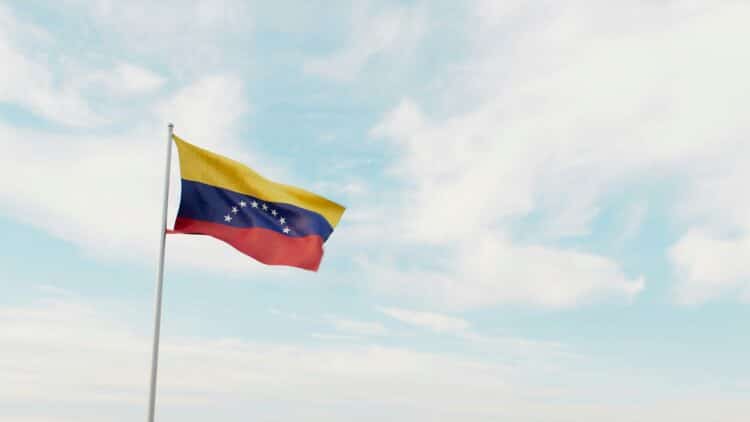
With increased U.S. military activities in the Caribbean and the U.S. traveling the world with the biggest military aircraft, President Nicolás Maduro of Venezuela said the ‘peace of the slaves’ will never be part of the political dialogue with Washington. With Maduro emphatically expressing the rejection of ‘peace of the slaves’ and military investments of the U.S. at the height of an ‘anti-drug’ blockade, Trump called an emergency meeting of the U.S. National Security Council and focused on the future of Venezuela. The U.S. military presence in the Caribbean has reached a record level and includes more than 15,000 U.S. troops.
No peace of the slave
For Maduro, the military control of the region has more to do with the political control of the situation in Venezuela and the control of its oil than the protection of the region.
“Neither do we want a slave’s peace, nor the peace of a colony! A colony, not ever! Slaves, not ever!”
He received a roaring standing ovation from the audience who waved Venezuelan flags. Maduro insisted that Venezuela wants peace, but only a peace that is genuine and respects the country’s sovereignty, equality, and independence. Maduro’s comments highlight the continued and deepening standoff that has endured for more than five months and has been marked by sanctions, diplomatic isolation, and military threats.
Trump’s administration has focused the full range of its pressures on Venezuela’s military, diplomatic, and economic arms. In recent weeks, the U.S. designated as a terrorist organization the ‘Cartel de los Soles,’ a grouping that the U.S. claims has links to Maduro and some of the top-ranked Venezuelan officials.
Trump’s pressure campaign
Maduro began an address to the Venezuelan National Assembly by confirming that Trump said he spoke with Maduro over the phone. Trump, however, said it was just a worthless and meaningless phone call. According to Trump, Maduro said that he was willing to leave Venezuela, but only if he received full legal amnesty and a complete lifting of all international sanctions, as well as immunity from arrest by the International Court of Justice.
Trump supposedly said that all of those demands would be rejected. Trump then offered Maduro and his family one week to leave the country. Caracas believes that the timeline and the offer in general are unreasonable, and that Trump is attempting to violate Venezuelan sovereignty.
Maduro’s accusation about the U.S. Psychological terrorism. Maduro claims the U.S attempted to psychologically terrorize the Venezuelan people over the last 22 weeks by portraying a crisis and class struggle, as well as portraying the people of the country, the citizens, as disloyal to their country, in this case, Maduro emphasized that the problems of a particular crisis are a test, and he said that the country has a long and proud history of people being loyal to the country, to the weight of the country, to the center of the country, and the world.
Maduro is describing a Venezuela under siege
The tensions caused by the conflict are affecting the stability of other regions. Analysts claim that because of the U.S. military’s Venezuela-affiliated military partnerships with other strategic countries like Russia and Iran, one misstep could lead to multiple armed conflicts.
Most of these conflicts, in U.S. military terms, are standoffs that must be engaged to bring to an end Venezuela’s survival claim, a narco-state, rival to the U.S. empire. Caracas, in military terms, is of non-empirical survival.
Maduro and the U.S. have tried both military and non-military peace. They predict escalating peace negotiations will determine the state of the conflict. Venezuela and the U.S. will be left with the state of the conflict. Will peace be found within the escalating conflict, or will the U.S.-Venezuelan conflict deepen into war?