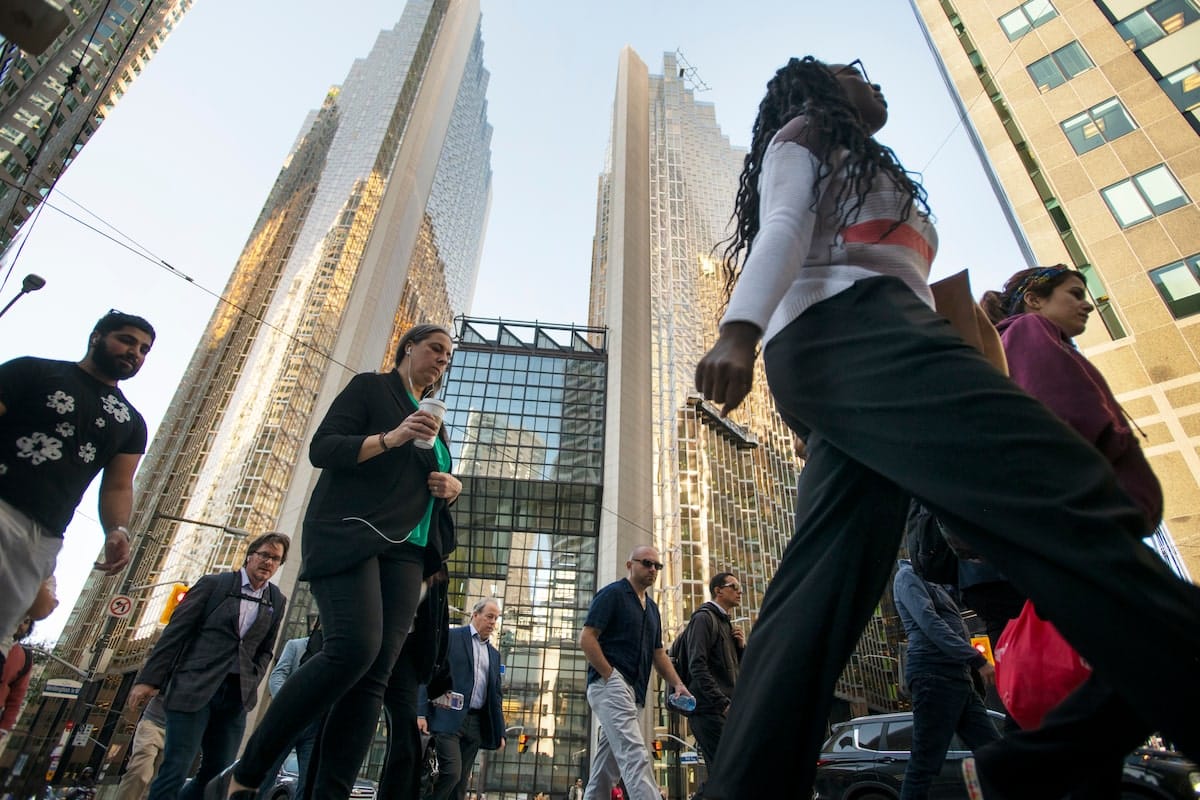
The midweek rush into American office buildings is no longer confined to two days. New data released this week show the peak has widened to a three-day block spanning Tuesday through Thursday.
The shift is straining shared desks, meeting rooms and commutes across downtowns nationwide.
The findings come from the XY Sense Workplace Utilization Index 2026 H2 edition, which tracks sensor data across corporate offices. According to the report, In Q3, Tuesday reached 55%, Wednesday 54% and Thursday 52%, turning what used to be a two-day midweek peak into a three-day block .
Monday sat at 43% and Friday at 35% , remaining far less busy than the midweek block.
Friday is closing the gap, but slowly
Friday posted the biggest gain of any day, up five points since Q1 2026, but it still sits 20 points below Tuesday .
That uneven recovery means employers can no longer plan around a simple two-day lull, the report suggests.
The shift matters for how companies manage office space. A desk-sharing ratio built around a Tuesday and Wednesday peak assumed demand would fall away on either side, but with Thursday now closer to that level, that ratio is under pressure three days a week instead of two.
Cutting desks to match the daily average will cause shortfalls from Tuesday to Thursday, while Monday and Friday still carry capacity that sits idle.
Meeting rooms and small spaces in demand
The report indicates that demand for enclosed meeting rooms and smaller private spaces, such as booths and pods, continues to outpace demand for open collaboration areas and team breakout zones, which XY Sense’s prior editions have shown lagging behind other space types.
A pattern confirmed across multiple data sources
The three-day midweek squeeze echoes patterns that GCN has previously reported in badge data, which found Tuesday consistently the single busiest office day across Kastle’s reporting over the past several years, followed by Wednesday and Thursday, while Monday and Friday lag well behind .
Commercial real estate firm CBRE has separately reported that 73% of organizations report office utilization on peak attendance days is effectively at capacity, with Tuesday and Wednesday typically the peak days .
Transit and traffic data point the same direction. In Austin, transportation researchers have found that hybrid workers who have flexibility tend to cluster their in-office days mid-week, which means Tuesday, Wednesday, and Thursday mornings see the heaviest volume on major roadways, according to a commuter guide.
Why it matters for workers and cities
For commuters, the expanding midweek block means longer waits for trains, denser sidewalks and tighter parking three days a week instead of two, with little relief on the shoulders of the week.
For employers and landlords, the mismatch between flat desk ratios and an uneven, three-day attendance curve is forcing a rethink of how office space gets allocated, a dynamic that also shapes idle parking capacity elsewhere during off-peak periods.
The data suggest hybrid work has not simply relocated the traditional Monday-to-Friday office week, but compressed it, concentrating pressure into a narrower, busier middle.
