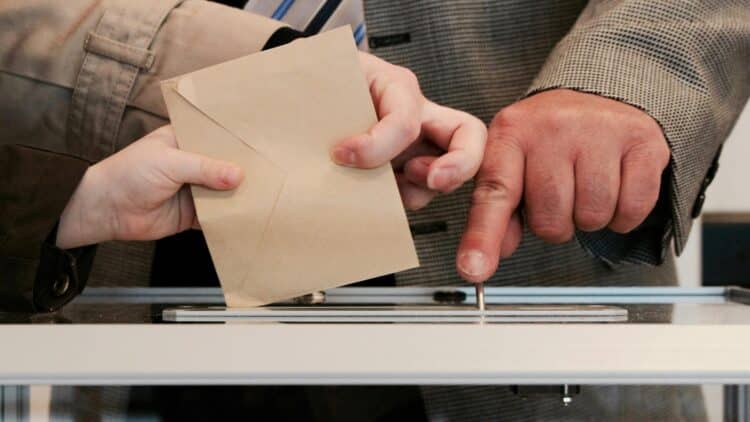
Despite continued internal strife and condemnation from both opposition and international circles, Myanmar’s ruling military has proceeded with the second phase of the national election. Polling took place on January 11, 2026 – just over two months after the initial round of voting, which most described as a sham to solidify the military’s hold on power, rather than to create a pathway for democracy.
Soldiers and troops were stationed at each polling station to protect the ballot boxes.
Soldiers and troops were stationed at each polling station to protect the ballot boxes, and maintain order according to reporting from Al Jazeera. In the military junta’s official explanation, this election marks another step towards national stability and demonstrates its ability to make a transition to a new political environment.
Reality however is much different. Armed conflict rages throughout Myanmar. A significant amount of the country is under control of armed resistance groups; fighting erupts almost every day; millions are displaced, and the humanitarian situation continues to deteriorate.
Reporting from PBS NewsHour states that the elections are viewed as illegitimate by critics who argue that they prohibit opposition parties from participating, limit free speech, and represent no interest of the people. Ousted lawmakers and activist leaders formed the National Unity Government (NUG) in response to the 2021 military takeover. NUG called the vote “a show for the military” to demonstrate the junta’s legitimacy.
Similar sentiments are being voiced by human rights organizations.
Similar sentiments are being voiced by human rights organizations, which state that the elections could further fragment society instead of creating commonality. Human rights organizations point out the numerous obstacles to free speech, the lack of independent observers, and the persecution of journalists and activists.
Military officials have stated that holding multiple rounds of voting is essential to allowing all segments of society to participate in the electoral process, especially in those areas affected by the conflict. Military officials also argue that this process is necessary to establish a functioning parliament, and ultimately create the framework for future constitutional reforms.
Many however see through the military’s rationale and view it as merely a means for maintaining and expanding their control over the nation while providing the appearance of progress to the international community.
Security problems caused voters to fear going to the polls.
In addition, many polling stations located in disputed regions were inaccessible to voters; many voters did not vote because they feared possible violence in those areas. Armed resistance groups and the National Unity Government (NUG) both stated that they would interfere with the voting process and stated that the election was illegitimate.
With low voter turnout in many regions and the presence of military personnel at many polling stations creating an environment where democracy could not be truly practiced, observers questioned whether the election had legitimate results.
International organizations have different opinions on how to proceed with the election. Western countries have generally rejected the election, labeling it as a sham of democracy and claiming it does not fulfill the minimum requirements of democracy. The U.S. and the European Union (E.U.) have restated their commitment to the NUG and are encouraging the military junta to begin negotiating.
Some regional actors have reacted cautiously to the election.
Some countries in Southeast Asia (and especially many of the members of ASEAN) have expressed reservations regarding the election process; however they have not yet refused to recognize it as legitimate. The reluctance on the part of some regional actors to immediately dismiss the legitimacy of the election reflects ASEAN’s history of developing new ways to deal with the Myanmar crisis.
Despite the fact that the elections are proceeding, the situation for millions of civilians continues to deteriorate, as they experience severe food shortages and a lack of access to medical care due to ongoing conflict. Additionally, the military violence has led to millions of civilians being forced out of their homes. Relief agencies report that the humanitarian issues being experienced by the population of Myanmar will not be alleviated by the upcoming elections, but will instead likely be exacerbated because funds originally allocated for the delivery of humanitarian aid will now be redirected to support military activities.
In this way, the second round of voting in Myanmar illustrates the large disconnect between what the military views as positive actions taken to stabilize the country, and the daily lives of its citizens. In opposition to the junta, those opposing the military state that the election will solidify an authoritarian government in Myanmar and ignore the extreme humanitarian crisis which is currently occurring throughout the country.