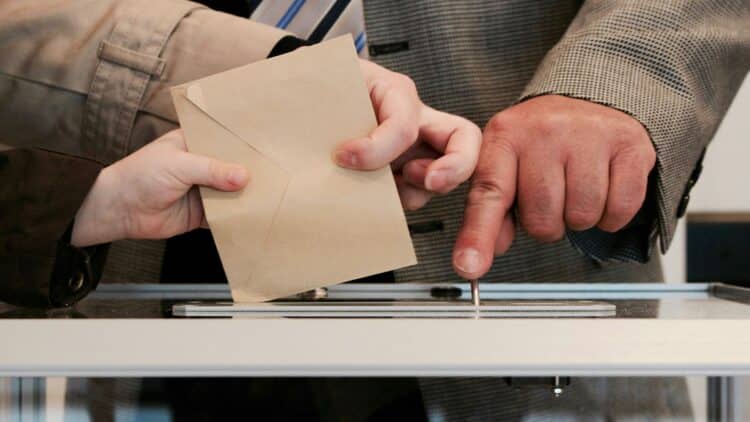
After Myanmar’s military declared the country’s first post-coup general elections to the public in May 2023, the Myanmar military has since detailed the elections and the country’s future post-coup national strategy. The Myanmar military declared the elections as a means to introduce democracy in the country. The military’s defined social and political vision, as well as the declared elections, have drawn critics to claim that the vision is a means to entrench further military autocracy while secularizing further political and social repression, loss of civil liberties, and national political repression in the country post-November 2020’s national elections.
The UN claimed that Myanmar’s military is the self-declared country’s authority
The UN claimed that Myanmar’s military is the self-declared master of the country’s politics. They also claim they also are legally the foremost offender of the civil and political rights of the people of the country, while the military of Myanmar has also self-declared to be the foremost and exclusive perpetrator of international humanitarian law. The civil social elections announced in December are deemed unlawful by the UN, and thus, elections purported to be free and fair are not elections but are defined as a totalitarian regime’s tools to maintain and exert political domination over the country.
A few groups in Myanmar, including the Shan ‘Political Military’ enterprises equity, have been raising issues within the country. According to Shan Incorporation, many of the political entities have been bypassed, and their leaders have been taken, detained, and substituted. The military’s control of political activities has eliminated real opposition, lapsing into the inability to campaign or overturn the control of the military.
Many human rights activists argue that elections in such a climate have no meaning. Where freedom of installation, free movement, and the ability to legally associate, the people have no real choice, and the candidates can resort to un-marginalized methods of eloquent persuasion. The dictatorial elections have a hollow ring, in that the obsession with the democratic process appears to have a real control over dissent.
Military activity will increase and cause more civil conflict
In such an environment, the current and ongoing activities of the Myanmar military will certainly increase the number of internally and externally displaced people to rural Myanmar and the shanty towns across the world. The actions of the military will certainly, in the current environment, attract yet further conflicts to Myanmar.
With the political violence in Myanmar highly internationally sanctioned, observers argue that the voice of the people has been muted in both the internationally and socially sanctioned violence. The internationally and socially sanctioned violence is in response to the oppression brought by the policies in Myanmar.
The need to keep civil rights intact and support disenfranchised people
There is an absolute need for the disenfranchised people to voice their political and civil wishes for the political violence to transform into a politically meaningful conflict. The need for civil and political voice, shadowed by violence, is to respond to the inhumane violence and civil and political disenfranchisement that people are subjected to.
There is an absolute need to end the politically suppressed violence to minimise the civilian and political violence people are subjected to. Without such action, the current political violence will continue to be justified. In Myanmar, without action on the current political violence, the potential military political violence will nominally increase. Without action on the current political violence, the potential for internally displaced people in Myanmar will nominally increase.
Civil society and the UN are continuing to advocate for the military in Myanmar to join in dialogue that will bring back the people’s democratic rights and stop the violence. However, for the time being, the election planned for December will continue to show the people the reality of the situation, while the rest of the world watches and does nothing to help.