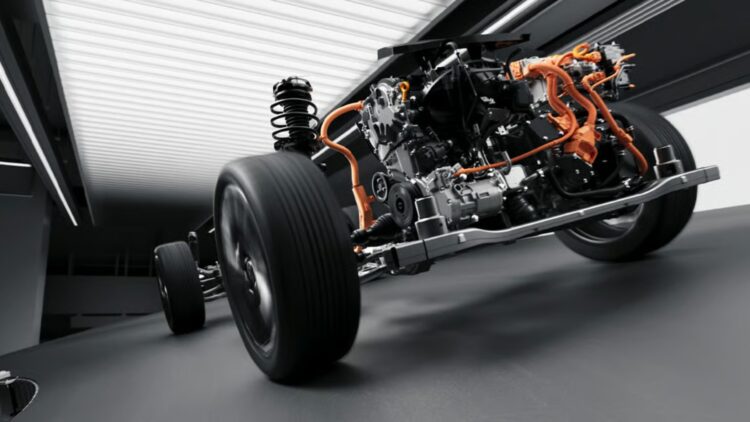
Hyundai Motor Group has been a prominent figure in the manufacturing of conventional vehicles with an internal combustion engine, but it is still growing in EV technology development. Recently, the company unveiled a new flagship battery hub to accelerate next-generation EV technology. Although this might not be an immediate cause for concern for competitors like Tesla and BYD, Hyundai Motor Group intends to enhance its EV portfolio progressively.
Assessing Hyundai Motor Group’s position in EV technology development
Hyundai Motor Group’s headquarters are in Seoul, South Korea, but it has a worldwide presence. The global corporation has long played second fiddle to leaders such as Tesla, which has set the blueprint as a leader in electric vehicle manufacturing. However, statistics related to sales and market share suggest that Hyundai is an upcoming leader in the EV market as it is increasingly prioritizing the demands of the people.
The market in which the corporation possesses the strongest performance is the US, with some experts ranking it as the second biggest EV brand in the country, only behind Tesla. The Chinese market is the most dominant, hence Hyundai falls further behind in that realm. Nonetheless, it is still unquestionably among the top 10 manufacturers of electric vehicles. With that said, what does Hyundai Motor Group’s new flagship battery hub indicate about its intention to participate in next-generation EV technology development?
A Futuristic battery hub investment: Understanding how Hyundai is poised to influence EV innovation
Hyundai Motor Group would not be such a significant player in the vehicle industry if it did not attempt to intelligently get ahead of the curve and predict what people will demand in the future. The corporation announced a new flagship battery research and development (R&D) center, the Future Mobility Battery Campus in Anseong, South Korea. In a display of utmost commitment, the company invested 1.2 trillion won (US$818.3 million) in a center that occupies 111,000 square meters and is set to be completed by 2026.
How will the new Future Mobility Battery Campus center transform EV technology advancement?
Assessing the effectiveness of a project involves reviewing how it’s set to change the way that things were done in the past. Hyundai’s upcoming Future Mobility Battery campus is expected to allow the company to conduct its research in one area rather than across different centers. Previously, Hyundai conducted research in facilities like the Namyang R&D Center and the Uiwang R&D Center, which prevented maximum efficiency and a smoother flow of work. Now, the corporation will be able to work quickly and in an organized structure. The campus is also projected to permit continuous process validation instead of solely initial cell and process design.
A new flagship battery hub: Examining the long-term impacts of Hyundai’s new campus
The Future Mobility Battery campus is more than just an economic investment. One obvious benefit is that it will contribute towards the reduction of greenhouse gas emissions because the more electric vehicles that are manufactured and sold, the less fossil fuel emissions from conventional cars. The corporation signed a memorandum of understanding (MoU), which intends to create industries around the battery hub to complement its profitability. In other words, the hub will open up doors for even greater economic development in South Korea, adding onto the accolades Hyundai has received for its leadership.
The contemporary world is filled with significant technological advancements, which make it feasible for big corporations to invest strategically and ambitiously. The Future Mobility Battery Campus conveys an intent by Hyundai Motor Group not just to occupy the EV space but to have a prolonged and impactful presence. It is fitting that the company invested in a new flagship battery hub just as the world is moving toward full electrification.